




Updated on 16 October 2026
Paris is expensive — but not uniformly so. The gap between what a tourist pays eating next to the Eiffel Tower and what they’d pay for the same quality of food two streets away is significant, often 30–50%. The same applies to hotels, activities, and transport. Knowing where the money goes unnecessarily is the difference between a trip that feels extravagant and one that feels like good value.
This guide covers what things actually cost in Paris in 2026, with specific numbers rather than vague ranges, plus a few 2026-specific changes that affect what you’ll spend. All prices are in euros and based on current rates — always verify on official websites before you travel, as prices change.
- Paris cost quick answer
- Want to lower your Paris costs?
- What Changed in Paris in 2026
- Daily Budget at a Glance
- Accommodation
- Food and Drink
- Getting Around: Transport Costs
- Attractions and Museums
- What Makes Paris More Expensive Than It Needs to Be
- Total Trip Cost Estimates
- How to Keep Costs Down Without Missing Out
- How Paris Compares to Other European Cities
- Plan Your Budget Around What You Want to See
- Paris on Your Terms
- Download the Paris For You App
Paris cost quick answer
Budget traveller: about €65–150 per day, excluding flights.
Mid-range traveller: about €180–320 per day.
Higher-end traveller: €370+ per day.
Biggest variable: accommodation.
Easiest savings: stay slightly outside the most expensive areas, use public transport, eat lunch menus, book major sights smartly.
Want to lower your Paris costs?
| Find a better-value area to stay → Area Finder |
| Plan your days before you overspend → Paris Trip Planner |
| Explore free places → Paris for FREE map |
| Compare what to book before you go → What to Book Before Visiting Paris |
What Changed in Paris in 2026
A few updates that directly affect what you’ll spend:
- Tourist tax increase: New rates apply from 1 January 2026, with a 200% additional regional surcharge on top of the base rate.
- Paper Métro tickets phased out: As of June 2026, paper magnetic tickets are no longer valid on any Paris transport. Use a Navigo Easy card, contactless bank card, or the Île-de-France Mobilités app.
- Two-tier museum pricing: Non-EEA visitors now pay higher entry fees at many national museums, including the Louvre (€32 vs €22 for EEA residents). Verify at each museum’s official website.
- Free museum days: Rules vary by institution and change. Always check each museum’s official page rather than assuming a blanket policy.
Daily Budget at a Glance
Per person per day, excluding flights. Couples sharing accommodation pay less per person.
| Budget | Mid-range | Higher end | |
| Accommodation | €40–80 | €100–180 | €200–400+ |
| Food | €20–40 | €45–80 | €100–200+ |
| Transport | €5–10 | €10–15 | €20–50 |
| Attractions | €0–20 | €20–40 | €40–80 |
| Tourist tax | €1–2/night | €4–6/night | €8–12/night |
| Daily total | €65–150 | €180–320 | €370–730+ |
- Budget day: Bakery breakfast, Métro, one paid attraction, casual dinner near a local neighborhood.
- Mid-range day: Café breakfast, Métro and a taxi or two, one or two paid sights, bistro lunch or dinner.
- Higher-end day: Hotel breakfast, taxis or private transfer, premium attraction tickets, nicer restaurant meal and maybe a cruise or show.
Accommodation
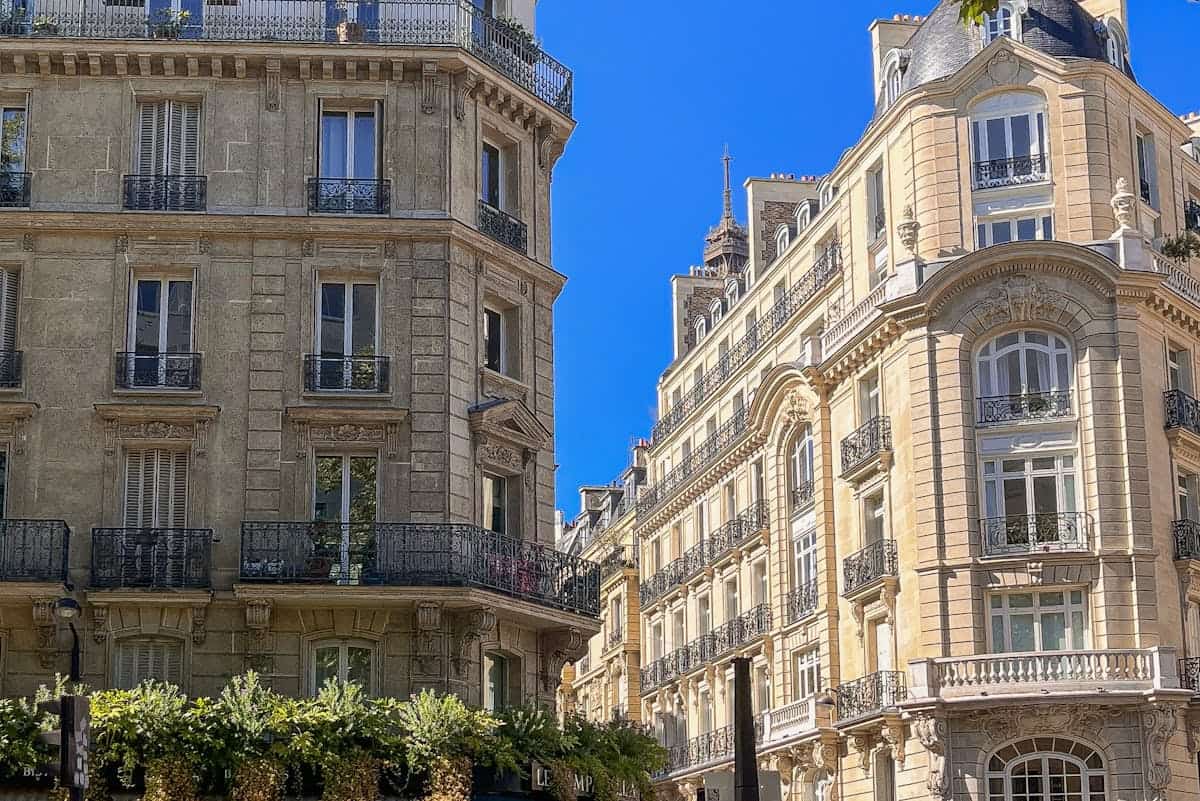
Accommodation is the biggest variable in a Paris trip budget. The same category of hotel can cost 40–50% more in peak summer (June–August) than in January or February, and a hotel in the Marais costs more than an equivalent hotel in the 9th arrondissement. Location and timing matter more than most other choices.
| Type | Price range per night | Notes |
| Hostel dorm bed | €35–55 | Best-reviewed: Generator Paris, St Christopher’s, Les Piaules |
| Budget hotel (2-star) | €80–130 | Variable quality; check room size in reviews |
| Mid-range hotel (3-star) | €120–200 | Most visitors; book 6–8 weeks ahead in summer |
| Upper mid-range (4-star) | €200–350 | Consistent quality; good central options in Marais and 6th |
| Luxury (5-star / Palace) | €400–900+ | Ritz, Le Bristol, Four Seasons George V and others |
| Apartment rental (Airbnb/Vrbo) | €80–250+ (total, incl. fees) | Add cleaning fee (€80–150 common); calculate total cost |
2026 note: Tourist tax (Taxe de Séjour) rates were updated from 1 January 2026. The charge applies per person per night and depends on accommodation category. Approximate current rates: budget hotels €1–2, 3-star €5.53, 4-star €8.13, 5-star €11.70, Palace category up to €15.93. The tax is invoiced separately by the host and adds up over a multi-night stay. In practice, a couple staying 5 nights in a 3-star hotel will pay around €55 extra in tourist tax — worth knowing before you compare hotel prices. Compare current hotel prices across Paris on Booking.com.
Food and Drink
Food in Paris ranges from genuinely affordable to very expensive, often within the same neighborhood. The main driver of cost isn’t quality — it’s location and format. A croissant at a local bakery costs €1.50–2; the same croissant at a café terrace near the Louvre costs €4–5. A bistro dinner 10 minutes’ walk from the Eiffel Tower charges 30–50% more than an equivalent meal in Saint-Germain or the Marais.
Typical prices
| Item | Local / neighborhood | Tourist-facing area |
| Croissant at a bakery | €1.50–2 | €3–5 |
| Espresso (at the bar) | €1.50–2 | €2.50–4 |
| Espresso (at a table/terrace) | €2.50–3.50 | €4–6 |
| Baguette sandwich (lunch) | €4–7 | €8–12 |
| Bistro lunch (plat du jour) | €14–20 | €20–30 |
| 3-course bistro dinner (excl. wine) | €30–45 | €45–75 |
| Glass of house wine | €5–8 | €9–15 |
| Falafel, Rue des Rosiers | €7–10 | — |
| Tap water (carafe d’eau) | Free by law | Free by law |
One thing worth knowing: in most Paris cafés, sitting at a table or on the terrace costs more than standing at the bar (comptoir). The same espresso can be €1.50 at the bar and €3.50 on the terrace. Neither is wrong — just worth knowing before you sit down.
The most reliable money-saving move in Paris: eat lunch at a restaurant rather than dinner. The midi formula (typically noon–14:30) offers two or three courses at significantly lower prices than the same kitchen charges in the evening. This works at good bistros as well as cafés.
Getting Around: Transport Costs
The Paris Métro is good value by the standards of major European cities, and it goes almost everywhere you’ll want to visit as a tourist.
2026 update: Paper magnetic tickets have been phased out across the entire network. As of June 2026, they are no longer valid. You must use one of the following:
- Navigo Easy card (€2 for the card, then load individual tickets at €2.15 each)
- Navigo Semaine (weekly pass, €30.75, valid Monday–Sunday — covers Métro, RER zones 1–5, bus, tram, and suburban trains including Versailles and CDG airport)
- Contactless bank card tap-in — works directly on Métro gates at the same per-trip rate
- Île-de-France Mobilités mobile app
The Navigo Semaine is outstanding value if you arrive on a Monday and plan to use public transport most days — check the current price on the official RATP or Île-de-France Mobilités website before buying. In practice, if you use the Métro twice a day for a week, the weekly pass pays for itself by Day 4.
| Journey | Cost | Notes |
| Single Métro / bus ticket | €2.55 | Via Navigo Easy card or contactless |
| Navigo Semaine (weekly pass) | €32.40 | Mon–Sun, all zones including airports |
| CDG airport to city (RER B) | €14.00 | Covered by Navigo Semaine |
| Taxi from CDG to central Paris | €50–65 (fixed fare) | Right Bank and Left Bank rates differ |
| Vélib’ bike share (short ride) | €1–3 | Mechanical bikes; electric costs more per minute |
| Taxi across central Paris | €12–25 | Variable with traffic; Uber/Bolt comparable |
If this is your first trip to Paris, Paris For You app helps you avoid confusion and overplanning. Everything you need is already on the map.
Attractions and Museums

Paris has introduced two-tier pricing for many national museums in 2026, with higher rates for non-EEA visitors. Prices below reflect current rates — always check the official website before booking, as prices change.
| Attraction | EEA visitors | Non-EEA visitors | Notes |
| Eiffel Tower (2nd floor) | See toureiffel.paris | See toureiffel.paris | Book in advance; always check toureiffel.paris for current rates |
| Eiffel Tower (summit) | See toureiffel.paris | See toureiffel.paris | Prices vary by floor and visitor category; always check toureiffel.paris for current rates |
| The Louvre | €22 | €32 | Closed Tuesdays; book in advance |
| Musée d’Orsay | €16 | €16 | Closed Mondays; check for 2026 non-EEA rate |
| Sainte-Chapelle | €16 | €22 | Verify on www.sainte-chapelle.fr |
| Versailles (palace + gardens) | €21–30 | €21–30 | Combination tickets vary; book in advance |
| Sacré-Cœur | Free | Free | Dome has a small fee |
| Musée Carnavalet | Free | Free | Paris history museum; permanent collection |
| Petit Palais | Free | Free | Permanent collection always free |
Free museum days: Free-entry rules vary by institution and can change — always check each museum’s official page for current dates and concession categories. Many national museums offer free entry on certain days or evenings; the Louvre, for example, also has free Friday evening slots in some months. EU and EEA residents under 26 enter national museums free year-round — bring valid ID.
Paris Museum Pass: €85 (2 days), €105 (4 days), €125 (6 days) in 2026. Covers entry to 50+ museums and monuments including the Louvre, Orsay, Versailles, Sainte-Chapelle, and Arc de Triomphe. Worth it if you plan two or more paid museum visits per day. In practice, two people visiting the Louvre and Musée d’Orsay on the same day save around €20–30 with a 2-day pass compared to buying separately.
What Makes Paris More Expensive Than It Needs to Be
A significant portion of tourist spending in Paris goes on things that cost more than they should — either because of location, or because of costs that are easy to overlook when budgeting. A few patterns worth knowing about:
- Luggage storage. Left-luggage services at the main train stations and at private storage points across the city cost €5–10 per bag per day. Useful on arrival day or departure day; not something most budgets factor in.
- Booking platform fees. Third-party ticket resellers charge a premium over the official price for Eiffel Tower, Louvre, and Versailles tickets. Always book directly on the official website — the price is the same and there’s no service fee.
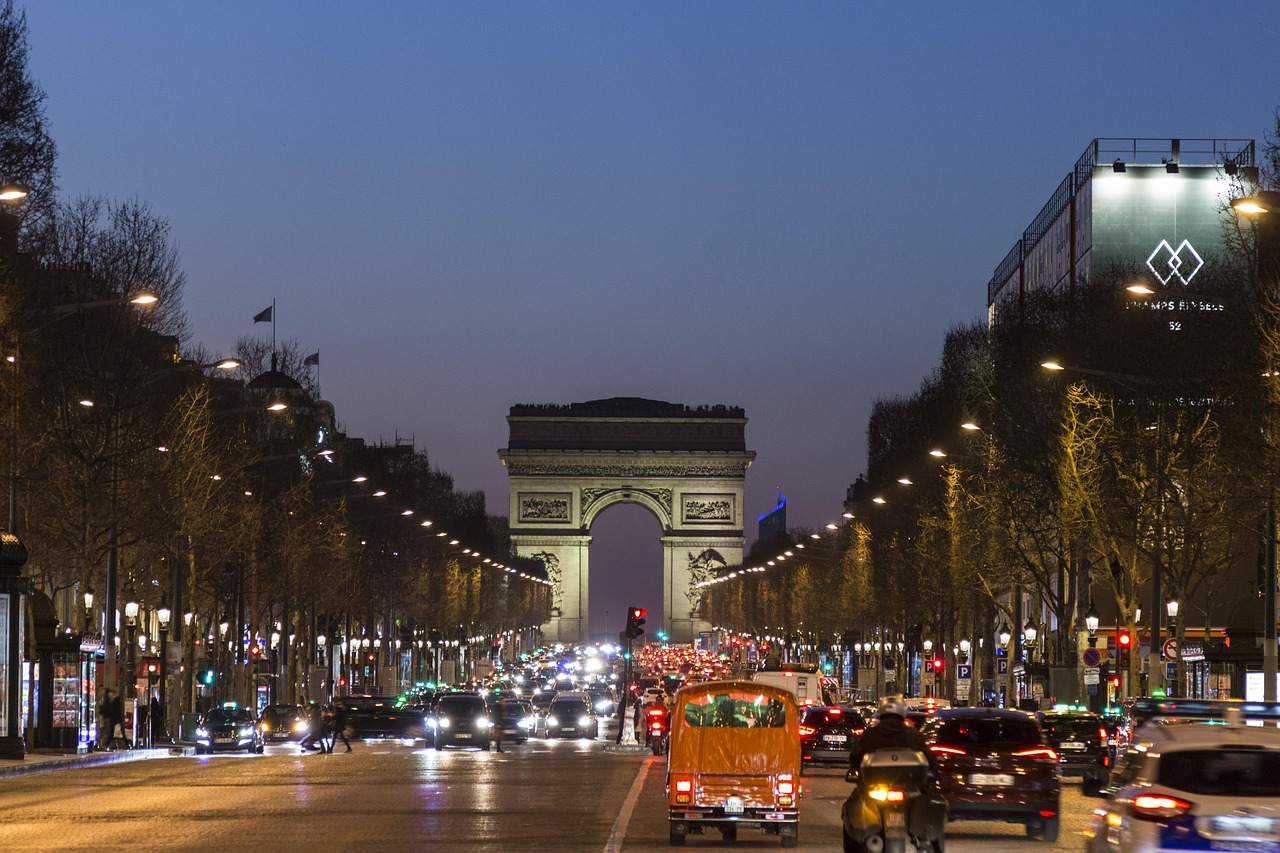
Location premium on food. Restaurants within 200 meters of the Eiffel Tower, Notre-Dame, the Louvre, and the Champs-Élysées charge 30–50% more for comparable food. This is not because the food is better — it’s because tourists don’t walk away. The practical fix is simple: walk one or two streets in any direction.
Terrace surcharge. Sitting at a table or on a terrace at a Parisian café costs more than standing at the bar (comptoir). An espresso at the bar might cost €1.50–2; the same at a terrace table, €3.50–5. If you’re planning multiple coffees per day, this adds up across a week.
Bottled water. Tap water in Paris is safe to drink and free by law at any restaurant (ask for une carafe d’eau). Ordering bottled water at every meal over a week adds €30–50 to the bill for no benefit.
Tourist tax underestimated. The Taxe de Séjour is charged per person per night and is listed separately from the hotel rate on most booking platforms. At a 3-star hotel for two people for 5 nights, this adds around €55 to the total — not trivial, and easy to miss when comparing hotel prices.
Cleaning fees on short apartment stays. A one or two-night apartment rental with a €120 cleaning fee often works out more expensive than a hotel, once the fee is included. Always compare total cost, not nightly rate.
Total Trip Cost Estimates
Per person, excluding flights. Couples sharing accommodation pay less per person on accommodation costs.
3 nights in Paris:
- Budget: €195–450
- Mid-range: €540–960
- Higher end: €1,100–2,200+
5 nights in Paris:
- Budget: €325–750
- Mid-range: €900–1,600
- Higher end: €1,850–3,650+
7 nights in Paris:
- Budget: €455–1,050
- Mid-range: €1,260–2,240
- Higher end: €2,590–5,110+
These are indicative ranges. The biggest variables are accommodation (central vs slightly out, time of year) and how often you eat at sit-down restaurants vs cafés and markets.
How to Keep Costs Down Without Missing Out

A few moves that consistently make a meaningful difference:
- Buy the Navigo Semaine if you arrive on a Monday and plan to take the Métro most days. Check the current price on the official RATP or Ile-de-France Mobilités website before buying — it covers everything including Versailles and the airports, and costs less than 15 individual trips.
- Eat the lunch formula (plat du jour or formule midi). Two or three courses at the same bistro that charges €45 for dinner often costs €15–20 at lunchtime. The kitchen is the same.
- Use bakeries for breakfast rather than hotel breakfast or tourist cafés. A croissant and coffee at a boulangerie costs €3–5. Hotel breakfast for two at a mid-range hotel typically costs €30–50.
- Check free-entry days at the museums you plan to visit — rules vary by institution. Many offer free or reduced entry on certain days or evenings. Expect larger crowds on free-entry days.
- Carry a reusable water bottle. Paris tap water is safe and there are free Wallace fountains across the city.
- Book the Eiffel Tower and Versailles online in advance. You avoid the queue surcharge of tours purchased at the gate, and you get the slot you actually want.
- Stay slightly outside the most expensive neighborhoods. A hotel in the 9th or the Latin Quarter costs noticeably less per night than an equivalent hotel in the Marais or Saint-Germain, with a 10–15 minute Métro difference. Browse hotels in the 9th arrondissement or the Latin Quarter.
For a complete guide to free and low-cost experiences across the city — from parks and markets to hidden viewpoints — the Paris for FREE map covers 50 experiences that don’t cost a cent.
How Paris Compares to Other European Cities
Paris sits in the upper-middle range of European city costs — more expensive than Rome, Lisbon, or Prague, broadly comparable to Amsterdam and Barcelona, and significantly cheaper than London, Zurich, or Scandinavian capitals. The perception of Paris as exceptionally expensive often reflects tourist-zone pricing rather than the city as a whole. A visitor who eats at neighborhood restaurants, uses the Métro, and stays 10 minutes from the main landmarks will spend less per day than the same visitor in London doing the equivalent.
The main cost categories where Paris stands out: accommodation in central arrondissements (high), attraction entry fees (moderate to high, especially post-2026 two-tier pricing for non-EEA visitors), and restaurant food near major sights (high). Transport and food at local establishments: reasonable.

Plan Your Budget Around What You Want to See
The Must-See Paris map covers the 15 key sights that most first-time visitors prioritize — useful for working out how many paid entries are realistic in your time frame and budget.
Paris on Your Terms
Paris doesn’t have to be as expensive as its reputation suggests, but it isn’t cheap. The real question isn’t whether Paris is expensive — it’s where your money goes. Spend it near the main tourist sights without thinking and you’ll overpay consistently. Spend it one or two streets away, eat lunch at a good bistro rather than dinner, use the Métro, and book the major tickets in advance — and Paris delivers extraordinary value for what it offers.
The numbers above give you a realistic starting point. Adjust for your travel style, your group size, and the time of year, and you’ll have a figure you can actually plan around rather than one that surprises you when you get home.
Download the Paris For You App
Navigate Paris without switching between browser tabs. Offline maps, attraction info, audio guides, and 26 language options — useful from the moment you land, whatever your budget.
Make your Paris trip simpler.
Download Paris For You and explore the city like a local.
Download on Android
Download on iPhone