





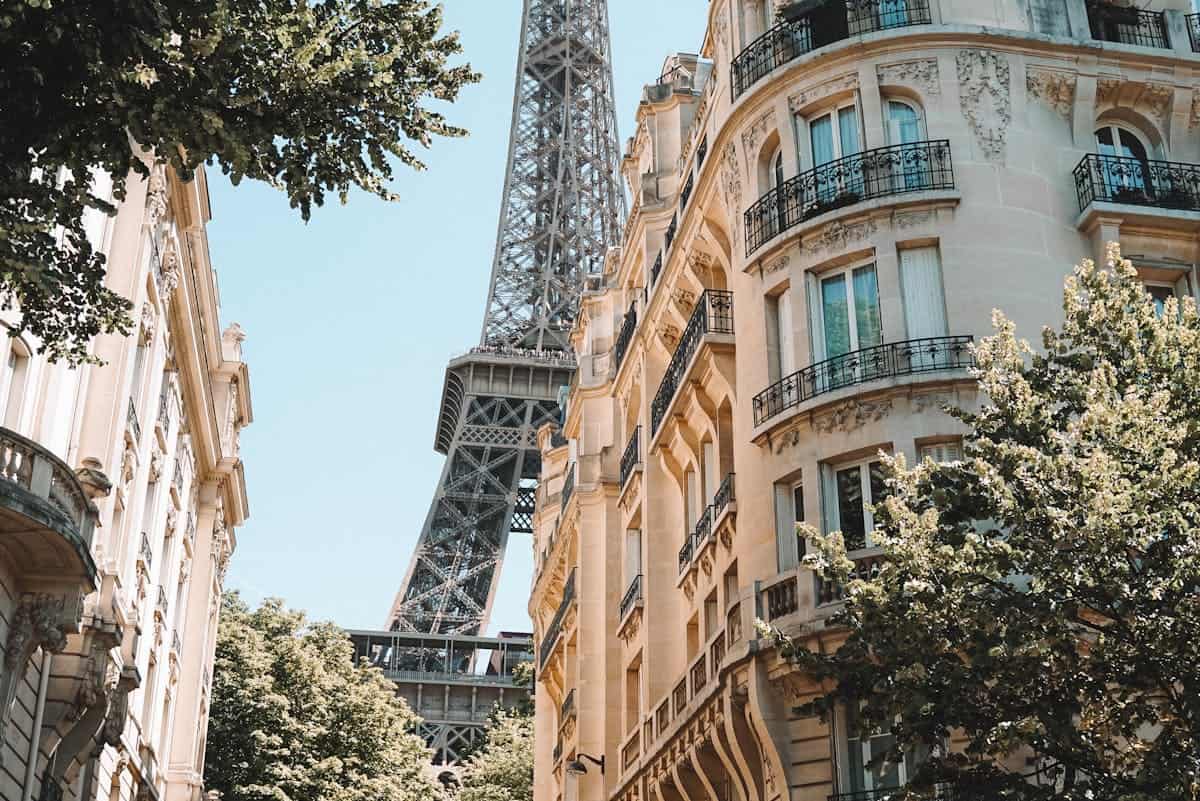
Updated on 26 July 2026
Where you stay in Paris affects everything else about the trip. A hotel in the right neighborhood means shorter walks to the sights, better dinner options within reach, and a genuine sense of the city rather than a commute through it. A hotel in the wrong one means time and energy spent getting to where you actually want to be.
For a first visit, the choice matters more than it might on a return trip, when you already know the city and can navigate it efficiently. This guide covers the areas that work best for first-time visitors: what each one is like, what makes it a good base, and who it suits.
- Best Area by Traveler Type
- Quick Decision Guide
- What to Think About Before Choosing
- The Marais (4th Arrondissement): Best Overall Base for First-Timers
- Saint-Germain-des-Prés and the 7th Arrondissement: Classic Left Bank
- The Latin Quarter (5th Arrondissement): Good Value in the Historic Heart
- Around the Eiffel Tower (7th Arrondissement): For Families and Tower Prioritizers
- Opéra and the 9th Arrondissement: Practical Central Base
- Canal Saint-Martin (10th Arrondissement): For Those Who Want Local Paris
- Areas to Avoid for a First Stay
- Practical Notes on Booking
- The Right Base Makes the Trip
- Download the Paris For You App
A quick note on terminology: Paris is divided into 20 districts called arrondissements, numbered 1 to 20 in a spiral from the historic center outward. In general, lower-numbered arrondissements are closer to the center. Most of the main sights for first-time visitors sit within arrondissements 1 to 9, all on or near the Seine. When people say “stay central,” they mean roughly this zone.
If you want a detailed breakdown of all 20 arrondissements — what to see, what to avoid, and the character of each district — the Paris Arrondissements Guide covers the full picture.
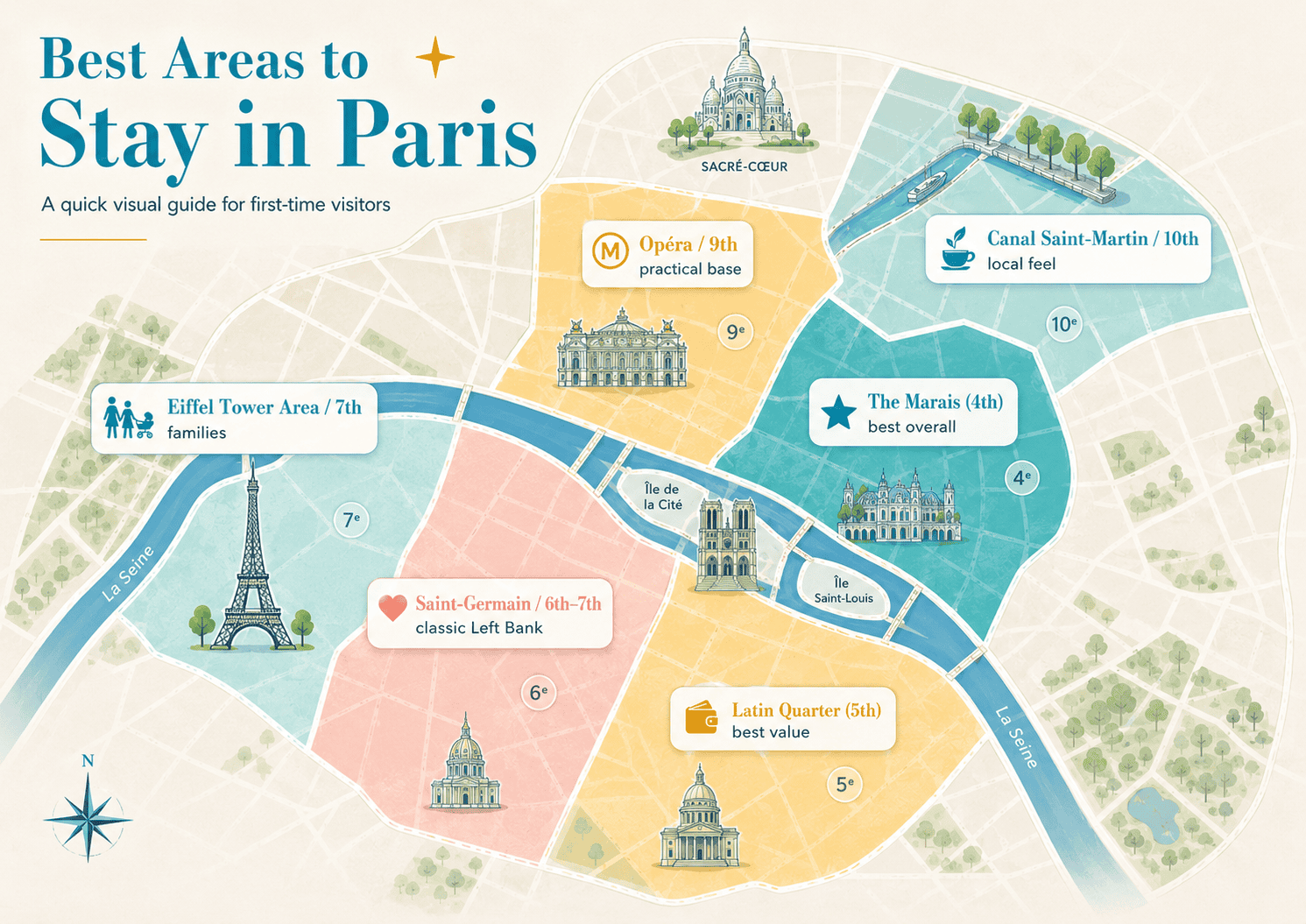
Best Area by Traveler Type
| Traveler type | Best area |
| First-time visitor, 3–5 days | The Marais (4th) |
| First-time visitor, short stay | Latin Quarter (5th) for value; 9th for transport |
| Couples | Saint-Germain (6th–7th) |
| Families with children | 7th arrondissement (Eiffel Tower area) or Marais |
| Budget traveler | Latin Quarter (5th) or Opéra area (9th) |
| Nightlife and restaurants | The Marais (4th) or SoPi, south of Pigalle (9th) |
| Repeat visitor / local feel | Canal Saint-Martin (10th) |
| Luxury stay | Saint-Germain (6th) or 1st arrondissement |
Explore 100+ places in Paris with one offline map built for real trips, not random saved pins.
Quick Decision Guide
| Area | Best for | Trade-off |
| The Marais (4th) | First-timers who want central, walkable, lively | Busy on weekends; some tourist pricing |
| Saint-Germain (6th–7th) | Couples, those who want calm and classic Paris | Higher prices; quieter at night |
| Latin Quarter (5th) | Budget-conscious, students, curious explorers | Noisier streets; some tourist-heavy pockets |
| Around the Eiffel Tower (7th) | Families; those prioritizing the tower | Less nightlife; quieter neighborhood feel |
| Opéra / 9th arrondissement | Shoppers, good transport links, mid-range budget | Less atmospheric than the historic center |
| Canal Saint-Martin (10th) | Return visitors, independent travelers, local feel | Further from main sights; best on longer trips |
What to Think About Before Choosing
A few questions that narrow the decision quickly:
How long are you staying? For a short trip (2–3 nights), being close to the main sights matters more. For a longer trip (5+ days), you’ll cover the city regardless, so a quieter or more local neighborhood becomes more appealing.
What’s your budget? Central Paris (1st, 4th, 6th, 7th arrondissements) is significantly more expensive for accommodation than slightly further out (9th, 10th, 11th). The trade-off is commute time vs. cost.
What will you be doing in the evenings? Some neighborhoods (the Marais, the 9th) have a strong evening energy — good restaurants, bars, people on the streets until late. Others (the 7th, parts of the 6th) are quieter after dinner. Neither is wrong, but it’s worth knowing which suits you.
Are you traveling with children? The 7th arrondissement (Eiffel Tower area) and the Marais are both family-friendly — manageable streets, plenty of parks, and good food options. The Latin Quarter’s liveliness works less well for early bedtimes.
The Marais (4th Arrondissement): Best Overall Base for First-Timers
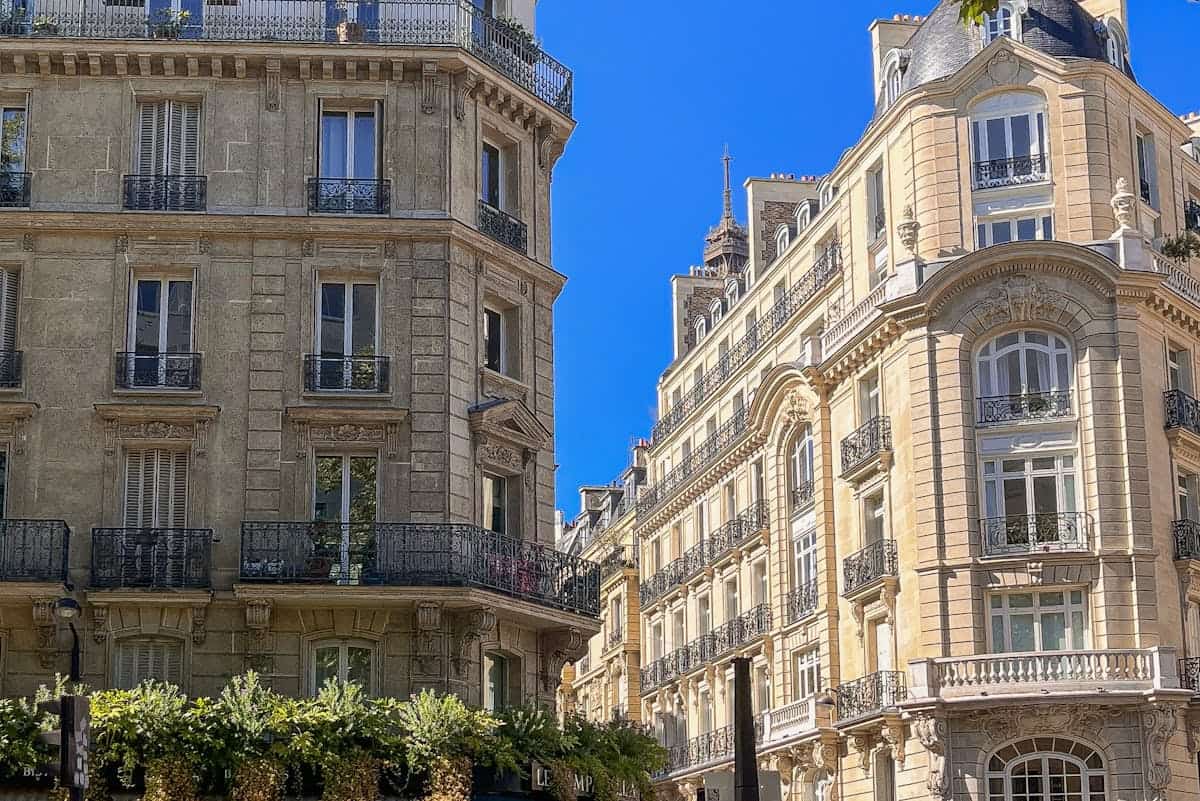
For most first-time visitors, the Marais is the strongest all-round choice. It sits at the heart of central tourist Paris, within walking distance of Notre-Dame, Sainte-Chapelle, and the Seine, with good Métro links to the Louvre and the Eiffel Tower.
But what makes it genuinely good as a base isn’t just the proximity to sights — it’s the neighborhood itself. The Marais has a distinct character: medieval streets, elegant squares, galleries and independent shops, a strong food scene, and an energy that’s lively without being overwhelming. It’s the kind of place where the walk back to the hotel is as enjoyable as the walk out.
What you’re close to
- Place des Vosges — Paris’s oldest planned square, 5 minutes on foot from most Marais hotels
- Notre-Dame — 15–20 minutes on foot across the river
- Sainte-Chapelle — 20 minutes on foot
- The Louvre — around 25 minutes on foot depending on your exact hotel, or 10 minutes by Métro
- Pompidou Centre — 10 minutes on foot
What works well
The Marais is walkable, diverse, and has some of the best street food in Paris. Rue des Rosiers (the historic Jewish quarter) is steps away from some of the city’s best falafel. The area around Rue de Bretagne has excellent markets and restaurants. In the evenings, the streets stay lively without becoming loud.
The neighborhood is also genuinely interesting in its own right. The mix of medieval architecture, 17th-century hôtels particuliers (grand private mansions), and contemporary galleries gives it a texture that purely tourist areas lack.
What to be aware of
The Marais is popular, and prices reflect that — both for accommodation and restaurants. On weekends it draws significant crowds, particularly around Place des Vosges and Rue des Rosiers. For a short trip this is barely noticeable; for a longer stay it can become a reason to look slightly further out.
Best for: First-time visitors on a 3–5 day trip who want to be central, walkable, and in a neighborhood with genuine character.
See the Paris TOP15 Must-See Places map here and make your first Paris trip easier from the start.
Saint-Germain-des-Prés and the 7th Arrondissement: Classic Left Bank
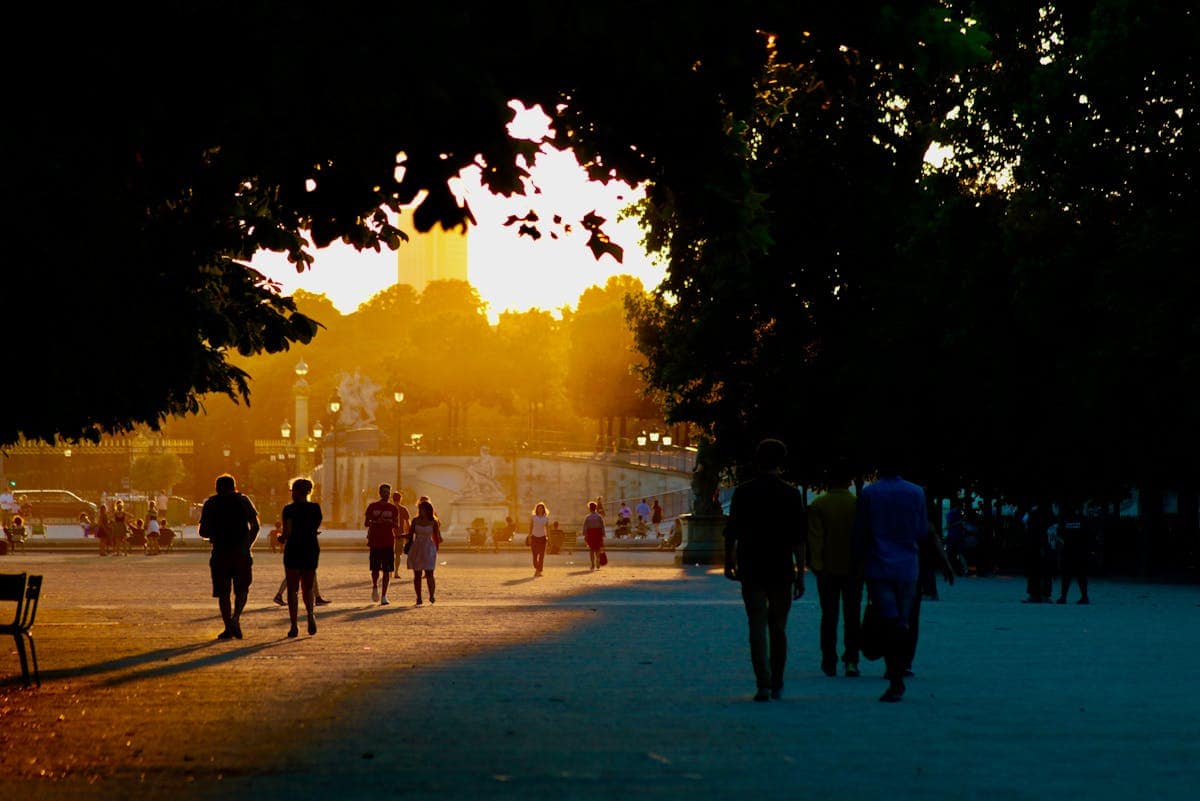
Saint-Germain and the adjacent 7th arrondissement make up what most people imagine when they picture Paris — elegant boulevards, literary cafés, the Seine visible from the end of the street. It’s the part of the city that matches the postcard most closely.
This area suits visitors who want a quieter, more refined base. The Musée d’Orsay is a short walk; the Eiffel Tower is 20–25 minutes on foot; the Luxembourg Garden is nearby for an easy morning. The restaurant scene is reliable and consistently good, though it rewards booking ahead.
What you’re close to
- Musée d’Orsay — 10 minutes on foot from most Saint-Germain addresses
- Hôtel des Invalides and Napoleon’s Tomb — 15 minutes
- Eiffel Tower — 20–25 minutes on foot depending on your exact location
- Luxembourg Garden — 10 minutes
- The Louvre — 25 minutes on foot across the river
What works well
The Left Bank has a different pace from the Marais — calmer streets, bookshops, a neighborhood feeling that persists even in tourist season. The historic cafés (Café de Flore, Les Deux Magots) are genuinely worth sitting in once, not for the coffee but for the experience of being in Paris at a measured pace.
For couples, this area consistently works well. The evenings are pleasant, the accommodation quality tends to be high, and the neighborhood doesn’t require planning — you can simply walk and find something good.
What to be aware of
Saint-Germain is one of the more expensive neighborhoods for accommodation. It’s also quieter after dinner than the Marais or the 9th, which suits some travelers and not others. Getting to Montmartre or the Marais requires the Métro, adding 20–30 minutes each way to those parts of the itinerary.
Best for: Couples, those who want calm and elegance over buzz, visitors who prioritize the Left Bank sights (Orsay, Invalides, Eiffel Tower), and travelers on a longer trip who want a quiet retreat.
Time matters when you travel. Paris For You app brings essential Paris information together in one simple app.
The Latin Quarter (5th Arrondissement): Good Value in the Historic Heart
The Latin Quarter sits on the Left Bank around the Sorbonne university, and has been a center of Parisian intellectual and student life for centuries. The neighborhood is dense, lively, and significantly more affordable than Saint-Germain or the Marais.
For first-time visitors on a tighter budget, it’s a strong option. It’s well-placed — close to Notre-Dame and the river, with good Métro links — and has an energy that’s genuinely Parisian rather than curated.
What you’re close to
- Notre-Dame — 10–15 minutes on foot
- The Pantheon — 10 minutes on foot
- Rue Mouffetard market street — in the neighborhood
- Jardin des Plantes — 15 minutes on foot
- Musée d’Orsay — 20 minutes on foot
What works well
The Latin Quarter has a high density of restaurants, cafés, and bars at prices below what you’d find in the Marais or Saint-Germain. Rue Mouffetard is one of the city’s best market streets — good for a slow morning browse and a picnic lunch. The neighborhood is lively at night without being as centrally crowded as the Marais on a summer weekend.
What to be aware of
Some parts of the Latin Quarter, particularly around Rue de la Huchette near Notre-Dame, are heavily tourist-focused with predictable menus and tourist-trap restaurants. Staying in the Latin Quarter while eating there is a mistake worth avoiding. Move a few streets away from the river and the quality improves immediately.
Best for: Budget-conscious travelers, students, visitors curious about the historic Left Bank who want to stay closer to the action at a lower price point.
Around the Eiffel Tower (7th Arrondissement): For Families and Tower Prioritizers
Staying in the 7th, close to the Eiffel Tower, makes sense for a specific type of visitor: families with children, those for whom the tower is the central experience of the trip, or people who want a quieter, more residential base with a genuinely iconic address.
The neighborhood around the tower is elegant and calm — wide streets, good parks (Champ de Mars is enormous and well-maintained), and a residential quality that means fewer late-night crowds. The trade-off is distance from the other main sights and a more limited restaurant scene compared to the Marais or Saint-Germain.
What works well
Waking up within walking distance of the Eiffel Tower is a genuinely good thing on a first Paris trip. The tower looks different at different times of day, and being able to see it lit up at night without commuting is one of those small pleasures that a longer-distance stay removes. The Champ de Mars park is also excellent for families — large, flat, and easy for children to run around in without supervision.
What to be aware of
The 7th is one of the quieter arrondissements in the evening. For travelers who want a lively neighborhood with good restaurant choice within easy walking distance, it’s not the right base. Getting to the Marais, Montmartre, or the Latin Quarter requires the Métro.
Best for: Families with young children, travelers for whom the Eiffel Tower is the emotional center of the trip, those who want a quieter base.
Opéra and the 9th Arrondissement: Practical Central Base
The 9th arrondissement, centered around the Palais Garnier (Opéra Garnier) and the grands magasins (Galeries Lafayette, Printemps), is a practical choice rather than an atmospheric one. It’s central, extremely well-served by Métro, and tends to have more accommodation at mid-range prices than the historic core.
It’s also home to SoPi (South Pigalle) — a neighborhood of independent restaurants, bars, and a genuinely local energy that has developed in the last decade. For visitors who want to eat and drink well at reasonable prices, this end of the 9th is worth exploring.
What works well
Transport is the 9th’s strongest argument. Multiple Métro lines intersect here, making anywhere in Paris reachable in 15–20 minutes. For visitors planning to cover a lot of ground — Versailles, Montmartre, the Marais, the Eiffel Tower — a central transport hub is a genuine advantage. Accommodation prices are noticeably lower than in the 4th or 6th for equivalent quality.
What to be aware of
The area immediately around the grands magasins is busy and commercial. It doesn’t have the neighborhood character of the Marais or Saint-Germain, and it’s less pleasant to walk around in than those areas. The better parts of the 9th are a few streets south, toward SoPi.
Best for: Value-focused travelers who want good Métro access and don’t need the hotel to be in a particularly beautiful neighborhood.
Canal Saint-Martin (10th Arrondissement): For Those Who Want Local Paris
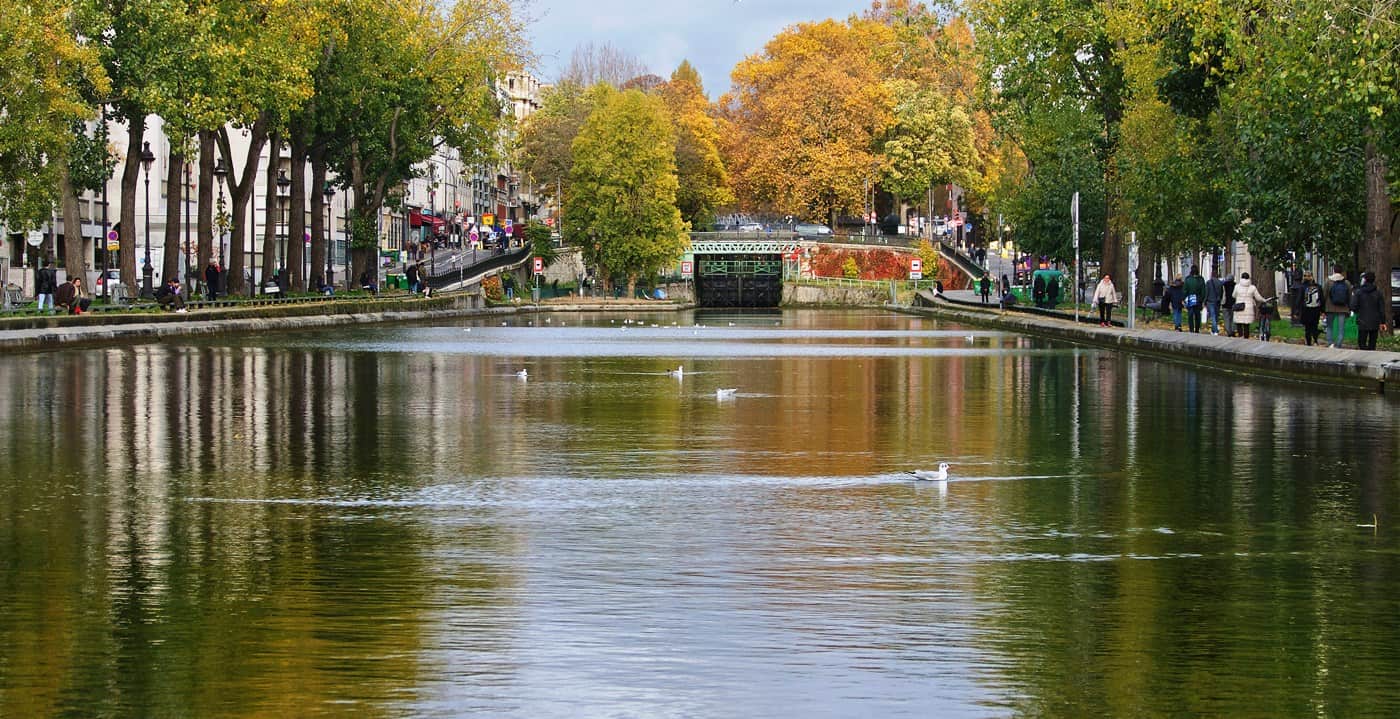
Canal Saint-Martin is worth mentioning, though honestly it works better as a neighborhood to visit than as a base for a first trip. It’s one of the best parts of Paris to understand how the city lives when it’s not performing for visitors — tree-lined canal, working locks, good independent cafés, a genuinely local weekend atmosphere.
But it’s further from the main sights than the areas above, and on a short first trip, commuting 20–25 minutes to get to Notre-Dame or the Louvre is time that adds up. It suits visitors on longer trips (5–7 days) who have already seen the main sights or are returning to Paris.
Best for: Return visitors, independent travelers on a longer stay, anyone who specifically wants to be in a local Parisian neighborhood rather than a tourist-facing one.
Areas to Avoid for a First Stay
A few things worth knowing to narrow the search from the other direction:
Far from the center. Arrondissements 13–20 are large, often interesting in their own right, but require a significant Métro commute to the main sights. For a first trip, that commute compounds every day. Stay central (1st–9th) and explore the outer neighborhoods on day trips.
Near Gare du Nord and Gare de l’Est. These major stations have accommodation at competitive prices, but the surrounding area is busy, noisy, and not particularly pleasant to be based in. Good for an early train departure; not good as a base for several days. If you’re arriving by Eurostar, Thalys, or another international train, it’s worth taking the Métro south to your hotel rather than staying in the station area.
The immediate vicinity of major sights. Hotels within 200 meters of the Eiffel Tower or Notre-Dame tend to charge a premium for the location. Staying 10 minutes further away, in the Marais or Saint-Germain, often means better accommodation at a similar or lower price.
Practical Notes on Booking
Book early for summer. Paris in June, July, and August is very busy. Accommodation in the Marais and Saint-Germain sells out weeks ahead at reasonable prices. Book as soon as dates are confirmed.
Check Métro proximity. A hotel that’s 10 minutes from the nearest Métro station adds 20 minutes to every cross-city journey. Check walk time to the nearest station before booking, not just the neighborhood.
Read the cancellation policy. Paris hotel policies vary significantly. A non-refundable rate is only worth it if your dates are fixed.
Consider apartment rentals for longer stays. For trips of 5+ days, a rental apartment in the Marais or Latin Quarter often gives more space, a kitchen for breakfasts, and a more genuine sense of living in the city. The trade-off is fewer hotel services and more variable quality.
The Right Base Makes the Trip
For most first-time visitors, the Marais gives the best combination of location, character, and practical value. Saint-Germain and the 7th are excellent if you’re prioritizing calm, the Left Bank sights, or a family-friendly environment. The Latin Quarter offers the same central position at lower prices. The 9th works if transport access and value matter more than neighborhood atmosphere.
Where you don’t want to be is somewhere that requires 30+ minutes of Métro travel to reach the places you came to see. Keep the center as your base and use the Métro to explore the rest.
If you’d like to understand the character of all 20 arrondissements in detail — including which areas to be cautious in and what each district is best known for — the Paris Arrondissements Guide covers the full picture.
Download the Paris For You App
Navigate Paris from the moment you arrive. Offline maps, attraction info, audio guides, and 26 language options — useful in any neighborhood you choose to stay in.
Paris For You app brings together must-see places, themed maps and practical tips in one app. Ideal for first-time visitors and for those who want to explore beyond the obvious.
Download on iPhone
Download on Android


