





Updated on 7 August 2026
Paris is one of the most visited cities in the world, which means it comes loaded with expectations — images from films, recommendations from people who went years ago, and a long list of things you’re supposed to see. Some of those expectations are accurate. Others will surprise you, and a few will turn out to be the opposite of what you imagined.
This guide is for first-time visitors who want to arrive knowing the basics: how the city works, what actually needs booking in advance, how to get around without stress, and where the common mistakes happen. It won’t tell you to see everything. It’ll help you figure out what’s worth your particular time.
- What Paris Is Actually Like
- When to Go
- How Long Do You Need?
- What to Book Before You Arrive
- Getting to Paris
- Getting Around Paris
- Neighborhoods Worth Knowing
- Money and Costs
- Language
- Eating in Paris
- Common Mistakes on a First Paris Trip
- What Not to Miss on a First Visit
- What You Can Skip
- Practical Information
- Planning Your Trip
- The Best First Trip to Paris
- Download the Paris For You App
What Paris Is Actually Like
A few things that surprise first-time visitors:
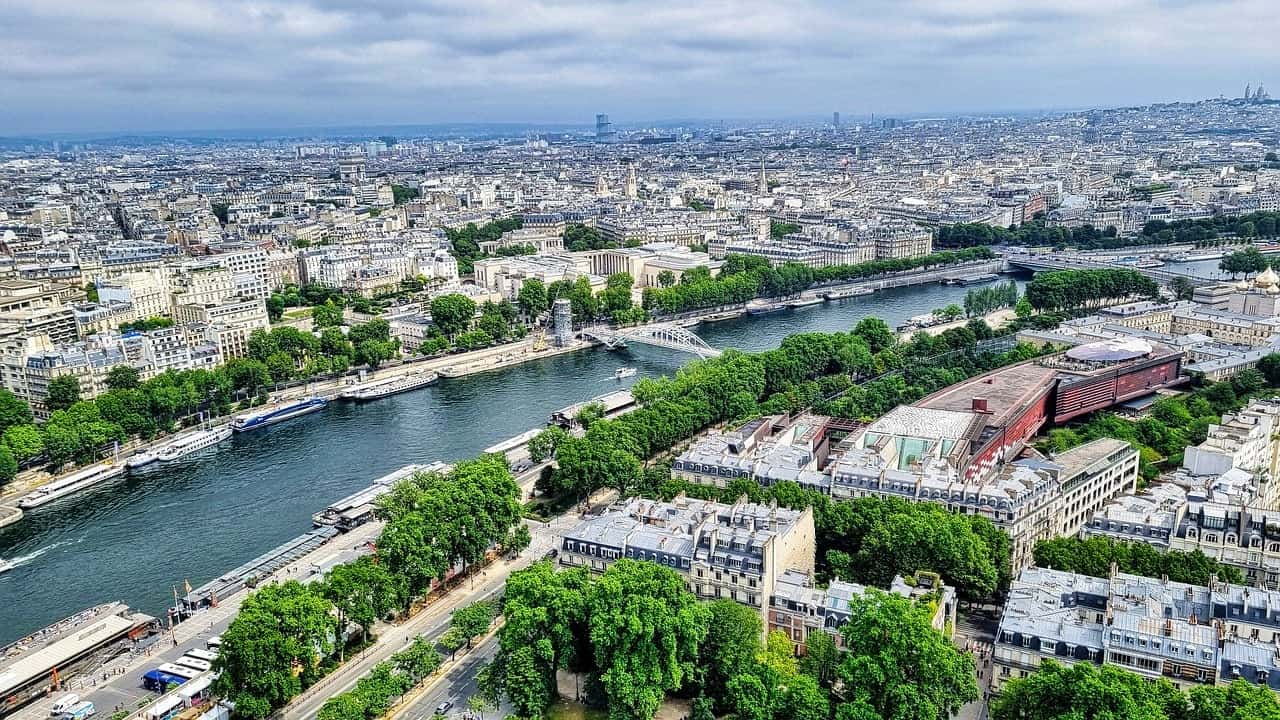
Paris is walkable, but larger than it looks. The city has 20 arrondissements arranged in a spiral from the center. The main tourist sights cluster in the middle, but walking from the Eiffel Tower to the Marais takes about an hour at a comfortable pace. Plan for more walking than you expect, and use the Métro when you’re covering serious distance.
The city is densest with sights in a fairly small area. Most of what first-time visitors want to see sits within a zone roughly bounded by the Eiffel Tower to the west, Montmartre to the north, the Marais to the east, and the Left Bank to the south. Staying inside this zone means shorter transfers and more time actually doing things.
Parisians are generally not unfriendly. The reputation is overstated. Making a basic attempt at French — “Bonjour” at the start of any interaction, “Merci” at the end — makes a consistent difference. Most people working in tourism speak workable English and will switch if you need them to.
The weather is variable. Paris doesn’t have a bad season, but it has unpredictable ones. Spring and autumn are generally mild but wet; summer is warm and crowded; winter is quiet, cheaper, and genuinely pleasant if you dress for it. Pack a layer regardless of when you go.
The crowds are real. At the Eiffel Tower, the Louvre, and Versailles especially. The difference between arriving at opening and arriving at midday is the difference between a manageable queue and a 90-minute wait. Book tickets in advance for anything that matters and arrive early.
When to Go
| Season | What to expect |
| Spring (Mar–May) | Mild, can be rainy. Cherry blossoms in April. Crowds build toward May. Good balance of weather and visitor numbers. |
| Summer (Jun–Aug) | Warm and very busy. Long daylight hours. Highest prices. Book everything well in advance. Best for outdoor time along the river and in parks. |
| Autumn (Sept–Nov) | Often the best time to visit. Crowds thin after September, weather stays mild into October. Good light for photography. |
| Winter (Dec–Feb) | Quieter, cheaper, and shorter queues. Christmas markets and lights in December. Cold but manageable. Some outdoor attractions less appealing. |
Paris Fashion Week (February/March and September/October) and major public holidays push accommodation prices up significantly. If your dates are flexible, mid-September to mid-October is consistently one of the most pleasant times to visit.
How Long Do You Need?
The honest answer depends on what you want from the trip. A rough guide:
- 2 days — enough to see the Eiffel Tower, walk the river, visit Sainte-Chapelle, and spend an afternoon in one neighborhood. A good introduction; not enough to feel like you know the city.
- 4 days — the practical minimum for covering the main sights without rushing. Enough for the tower, the Louvre, Notre-Dame, the Marais, and Montmartre, with evenings to spare.
- 5–7 days — the sweet spot for a first visit. Enough for the essentials, a day trip to Versailles or Giverny, and time in neighborhoods that don’t appear on every itinerary.
- More than a week — suits people who want to slow down, explore beyond the center, or use Paris as a base for day trips to the Loire Valley, Champagne, or Normandy.
If you’re coming from outside Europe and Paris is a significant journey, leaning toward five days or more makes the travel worthwhile. Three or four nights tends to feel just slightly too short on the way home.
What to Book Before You Arrive

This is the part that makes the most practical difference to a first visit. Some Paris sights have walk-up queues that can cost you 1–2 hours. Others are simply more pleasant when you’ve planned ahead.
Book in advance — essential
- Eiffel Tower — the most important booking on this list. Walk-up queues at peak times can exceed 2 hours. Book the earliest available slot on the official website. Decide in advance how high you want to go: second floor or summit.
- Sainte-Chapelle — the queue here is deceptive. The chapel is small, throughput is slow, and the walk-up line builds quickly. Book online; check current prices on the official website.
- The Louvre — timed entry tickets are available online and skip the main queue. The museum is open Tuesday–Sunday, 9:00–18:00, with late opening on Wednesdays and Fridays until 21:45. Closed Mondays. Verify current hours before you go.
- Versailles — if you’re going, book well in advance. The palace is one of the most visited sites in France and the queues reflect that. Combination tickets covering the palace and gardens offer better value than buying separately.
Worth booking, not strictly essential
- Notre-Dame — entry to the cathedral is free, but pre-booking a time slot saves queuing time, particularly in summer and around midday. The towers require a separate ticket.
- Musée d’Orsay — timed entry available online. Less critical than the Louvre but useful in high season.
- Popular restaurants — Paris bistros at dinner fill quickly, especially on weekends. If you have somewhere specific in mind, book 24–48 hours ahead.
No booking needed
- Montmartre and Sacré-Cœur — the basilica is free to enter and has no timed entry.
- The Marais — a neighborhood, not an attraction. Just show up.
- Tuileries Garden and Luxembourg Garden — public parks, open daily.
- Seine riverbank walks — free and accessible at any time.
Want the classic Paris sights without jumping between ten tabs? Take a look at this map.
Getting to Paris
By air
Paris has two main airports: Charles de Gaulle (CDG) to the northeast, and Orly (ORY) to the south. CDG handles the majority of international flights.
From CDG to central Paris:
- RER B train — the most straightforward option. Runs every 10–15 minutes and reaches Gare du Nord, Châtelet–Les Halles, and Saint-Michel in 35–45 minutes. Buy tickets at the airport stations; check current prices before you travel.
- Roissybus — direct coach to Opéra, roughly 60–75 minutes depending on traffic. Good if your hotel is near the Right Bank center.
- Taxi — fixed fares apply from CDG to central Paris (Right Bank and Left Bank have different rates). Check current fixed fares on the official Paris taxi website. Faster than the train in off-peak hours; slower and more expensive during rush hour.
From Orly to central Paris:
- Orlyval + RER B — automated shuttle to Antony station, then RER B into the center. Takes about 35–40 minutes total.
- Orlybus — coach to Denfert-Rochereau. Roughly 30–45 minutes.
- Taxi — fixed fares also apply from Orly.
By train
Paris is well connected by high-speed rail. Eurostar from London St Pancras takes about 2 hours 20 minutes to Gare du Nord. Thalys connects Amsterdam and Brussels. TGV services run to most major French cities and beyond. Booking in advance on Eurostar or SNCF usually gets better prices.
Getting Around Paris
The Métro
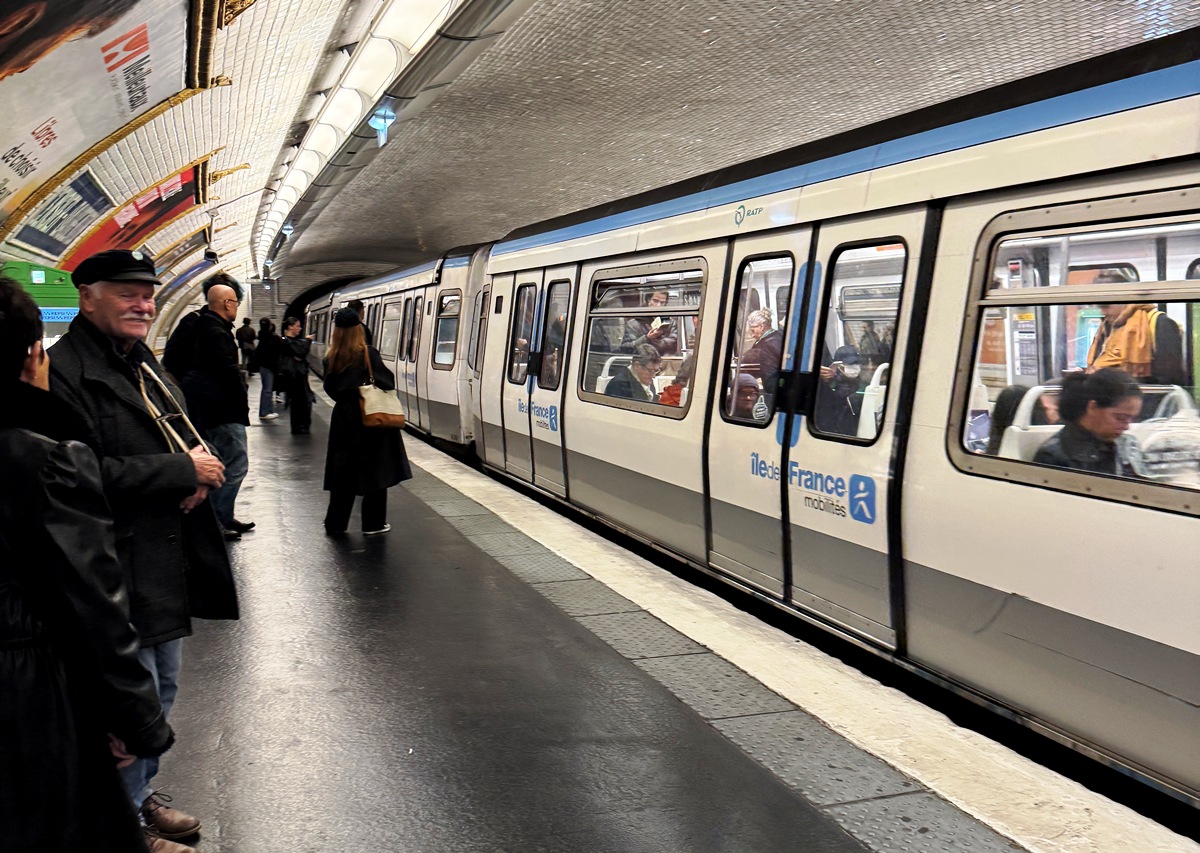
The Paris Métro has 16 lines covering the city comprehensively. It runs from around 5:30 AM to 1:15 AM on weekdays, and until 2:15 AM on Fridays, Saturdays, and the nights before public holidays. For most visitors, it’s the fastest way to move between neighborhoods.
- Single t+ ticket — valid for one journey on the Métro, including transfers. Buy in carnet (book of 10) for a better rate, or individually. Check current prices at any Métro station or on the RATP website.
- Navigo Easy — a reloadable card that holds individual tickets. Avoids paper tickets and works across Métro, RER (within zones 1–2), bus, and tram.
- Navigo Weekly pass — unlimited travel on all zones for a week (Monday–Sunday). Worth it if you’re staying five days or more and plan to use the Métro regularly. Requires a passport photo.
One practical note: validate your ticket every time you enter a station, even if the barriers are open. Inspectors check regularly and the fine is not negotiable.
Walking
Many of the main sights are close enough to walk between, and Paris at walking pace reveals things the Métro doesn’t. The river walk from the Eiffel Tower toward the Marais, the streets around the Marais itself, and the approach to Montmartre from the south are all better on foot than underground. Use the Métro for longer distances and when you’re behind schedule; walk when you have time.
Bus
The bus network covers areas the Métro doesn’t and gives you a view of the city in a way the underground can’t. Lines 69, 72, and 96 pass through particularly good stretches. Slower than the Métro but worth it if you have time. The same tickets work on buses as on the Métro.
Taxi and rideshare
Taxis are metered (or fixed-fare from airports) and generally reliable. Uber and Bolt operate in Paris and often have shorter wait times than street taxis during busy periods. For trips across the city at rush hour, the Métro is almost always faster. For late nights or airport runs with luggage, a taxi or rideshare is worth it.
Cycling
Vélib’ is Paris’s bike-share system with docking stations across the city. A short-term subscription gives access to mechanical bikes; electric bikes cost slightly more per ride. Good for flat stretches and riverside paths. Less suitable for navigating busy central streets if you’re not comfortable cycling in traffic.
Neighborhoods Worth Knowing
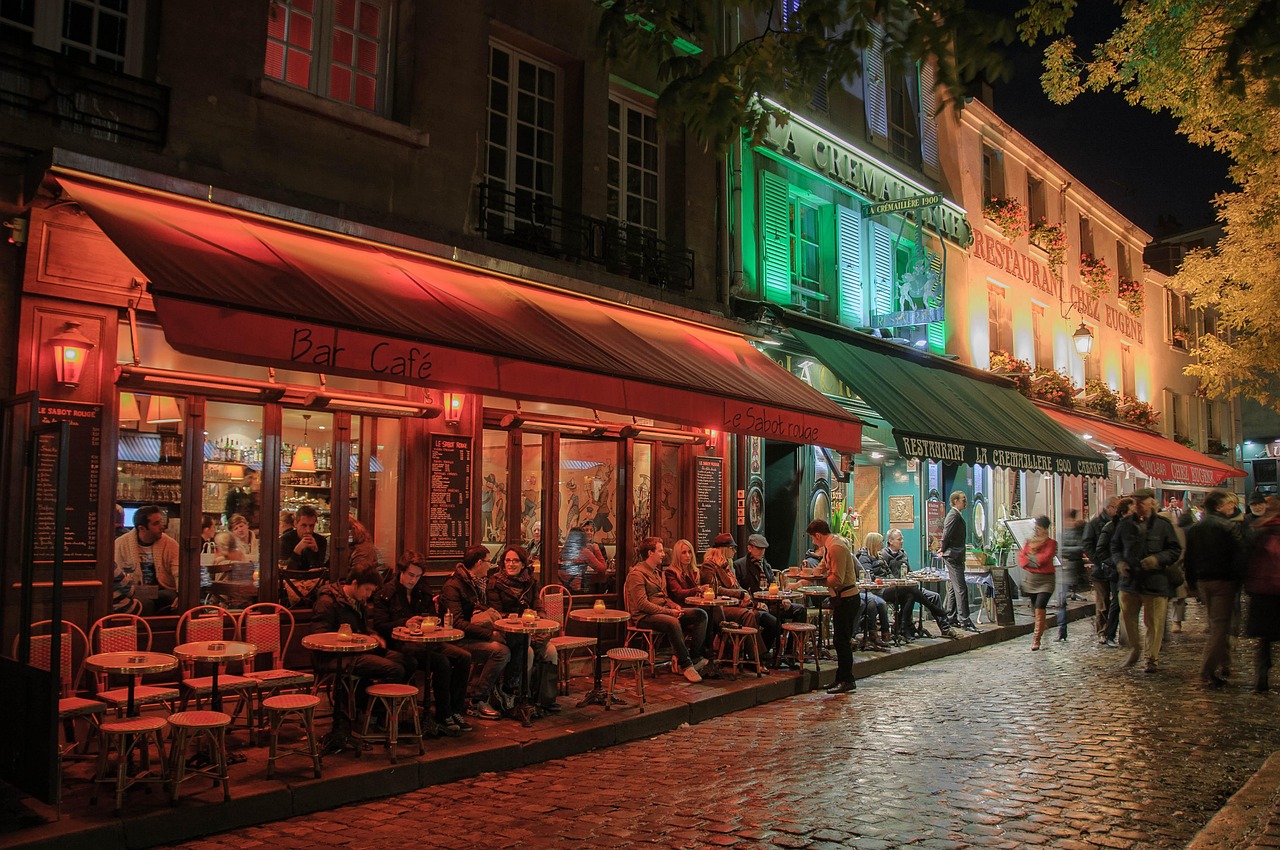
Paris has 20 arrondissements, each with its own character. For a first visit, a handful matter most.
The Marais (3rd and 4th arrondissements)
One of Paris’s best-preserved medieval neighborhoods, now layered with galleries, independent shops, and some of the city’s best street food. Place des Vosges is here — Paris’s oldest planned square. So is Rue des Rosiers, the heart of the historic Jewish quarter. The Marais is compact enough to explore without a fixed plan and consistently rewards wandering. Browse hotels in the Marais on Booking.com.
Saint-Germain-des-Prés (6th arrondissement)
The classic Left Bank — literary cafés, good bookshops, and some of Paris’s most reliable traditional bistros. Well-placed for the Musée d’Orsay and Luxembourg Garden. More expensive than some neighborhoods but consistently pleasant for an evening. See hotel options in Saint-Germain-des-Prés.
Montmartre (18th arrondissement)
A hilltop village neighborhood with a fundamentally different feel from central Paris. Sacré-Cœur at the top, then the quieter streets around Rue Lepic below — cafés, a weekend market, a pace that slows down noticeably. The area around Place du Tertre is tourist-heavy; the streets one or two blocks away are not. Browse hotels in Montmartre.
Canal Saint-Martin (10th arrondissement)
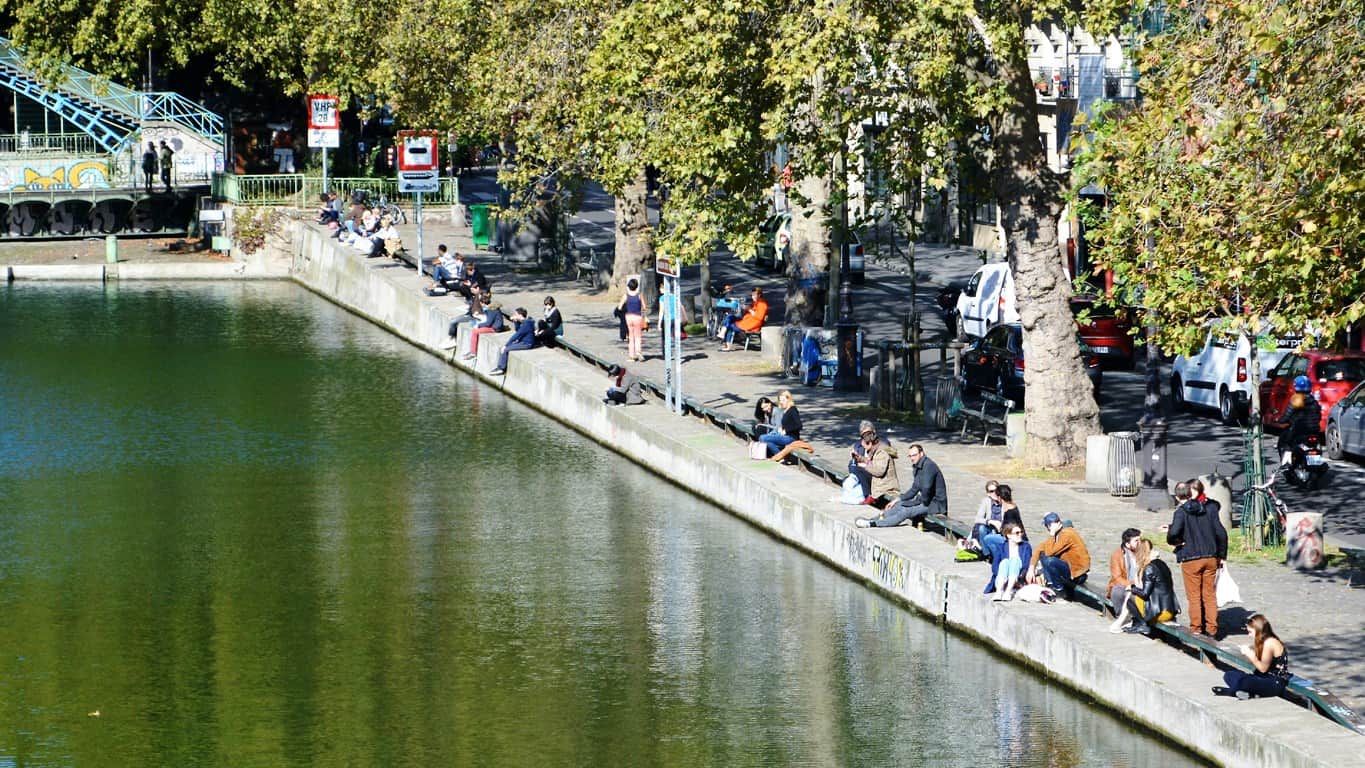
A tree-lined waterway where boats navigate working locks and locals sit along the banks on weekends. One of the best places in Paris to understand how the city operates when it’s not performing for visitors. Good independent cafés, less tourist infrastructure, and a noticeably different energy from the center. See hotel options around Canal Saint-Martin.
Île de la Cité and Île Saint-Louis (1st and 4th arrondissements)
The two islands in the middle of the Seine. Île de la Cité is historic and dense with sights: Notre-Dame, Sainte-Chapelle, and the Conciergerie. Île Saint-Louis, directly behind it, is quieter and almost entirely residential — a handful of restaurants, the famous Berthillon ice cream, and a pace unlike anywhere else in central Paris. Browse hotels near Île de la Cité on Booking.com.
Getting around Paris is easier when you know where to go. Paris For You app helps you find key sights, hidden corners and clear routes without endless searching.
Money and Costs
Paris has a reputation for being expensive. It can be, particularly near major sights. But it doesn’t have to be.
Rough daily budget per person, excluding accommodation:
- Budget (€50–70) — Museum entries (many are free the first Sunday of the month), market lunches, street food, a sit-down dinner in a neighborhood away from the center.
- Mid-range (€80–150) — One or two paid museum entries, lunch at a brasserie, dinner at a proper bistro with wine.
- Higher (€150+) — Multiple paid sights, lunch and dinner at recommended restaurants, taxis rather than the Métro.
A few consistent ways to spend less:
- Eat lunch rather than dinner at better restaurants — the same kitchen, often the same menu, at significantly lower prices on a weekday lunch formula.
- Picnic in a park — a baguette, cheese, and wine from a nearby shop, eaten in the Luxembourg Garden or along the Seine, costs a fraction of a sit-down meal and is a genuinely Parisian thing to do.
- Free museum days — national museums are free the first Sunday of each month. The Louvre, Musée d’Orsay, and others are included. Expect larger crowds on these days.
- Walk — the Métro adds up. Many of the best parts of Paris are free to be in.
Card payments are widely accepted across Paris, including on the Métro. Having some cash is useful for smaller markets and a few older bistros, but you rarely need large amounts.
Paris for FREE: 50 free places to explore in Paris
Language
French is the language. English is widely spoken in tourist areas, hotels, and most restaurants. The gap in experience between visitors who make no attempt at French and those who start with “Bonjour” and end with “Merci” is real and consistent.
A short practical vocabulary covers most situations:
| French | When to use it |
| Bonjour | Start of any interaction — entering a shop, addressing a waiter, asking for help |
| Merci | Thank you |
| S’il vous plaît | Please — ordering, asking for something |
| L’addition, s’il vous plaît | The bill, please |
| Parlez-vous anglais ? | Do you speak English? — opens the door politely |
| Excusez-moi | Excuse me — getting past someone, getting attention |
| Un café, s’il vous plaît | An espresso, please — a café in France is an espresso by default |
Eating in Paris
Eating well in Paris is not difficult. Eating badly is also surprisingly easy if you stay near the main sights. The single most reliable rule: walk one or two streets away from any major tourist attraction before choosing a restaurant.
What to eat
- Croissant and coffee in the morning — from a bakery (boulangerie), not a café near a museum. The difference in quality is significant.
- Steak frites — the reliable French bistro standard. When it’s done well, it’s hard to beat.
- Onion soup (soupe à l’oignon) — a Paris classic, particularly good in autumn and winter.
- Falafel on Rue des Rosiers — L’As du Fallafel is the best-known stop, and for good reason.
- Cheese — from a fromagerie, not a supermarket. Ask what’s good; they’ll tell you.
- Wine — house wine in a bistro (pichet or verre) is almost always decent and significantly cheaper than a bottle.
Where to eat
A brasserie is open all day and good for straightforward French food at any hour. A bistro is smaller, usually more personal, and tends to have a shorter menu that changes. A restaurant gastronomique is a more formal experience and requires a reservation, sometimes weeks in advance.
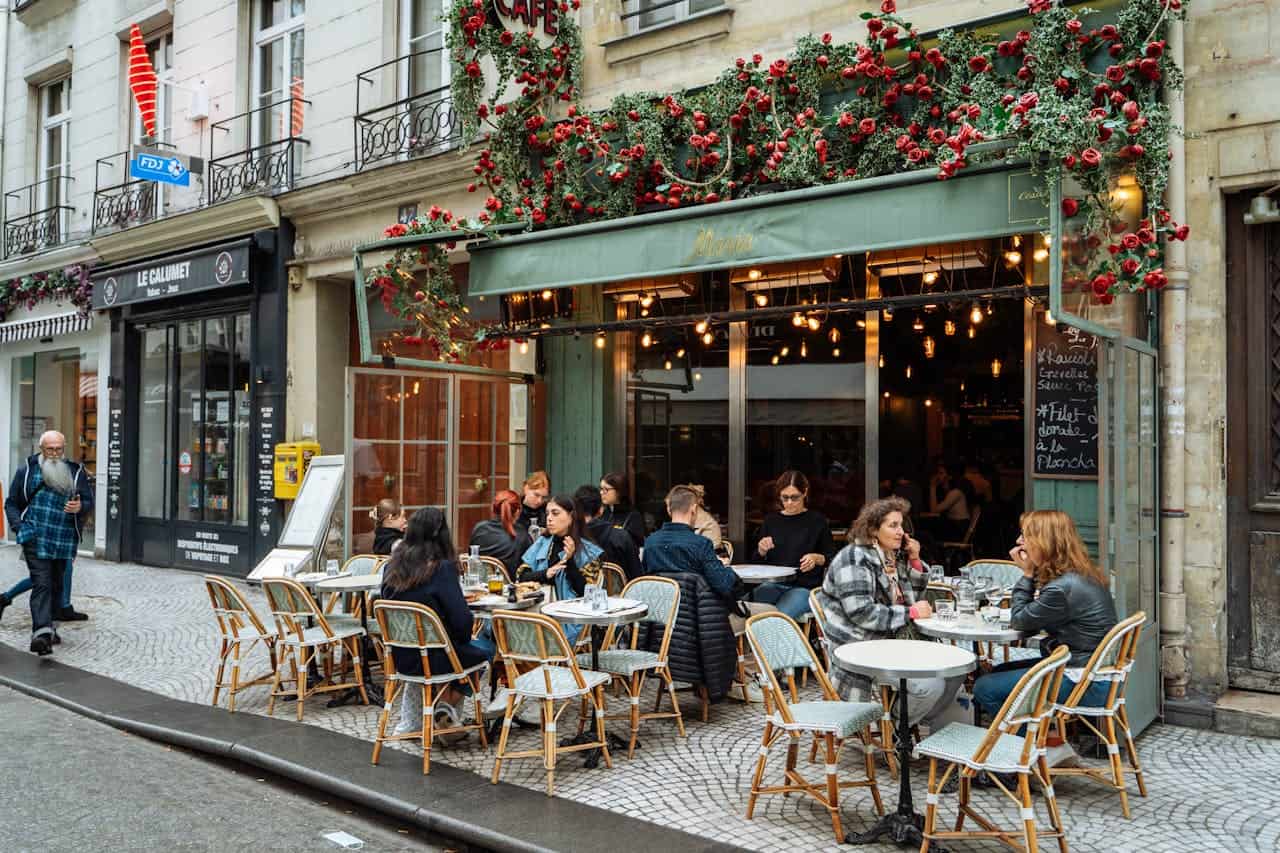
For first-time visitors, the bistro is the right default. Look for handwritten menus or small chalkboard specials — a sign that the kitchen is working with what’s fresh rather than running a tourist menu.
Meal times
Lunch is typically noon–14:00. Dinner service begins around 19:00–19:30. Arriving at a restaurant at 18:00 looking for dinner will confuse the staff. Many kitchens close between lunch and dinner; if you’re hungry at 16:00, a brasserie or café is the answer.
Common Mistakes on a First Paris Trip
Not booking tickets in advance. The Eiffel Tower, Sainte-Chapelle, and the Louvre all have significant walk-up queues. Arriving without tickets is the most common reason first-time visitors lose hours. Book before you arrive.
Planning too much. Paris looks manageable on paper and is exhausting in practice. Two large museums in one day leaves you too tired to enjoy either. One anchor sight per morning, one neighborhood per afternoon, one good dinner — that rhythm works. More than that starts to feel like a checklist.
Eating near the main sights. Restaurants within 200 meters of the Eiffel Tower, Notre-Dame, or the Louvre charge more and deliver less. This is consistent enough to be a rule. Walk one street away.
Skipping the neighborhoods. The monuments are worth seeing. But the parts of Paris that stay with most visitors are the neighborhoods — a square in the Marais that felt centuries old, a canal-side café in the 10th, a view from Montmartre at the end of a day. Build neighborhood time into every day, not just what’s left over.
Trying to do Versailles on a short trip. Versailles is a full-day commitment. If your Paris trip is three days or fewer, using one of them on Versailles means arriving back in the city exhausted with one evening left. Save it for a longer visit.
Ignoring the Métro. Walking is good. Walking 5 km between sights when you’re already tired is not. The Métro is fast, cheap, and comprehensive. Use it between neighborhoods; walk within them.
Forgetting “Bonjour.” It takes one second and it changes the interaction every time.
What Not to Miss on a First Visit
These are the sights that hold up — things that are genuinely worth your time and that most people are glad they made room for.
- The Eiffel Tower — not because it’s surprising, but because it’s one of those things that’s larger and more affecting in person than any photograph suggests. Go early.
- Sainte-Chapelle — consistently underrated and consistently worth it. The stained glass upper chapel is one of the most beautiful interiors in Paris.
- The Louvre — not all of it. Two or three areas, chosen in advance, at opening. Leave while you still feel good about it.
- Notre-Dame — fully reopened after its restoration. The exterior is remarkable; the interior has been transformed.
- The Marais on foot — no fixed plan, just walking. Place des Vosges, Rue des Rosiers, the streets between them.
- Montmartre at the right time — late afternoon into evening, when the day visitors have left and the neighborhood starts to feel like itself again.
- A meal that lasts — one dinner, booked in advance, somewhere that deserves proper time. Not a famous name necessarily, just somewhere good. Paris is full of them.
Not sure where to start? Use our FREE PARIS TRIP PLANNER to turn everything you just read into a simple day-by-day plan.
What You Can Skip
The Champs-Élysées as a destination. Walk it once for the scale and the Arc de Triomphe at the end. Don’t build an afternoon around it. The street is more impressive to look at than to be on.
The Moulin Rouge. Worth knowing it exists; not worth spending a significant part of an evening on unless the cabaret experience is something you specifically want.
Wax museums and tourist traps near major sights. Self-explanatory.
The Catacombs, on a short trip. Genuinely interesting; also genuinely time-consuming. The queue is long and the visit takes half a day. Better saved for a return visit.
Practical Information
Electricity
France uses Type E plugs (two round pins) at 230V/50Hz. Visitors from the UK need an adapter; visitors from North America need both an adapter and a voltage converter for devices that don’t auto-switch.
Tipping
Service is included in French restaurant bills by law. Tipping is not expected but is appreciated for good service — rounding up or leaving a few euros is common. No need to calculate a percentage.
Emergency numbers
European emergency number: 112 (works from any phone, including without a SIM). Police: 17. SAMU (medical emergency): 15. Pompiers (fire): 18.
Pharmacies
Pharmacies (green cross sign) are common across the city and can handle minor medical issues, recommend over-the-counter treatments, and refer you to a doctor if needed. A useful first stop for minor illness or injury before going to a hospital.
Connectivity
Free WiFi is available in most hotels, many cafés, and at some Métro stations. If you need reliable data throughout the day, a French or EU SIM card is the cheapest option for most visitors; check roaming arrangements with your home provider before you go.
Planning Your Trip
The basics above give you a foundation. From here, the useful next steps are:
- Decide how many days you have and what your priorities are — art-heavy, neighborhood-focused, or a mix.
- Book the Eiffel Tower, Sainte-Chapelle, and the Louvre before anything else.
- Pick a neighborhood to stay in based on where you’ll be spending most of your time. Compare hotels across Paris neighborhoods on Booking.com.
- Leave at least one day without a fixed plan.
If you’d rather keep your route, ticket information, and attraction details in one place instead of switching between tabs mid-trip, the Paris For You app helps you navigate with offline maps, attraction info, audio guides, and 26 language options — useful when you’d rather be looking at Paris than at your phone.
The Best First Trip to Paris
The best first trip to Paris is the one where you see the major things, find at least one neighborhood that feels like yours, eat one meal that was genuinely worth it, and come home already thinking about what you’d do differently with more time.
That’s not a high bar. Paris makes it fairly easy to clear, as long as you plan the parts that need planning and leave the rest open. Start with the basics above, book what needs booking, and let the city do the rest.
Download the Paris For You App
Navigate Paris without switching between browser tabs. Offline maps, attraction info, audio guides, and 26 language options — everything you need for a first visit, in one place.
Make your Paris trip simpler.
Download Paris For You and explore the city like a local.
Download on Android
Download on iPhone


