





Updated on 26 July 2026
A weekend in Paris is a different kind of trip from a week-long holiday. You don’t have time to see everything, and trying to will leave you exhausted and vaguely disappointed. But you do have enough time to see the city properly — to climb the Eiffel Tower, walk the river, spend an afternoon in a neighborhood that feels genuinely Parisian, and have dinner somewhere worth remembering.
The itinerary below is built for 48 hours: two days, one night. It covers the sights that most people come to Paris for, organizes them so you’re not crossing the city unnecessarily, and builds in enough room to slow down. The goal isn’t to maximize the number of places you visit. It’s to finish the weekend feeling like you actually experienced the city.
Quick Answers
Yes — if you’re focused. Two days is enough to see the major landmarks and get a real feel for the city. You won’t see everything, but you’ll see the right things.
The Eiffel Tower, Sainte-Chapelle, and the Louvre all have long walk-up queues. Book all three online before you arrive — it’s the single most effective thing you can do to save time on a short trip.
Anywhere in arrondissements 1–6 puts you within walking or short Métro distance of most sights. The Marais (4th) and Saint-Germain (6th) are both good choices. The 7th, near the Eiffel Tower, works well if the tower is your priority.
Mostly. Each day covers 6–8 km depending on how much you wander. You’ll want the Métro for one or two longer transfers, but most of the route connects naturally on foot.
Trying to visit Versailles. It’s a full-day trip, and using half a weekend on it means arriving back in Paris exhausted with one evening left. Save it for a longer visit.
The Weekend at a Glance
Times are approximate and depend on your pace. The structure matters more than the exact schedule — and a weekend in Paris works best when you leave some room for the unplanned parts.
Day 1
| Time | Where & What |
| 9:30–11:00 | Eiffel Tower — book the first slot in advance |
| 11:00–11:45 | Champ de Mars — sit, coffee, look back at the tower |
| 12:15–13:00 | Sainte-Chapelle — book in advance |
| 13:00—14:00 | Notre-Dame — exterior and interior + Square Jean XXIII |
| 14:00—15:00 | Lunch on Île Saint-Louis or in the Marais |
| 15:00—18:00 | Explore the Marais — Place des Vosges, Rue des Rosiers |
| 19:00+ | Dinner in the Marais or Saint-Germain |
Day 2
| Time | Where & What |
| 9:00–12:00 | The Louvre — focused visit, 2–3 areas maximum |
| 12:00—13:30 | Tuileries Garden + lunch nearby |
| 14:30—16:30 | Montmartre — Sacré-Cœur, Rue Lepic, village streets |
| 17:00—18:30 | Aperitif in Montmartre or back toward the center |
| 19:30+ | Dinner — Montmartre or Saint-Germain |
Day 1: The River and the Islands
The first day follows the Seine from west to east — from the Eiffel Tower through the historic heart of Paris and into the Marais. It’s a natural route that covers a lot of ground without feeling rushed.
Eiffel Tower — 9:30
Book tickets online before you arrive. The tower generally opens at 9:30, with earlier slots available in peak summer — check the official website for current times when you book. Morning is a genuinely different experience from midday — quieter, cooler, and with a quality of light that afternoon visits don’t have.
Decide in advance how high you want to go. The second floor gives an excellent view and shorter queues than the summit; on a clear morning, the top is worth it. Check the official website for current prices and opening hours. Allow 1.5 hours including entry.
Champ de Mars — 11:00
After the tower, walk south into the Champ de Mars and find a spot on the grass. Get a coffee from a nearby kiosk and look back at the tower from ground level. It’s a small thing, but sitting still for ten minutes in Paris is part of the experience — and this is one of the better places to do it.
Sainte-Chapelle — 12:15
Cross to Île de la Cité and visit Sainte-Chapelle before the midday crowds arrive. This small royal chapel is consistently underrated: almost every wall of the upper chapel is stained glass, and when the light comes through those 15 floor-to-ceiling windows, the effect is unlike anything else in Paris.
Book tickets online — the walk-up queue is longer than it looks. Entry is paid; check current prices. Note that the chapel is inside the Palais de Justice and requires going through security, so factor a few extra minutes. Budget about 45 minutes inside.
Notre-Dame — 13:00
Notre-Dame has fully reopened after its restoration and is worth at least an hour — enough to take in both the exterior and the interior. The Gothic façade, the flying buttresses from the square, and the scale and light inside the nave all hold up. Entry to the cathedral is free, but booking a time slot in advance is worth it: queues move reasonably fast, except at peak times in summer and around midday.
After the main entrance, walk around to Square Jean XXIII behind the cathedral. This small square along the river is quieter than the front and gives a good view of the apse and the Seine. It’s often nearly empty before the afternoon tour groups arrive.
Lunch — 14:00
Île Saint-Louis, directly behind Notre-Dame, has a handful of restaurants and the famous Berthillon ice cream — a short walk, particularly good in warm weather. The Marais across the river has a wider choice. Either works; avoid the restaurants immediately adjacent to Notre-Dame, which charge more for the location and deliver less for the price.
The Marais — 15:00
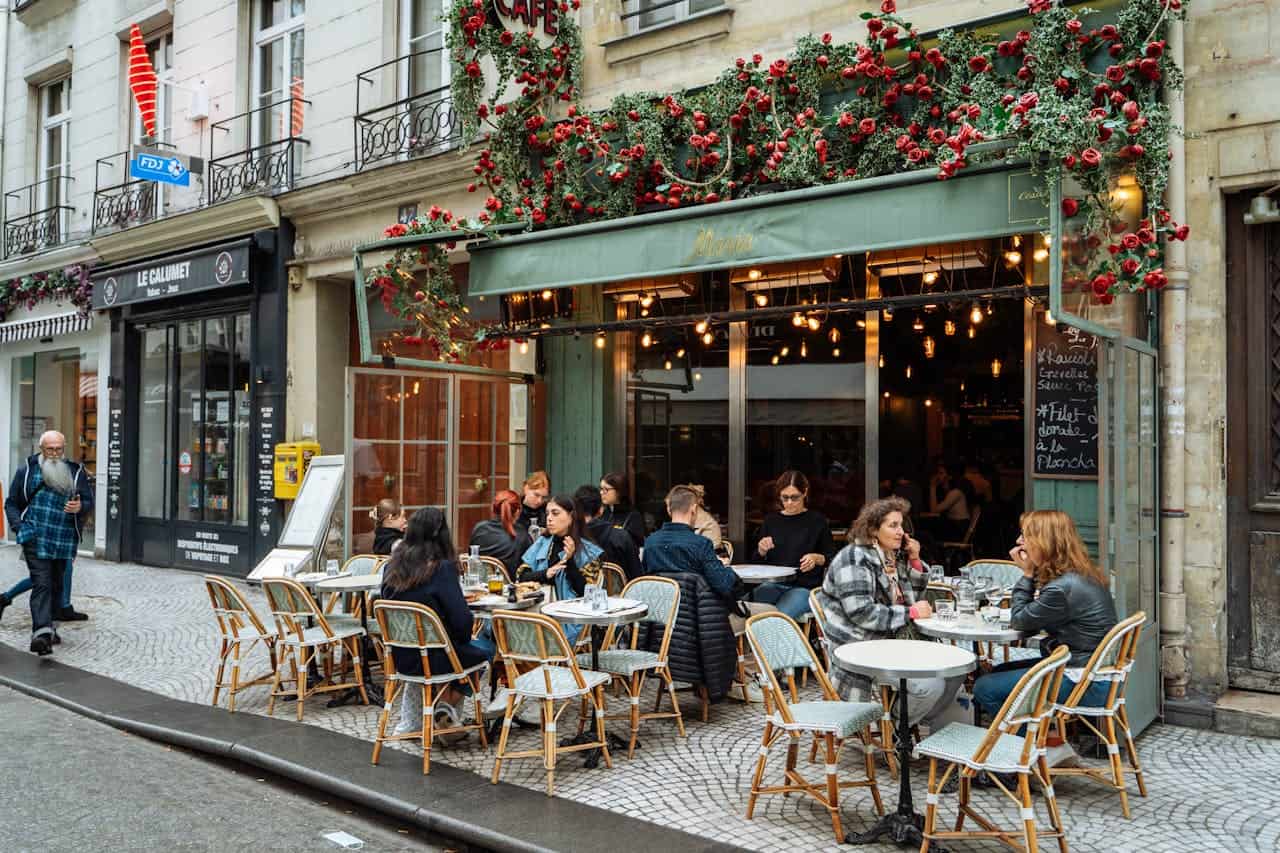
Spend the afternoon in the Marais (4th arrondissement) — one of Paris’s best-preserved medieval neighborhoods, now layered with galleries, independent shops, and some of the city’s best street food. It’s compact enough to explore without a fixed plan.
A few places worth stopping at:
- Place des Vosges — Paris’s oldest planned square. Walk the red-brick arcades, sit in the garden, have a coffee under the arches. Allow 20–30 minutes.
- Rue des Rosiers — the heart of the old Jewish quarter. L’As du Fallafel is the best-known stop here, and for good reason.
- Musée Picasso — if you want a museum stop, this one is manageable in 1.5 hours and has a collection that rewards attention without overwhelming it. Check current prices and hours.
The streets between these points are good for an hour of wandering — vintage shops, bookshops, small galleries, and the kind of neighborhood energy that most tourist areas lack.
Evening
Dinner in the Marais or Saint-Germain. The Marais has a strong restaurant scene around Rue de Bretagne and the northern streets — good food at prices that don’t punish you for sitting in a nice neighborhood. Saint-Germain is better for classic French bistros with handwritten menus and decent house wine. Book in advance if you have somewhere specific in mind.
If you’re still moving after dinner, the Eiffel Tower lights up on the hour after dark. From Pont de Bir-Hakeim or Trocadéro, the view at night is genuinely different from what you saw in the morning.
Time matters when you travel. Paris For You app brings essential Paris information together in one simple app.
Day 2: Art and the Hilltop
The second day moves from the world’s largest art museum to one of Paris’s most distinctive neighborhoods. The contrast is intentional — the Louvre is dense and intense, and Montmartre is the right antidote.
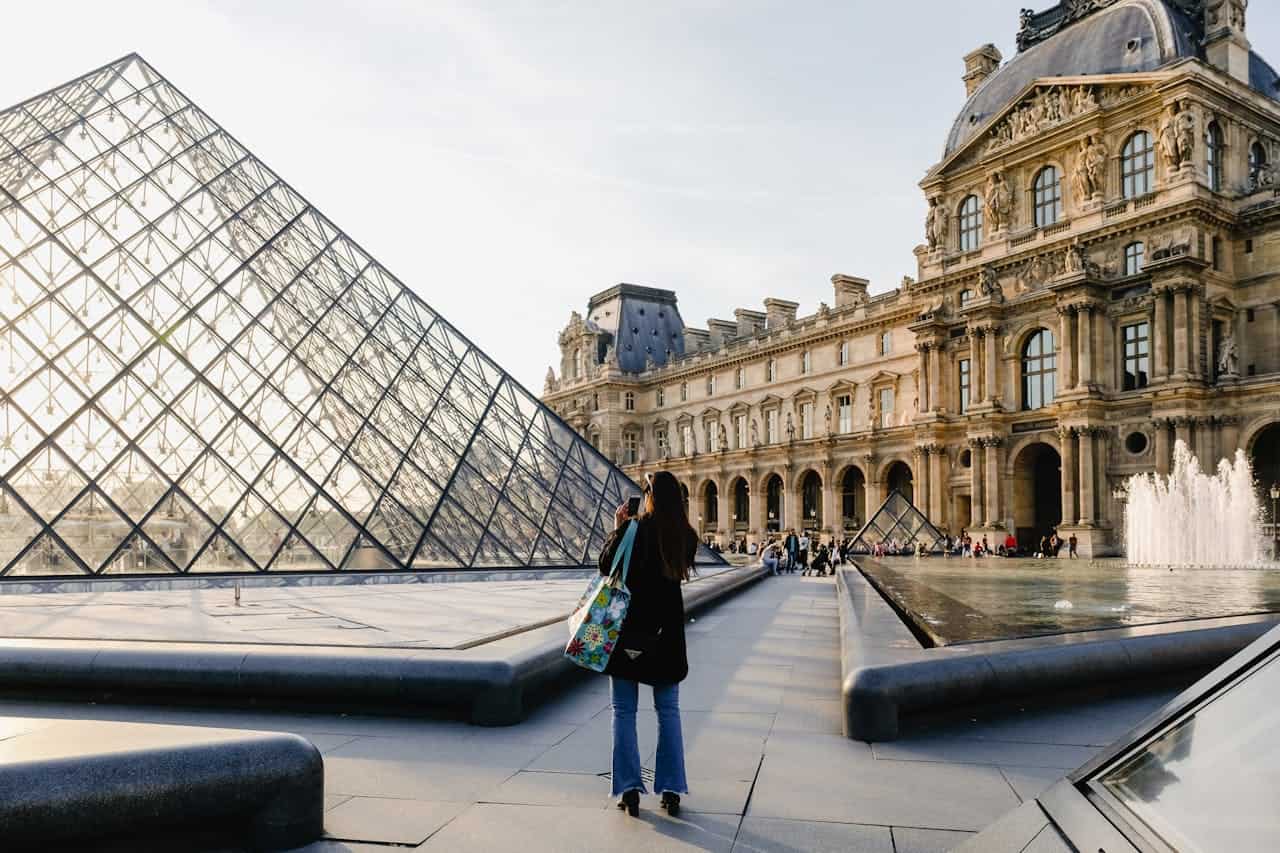
The Louvre — 9:00
The Louvre is the world’s largest art museum, and there is no version of seeing all of it in one visit. Before you arrive, pick two or three areas and stick to them:
- Egyptian antiquities (lower ground floor, Sully wing)
- Greek and Roman sculpture
- The Mona Lisa and French paintings (Denon wing, first floor)
Book tickets in advance and arrive at opening (9:30). Spend 2–3 hours and leave while you still feel good about it — the Louvre is physically exhausting if you push past your limit. Check current prices on the official website.
Walking out of the Louvre and into the Tuileries Garden is one of those quiet Paris moments — a long, formal park that feels like relief after all that marble.
Tuileries Garden and Lunch — 12:00
Take your time in the Tuileries. The garden connects the Louvre to Place de la Concorde and is a good place to decompress before the afternoon. There are cafés inside the garden if you want to eat without going far, or walk toward Rue de Rivoli for a wider choice. Budget an hour for lunch.
Montmartre — 14:30
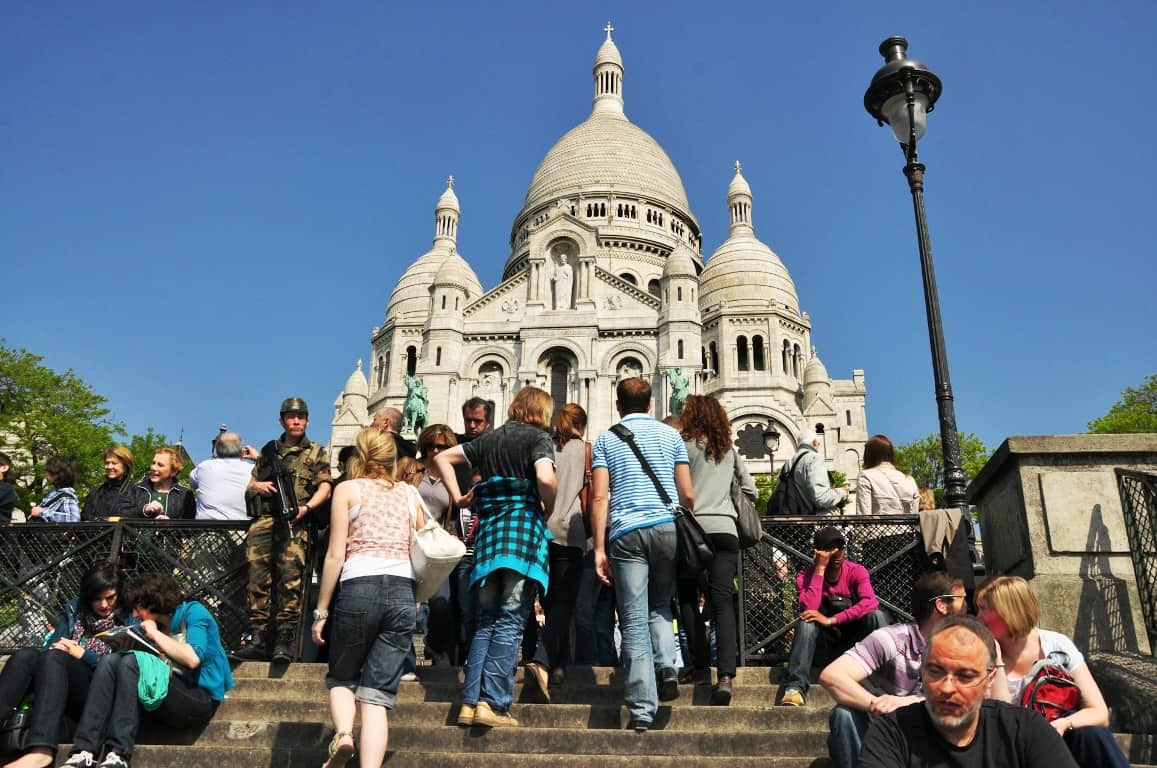
Take the Métro north (lines 2 or 12) to Montmartre. This hilltop neighborhood has a fundamentally different feel from central Paris — quieter streets, village-scale buildings, and the white dome of Sacré-Cœur at the top. The funicular from the base costs one Métro ticket if you’d rather skip the climb.
Spend time on the terrace of Sacré-Cœur before going inside — the view over Paris from up here is one of the best in the city. After the basilica, walk down through Place du Tertre and into the quieter streets around Rue Lepic. This is where Montmartre starts to feel less like an attraction and more like a neighborhood where people actually live — small cafés, a weekend market, residents going about their day.
Allow 2 hours for Montmartre. If you’re moving slowly, that can easily stretch to three.
Evening
Dinner in Montmartre tends to be slightly less expensive than central Paris, and the options are good. If you’d rather head back toward the center, Saint-Germain works well for a final Paris dinner — classic bistro food in a neighborhood that earns its reputation.
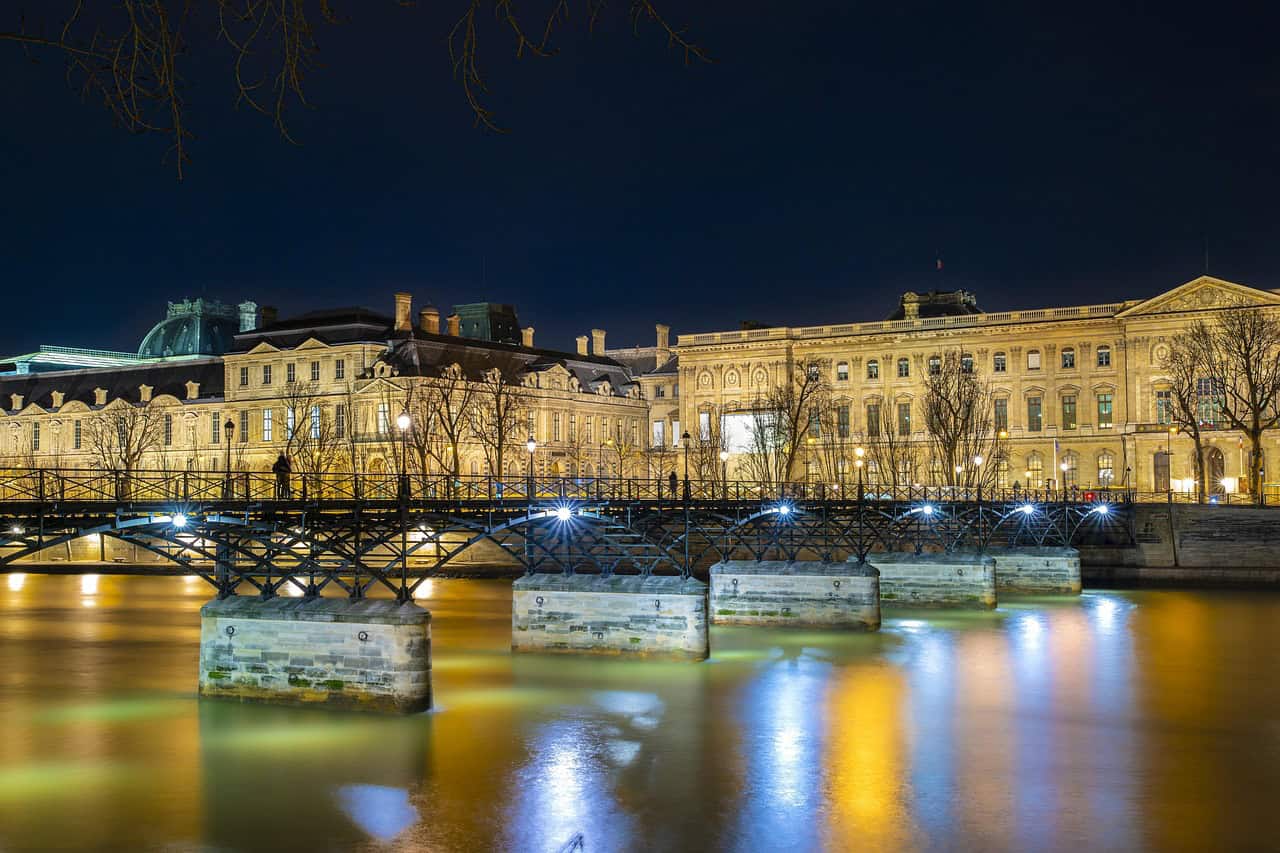
If your train or flight is early the next day, this is also a good evening to walk one last stretch along the Seine. The city at night — the bridges lit up, the river moving slowly underneath — is a reasonable last image to take home.
Turn this into your own plan: try our FREE PARIS TRIP PLANNER for a day-by-day 2-day itinerary tailored to your style.
What to Leave Out
Versailles. It’s a full-day commitment and a weekend doesn’t have a full day to spare. Go when you have more time.
The Catacombs. The queue is long and the visit takes half a day. Worth it on a longer trip; not on a weekend.
The Champs-Élysées as a destination. Walk it once for the scale and the Arc de Triomphe, but don’t build time around it. The street is more impressive to look at than to be on.
Two large museums in one day. One major museum per day is the practical limit. Two leaves you too tired to enjoy either.
Common Problems on a Paris Weekend
No tickets booked in advance. The Eiffel Tower and Sainte-Chapelle both have substantial walk-up queues. Book both before you arrive. It’s the most common reason people lose hours on short Paris trips.
Underestimating distances. Paris looks compact on a map. It isn’t. The Louvre to Montmartre is a 5 km walk or a 20-minute Métro ride. Use the Métro when you’re running behind — it’s faster than walking between neighborhoods and cheaper than taxis in traffic.
Eating near the main sights. Restaurants within 200 meters of the Eiffel Tower or Notre-Dame charge significantly more for noticeably worse food. Walk one or two streets away.
No dinner reservation. Paris bistros fill quickly, especially on weekends. If you have somewhere specific in mind, book it the day before or in the morning.
Making the Most of Your Weekend
If you want a clear two-day structure without too many decisions, the itinerary above covers what most people come to Paris for and works well as a first visit.
If art is the main draw, swap the Marais afternoon on Day 1 for the Musée d’Orsay — it’s 15 minutes on foot from the Eiffel Tower and has one of the strongest Impressionist collections in the world. Keep the Louvre for Day 2.
If you’re traveling with someone who has different priorities, build in an hour or two to split up. Paris is easy to navigate independently, and a few hours of solo exploring often produces the most memorable parts of any trip.
If you’d rather keep your route, ticket info, and attraction details in one place instead of switching between tabs mid-trip, the Paris For You app helps you navigate with offline maps, attraction info, audio guides, and 26 language options.
A Weekend Is Enough to Get Started
Two days in Paris won’t give you the full picture. But they’ll give you enough — enough to understand why people keep coming back, enough to know what you’d do differently with more time, and enough to leave with a clear sense of the city rather than a blur of monuments and queues.
Keep the plan simple, book the tickets that matter, and leave room for the parts you didn’t plan. Those tend to be the ones worth remembering.
Download the Paris For You App
Navigate your Paris weekend without switching between browser tabs. Offline maps, attraction info, audio guides, and 26 language options — everything you need for a short visit, organized in one place.
Paris For You app brings together must-see places, themed maps and practical tips in one app. Ideal for first-time visitors and for those who want to explore beyond the obvious.
Download on iPhone
Download on Android


