





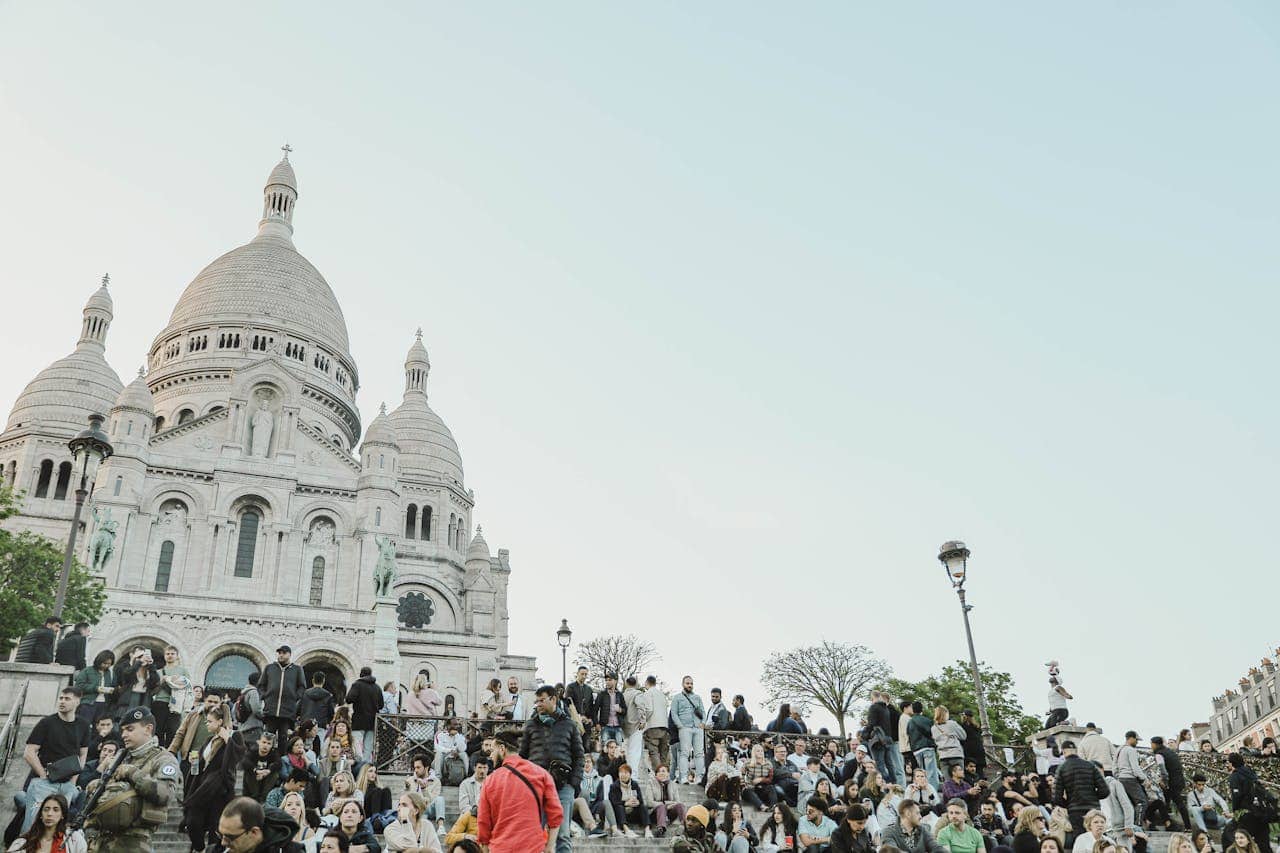
There is a particular moment that happens to almost every visitor to Montmartre, Paris’s famous hilltop neighbourhood. You’ve climbed the long hill — either on foot up the winding streets or by funicular — and you turn around to catch your breath. Below you, Paris stretches out in every direction, a grey-and-cream patchwork of rooftops and church towers and the occasional glint of the Seine. And you think: this is the city I came to see.
Montmartre earns that moment. But it also offers far more than a view.
A Hill With a Long Memory: The History of Montmartre
The story of Montmartre starts before Paris was Paris. The hill — the butte, as locals call it — rises 130 metres above the city, high enough to have served as a strategic lookout, a place for windmills, and later, a quarry. The gypsum mined here over centuries was so abundant that the material became known internationally as plaster of Paris.
The hill also has a darker chapter. In 272 AD, according to tradition, Saint Denis — the first bishop of Paris — was beheaded on this spot by Roman authorities, after which he allegedly picked up his own head and walked six kilometres north, preaching as he went. Whether you find that story believable or not, it gave the hill a reputation for the sacred, and the name Mons Martyrum — Mount of the Martyrs — stuck. In softened French, that became Montmartre.
For centuries, the area sat just outside Paris proper. That status as a semi-independent village made it cheaper and more relaxed, which is exactly what attracted artists, poets, and various characters who preferred to live on the edge of respectability. By the late 19th century, Montmartre in Paris had become the creative engine of modern art. Pablo Picasso, Georges Braque, Amedeo Modigliani, Henri de Toulouse-Lautrec — all lived and worked here. The famous Bateau-Lavoir, a ramshackle studio building on Place Émile Goudeau, is where Picasso painted Les Demoiselles d’Avignon in 1907. The building burned down in 1970 and was rebuilt, but the address still feels like hallowed ground.
The neighbourhood was also home to the original Moulin Rouge, which opened in 1889 at the foot of the hill and immediately became a sensation — a place where middle-class Parisians could come and watch cancan dancers while telling themselves they were being daring. Toulouse-Lautrec’s posters for the club turned its performers into icons. The Moulin Rouge still operates today, though it now caters more to tourists than to bohemians.
The Sacré-Cœur: Montmartre’s Most Iconic Landmark
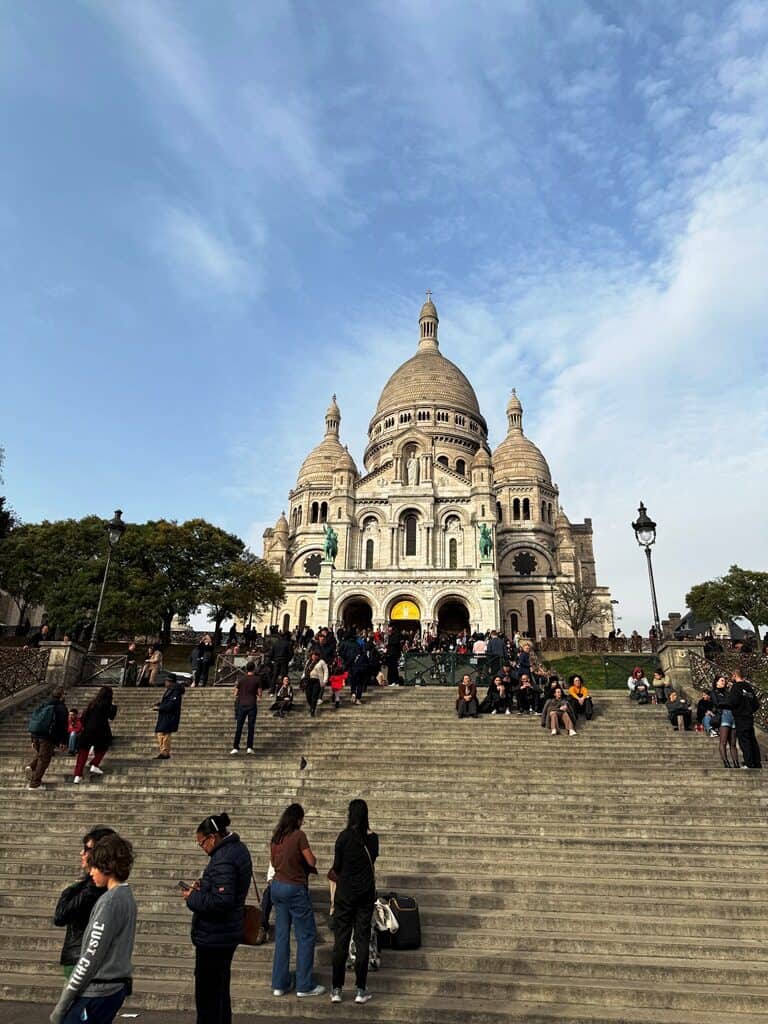
The most visible landmark in Montmartre is the Basilica of the Sacré-Cœur, its white Romano-Byzantine domes floating above the hill like a mirage. Construction began in 1875 and wasn’t completed until 1914 — the building was consecrated only in 1919, after World War I.
Its origins are politically charged in ways that are easy to forget. The basilica was commissioned as an act of national penance following France’s humiliating defeat in the Franco-Prussian War of 1870–71 and the subsequent violence of the Paris Commune. Montmartre had been a stronghold of the Commune — a working-class revolutionary government that briefly controlled Paris — and building a massive Catholic basilica on that same hill was, for many, a deliberate act of ideological erasure.
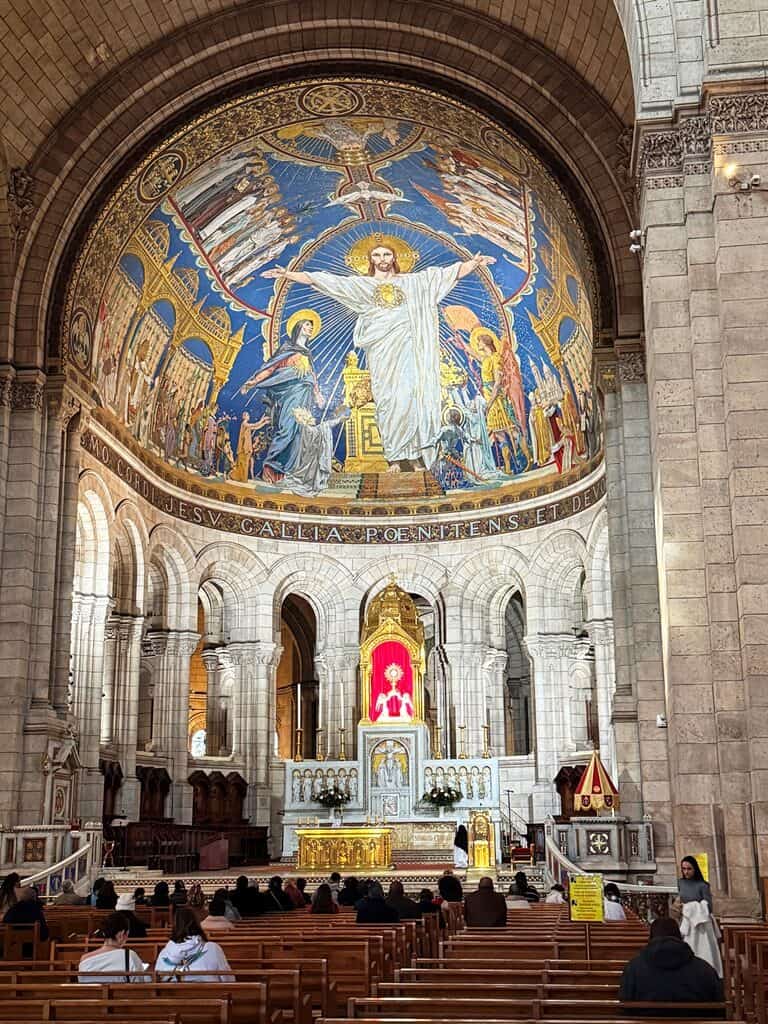
Today, the political baggage has mostly faded. What remains is a stunning building that glows white in part because of the type of stone used: travertine limestone, which secretes calcite when it rains, keeping the exterior perpetually clean. Inside, the mosaic above the choir is one of the largest in the world. And the view from the forecourt steps? Still extraordinary.
One genuinely useful tip: the neighbourhood around the basilica, especially Place du Tertre, can feel like a tourist trap at peak hours — portrait artists, overpriced cafés, and souvenir shops crowd every corner. This is not the Montmartre that locals love. But it’s worth understanding what it is: a 19th-century tradition of artists selling work directly to passersby, preserved into the 21st century in slightly commodified form. Walk two streets away in any direction and the atmosphere changes completely.
Things to Do in Montmartre Beyond the Tourist Trail
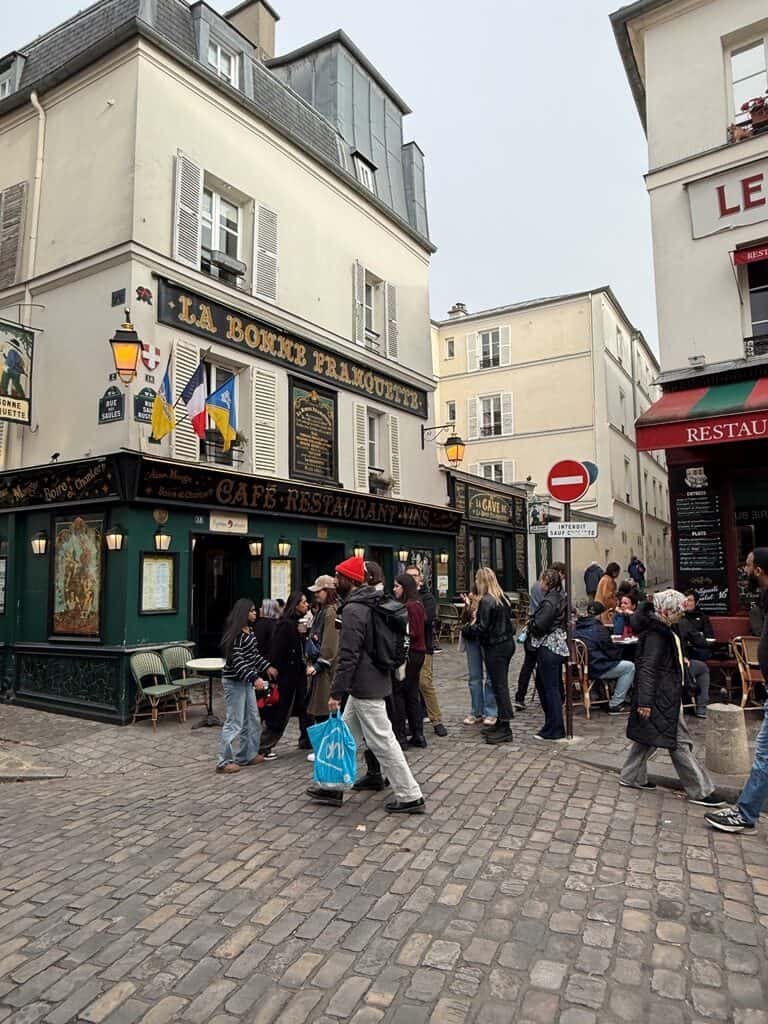
The real texture of the neighbourhood lives in its quieter corners. The vignes du Montmartre — the vineyard on Rue des Saules — produces around 1,000 bottles of wine per year. It’s not exceptional wine, but it might be the most surprising urban vineyard in Europe. The harvest each October turns into a week-long neighbourhood festival, the Fête des Vendanges.
Nearby, on the same street, you’ll find Le Lapin Agile — a small cabaret that has been operating since the 1880s. Picasso once paid his tab with a painting. The venue still hosts live performances most evenings: songs, poetry, and storytelling in a low-lit room that looks much as it did a hundred years ago. This is the kind of Montmartre worth seeking out.
The Cimetière de Montmartre, tucked under a road bridge on the western slope of the hill, is one of Paris’s great cemetery walks. Edgar Degas, Émile Zola, and Jacques Offenbach are buried here, among others. French cemeteries are not gloomy places — they are quiet and densely planted, and the Montmartre cemetery has a particularly intimate quality, sheltered from the noise of the city above.
For food, the neighbourhood‘s best offerings are away from the tourist drag. The stretch of Rue Lepic — a lively market street — offers good bakeries, cheese shops, and a couple of wine bars where you can sit outside and watch the hill’s own ecosystem of residents going about their day. The two windmills still standing on Rue Lepic (Le Moulin Radet and Le Moulin de la Galette) are genuine survivors from the 18th century. One of them is now a restaurant; the other stands in a private garden, glimpsed over a fence.
What Makes Montmartre Worth Visiting: The Vibe, Honestly
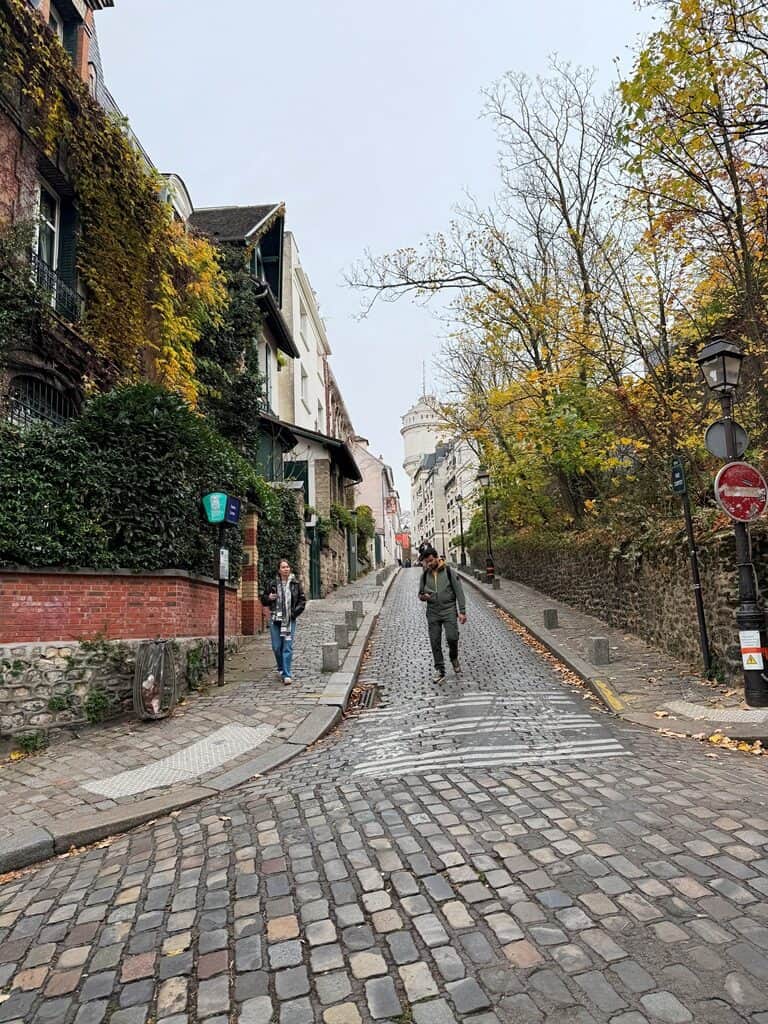
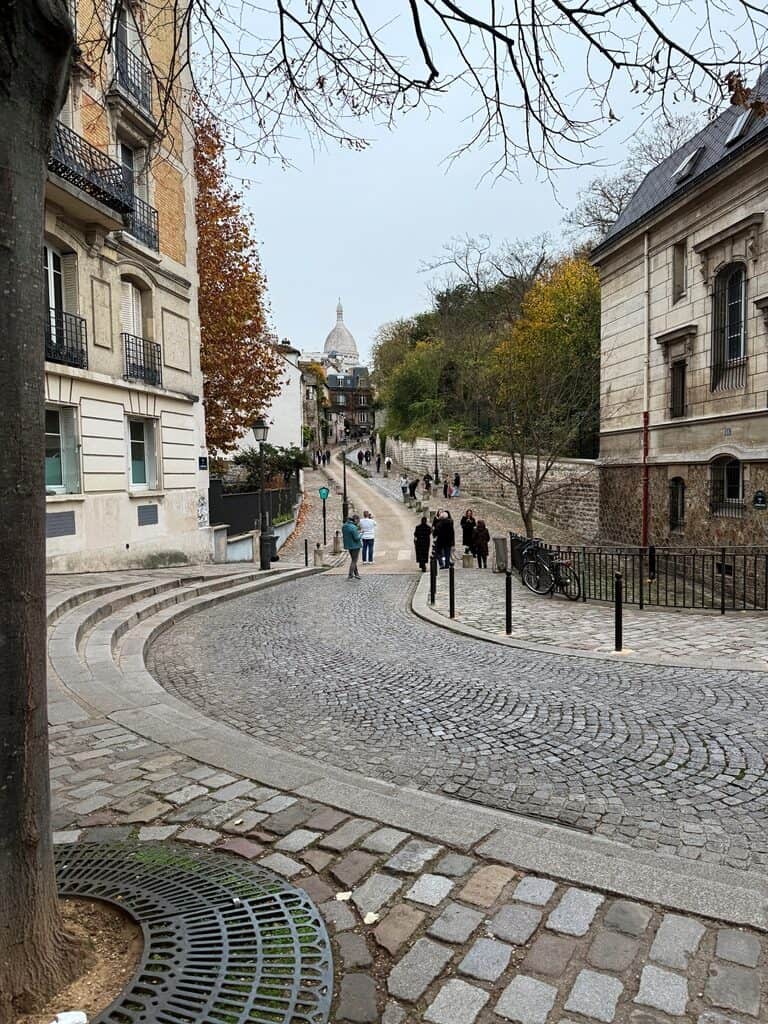
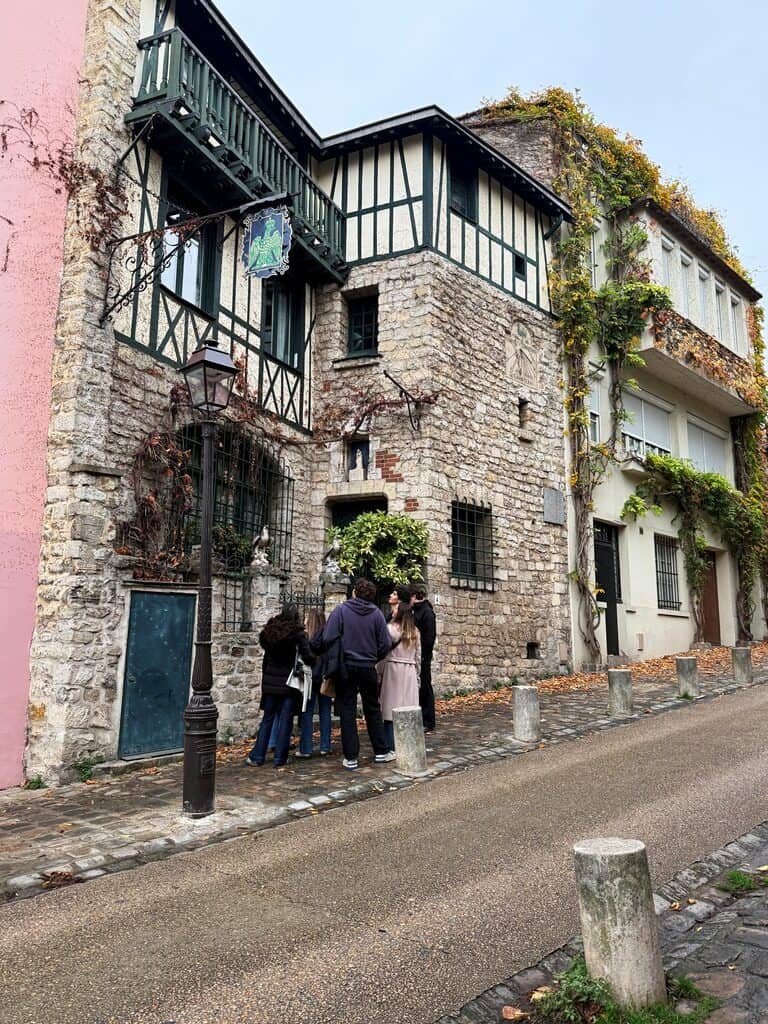
Montmartre in Paris contains multitudes. In the same hour you can stand in a plaza surrounded by selfie sticks and then turn down a quiet lane lined with ateliers, flowering window boxes, and cats sleeping on warm stone steps. The hill is genuinely beautiful — its steep streets, staircases, and sudden open squares feel unlike anywhere else in Paris, more like a village that the city grew around than a neighbourhood built for scale.
It is also genuinely popular, and that popularity is not a recent development. Montmartre has attracted visitors since the Belle Époque, and the tourist infrastructure has grown accordingly. If you arrive in August on a Saturday morning and head straight for the Sacré-Cœur, you will encounter crowds. The solution is simple: come early, or come in the evening, or just walk slightly further than most people bother to go.
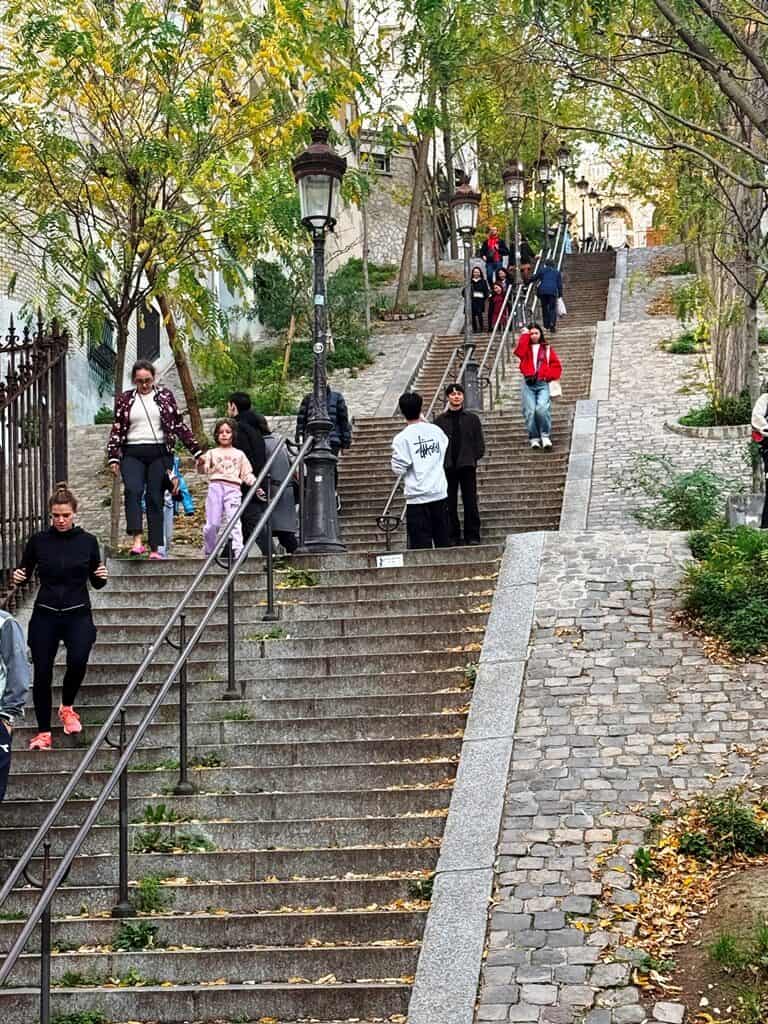
The best of Montmartre is found when you stop following a fixed route and start getting a little lost. The butte is small enough that getting lost is never serious. You will eventually hit the steps, or a street you recognise, or a café that looks worth stopping at. That spontaneity — that sense that the neighbourhood has a few more surprises for you around the next corner — is what keeps people coming back.
How to Get to Montmartre: Practical Information
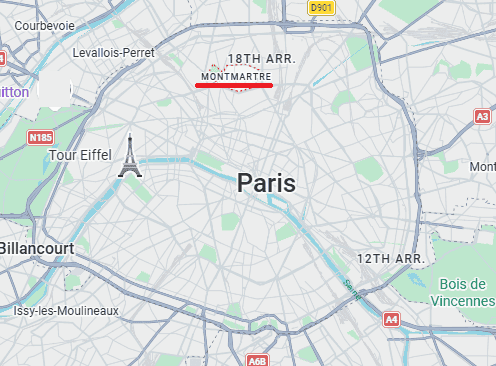
The neighbourhood sits in the 18th arrondissement, roughly 4 kilometres north of the city centre. The closest Métro stations are Abbesses (line 12) and Anvers (line 2), both at the base of the hill. The Abbesses station has one of the few remaining original Art Nouveau Métro entrances designed by Hector Guimard — worth pausing to look at before you start climbing.
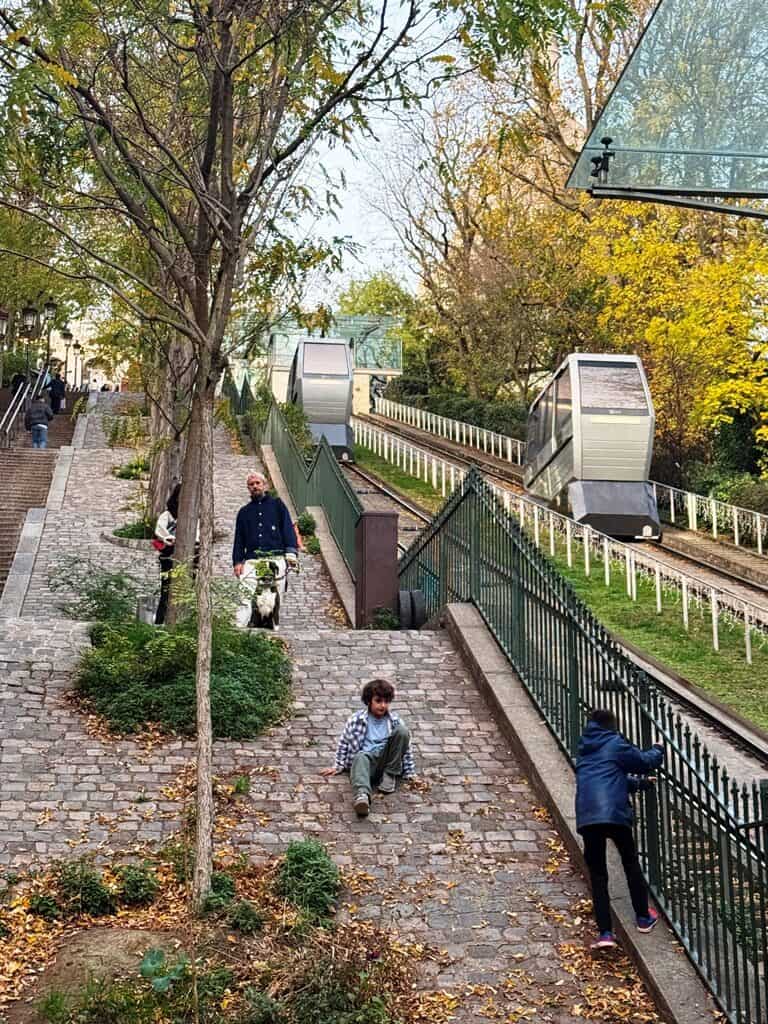
The funicular runs between Anvers and the forecourt of the Sacré-Cœur and accepts standard Métro tickets. It is heavily used; the staircase alongside it is often faster and gives a better sense of the hill.
If you’re staying in Paris for several days, Montmartre rewards two visits: one during the day for the architecture, the basilica, and a slow exploration of the streets, and one in the evening when the neighbourhood settles into itself and the city lights begin below.
Montmartre FAQs
Early morning or late evening is best for smaller crowds and better atmosphere, especially around Sacré-Cœur and Place du Tertre.
Plan 2–4 hours for the highlights, or half a day if you want to wander side streets, stop for cafés, and visit a cemetery or cabaret.
Generally yes, but the busiest areas around Sacré-Cœur can attract pickpockets and aggressive “friendship bracelet” scams—keep bags zipped and ignore anyone who tries to grab your wrist.
Use the funicular from Anvers—it takes you up to the basilica forecourt and uses a standard Métro ticket.
Walk away from the main basilica area (e.g., toward Rue Lepic / Rue des Saules), browse small food shops, and let yourself get a little lost on the quieter lanes.
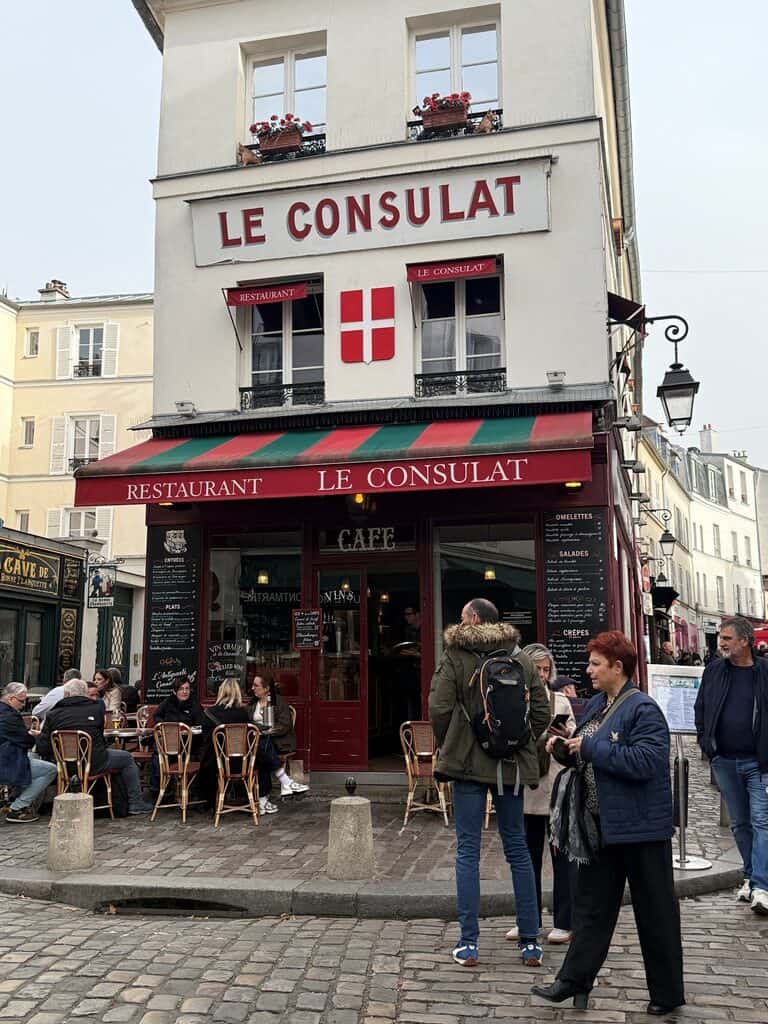
Montmartre is not Paris at its most polished. It is Paris at its most layered — a place where art history, religious architecture, working-class memory, and present-day tourist reality all coexist in a relatively small space on top of a hill. That complexity is precisely what makes it worth the climb.
Want to explore Paris with a clear plan?
Download the Paris For You app and use maps, routes and recommendations directly on your phone — even offline.
Download on Android
Download on iPhone


