




The short answer is yes. Paris welcomes millions of international visitors every year, the vast majority of whom speak no French at all, and they navigate the city, eat well, visit museums, and get where they need to go without significant difficulty. Not speaking French will not ruin your trip.
That said, a few words matter more than you might expect — not because Parisians need you to speak French, but because French social culture places genuine weight on politeness, and a simple “Bonjour” before any interaction changes the dynamic noticeably. This guide covers what you actually need to know, and what you can stop worrying about.
English in Tourist Paris
In the areas where most visitors spend most of their time, English is commonly used and generally understood. Staff at hotels, museums, major restaurants, and tourist attractions in central Paris are generally comfortable with English, and most have dealt with international visitors every day of their working lives. At the Louvre, the Eiffel Tower, Musée d’Orsay, and similar sites, information, signage, and audio guides are available in English as standard.
The Métro is easy to navigate without any French at all. Station names are announced and displayed, the line maps are visual and self-explanatory, and the ticketing machines have an English language option.
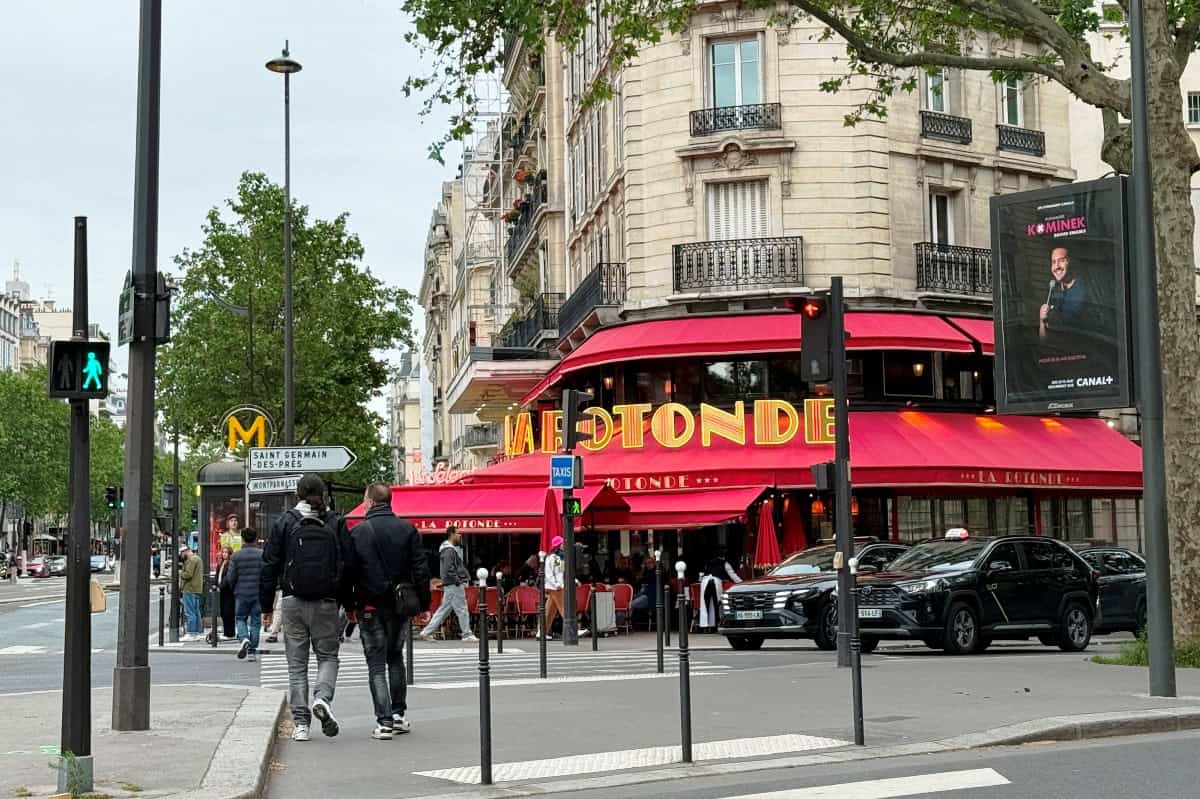
Restaurants in tourist areas frequently have English menus or will switch to English when needed. Shops in central Paris — particularly in the Marais, Saint-Germain, and around the main boulevards — are accustomed to non-French-speaking customers.
The picture changes slightly as you move further from the main tourist routes. In local neighborhood cafés, smaller markets, and outer arrondissements, English is less consistently available — though even there, a combination of gestures, pointing, and a translation app will get you through most situations.
The One Thing That Actually Matters: Bonjour
If you remember one thing from this guide, make it this: say “Bonjour” before anything else.
In France, beginning an interaction without a greeting is considered abrupt to the point of rudeness. Walking up to a shop counter, restaurant table, or information desk and immediately saying “Do you speak English?” — without first saying hello — is not the norm, and can come across as abrupt or overly direct, even when no offence is intended.
The fix is simple: “Bonjour” when you enter, “Bonjour” before you ask anything, “Au revoir” when you leave. That single habit, consistently applied, is worth more than any amount of vocabulary. Most Parisians who seem less forthcoming with tourists are responding to this gap in etiquette rather than to the language itself.
After “Bonjour,” you can immediately ask “Parlez-vous anglais ?” (Do you speak English?), and most people in tourist areas will say yes or indicate that they’ll do their best. The greeting is the key that opens the conversation.
Practical Situations
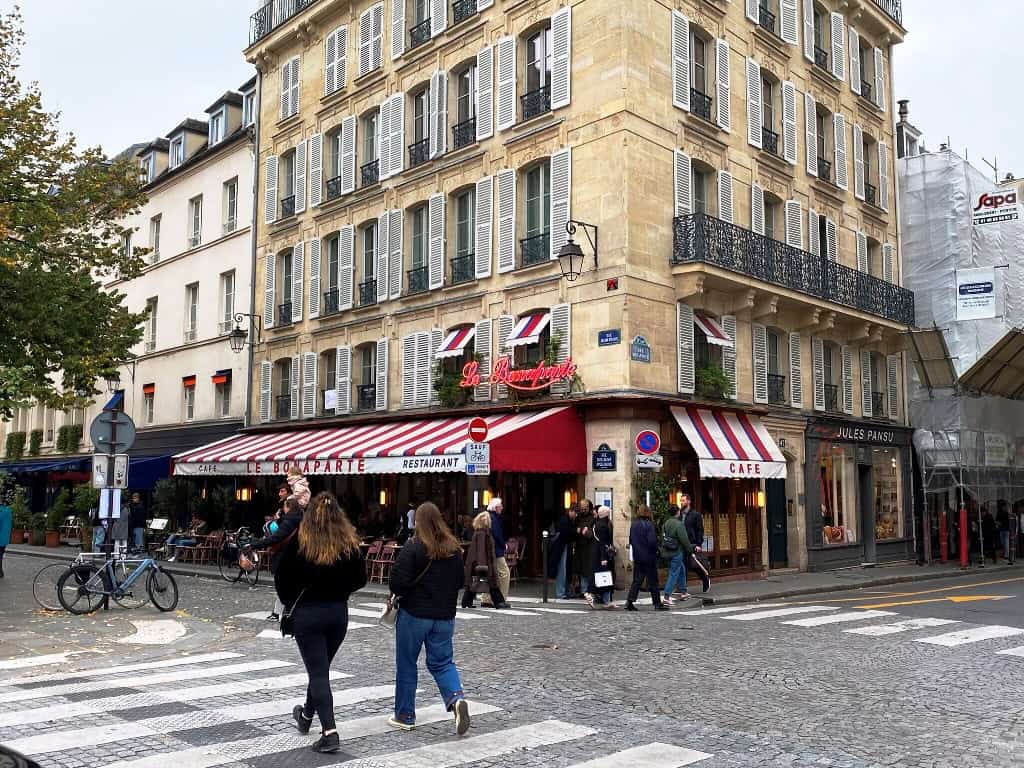
Here is how the language question plays out in the most common tourist scenarios:
- Restaurants — greet with “Bonjour” when entering, indicate how many people with your fingers if needed, and ask for the menu (“la carte, s’il vous plaît”). Many restaurants in tourist areas have English menus; others will have staff who can explain the dishes. Pointing at the menu and nodding works well when words run out. To ask for the bill: “l’addition, s’il vous plaît.”
- The Métro and buses — no French required. Signage is visual, machines have English options, and the system is straightforward once you know your line and direction.
- Museums and attractions — English audio guides are standard at major sites. Staff at ticket desks are used to international visitors. Booking tickets online in advance removes any interaction at the entrance.
- Shopping — say “Bonjour” when entering and “Au revoir” when leaving. This is non-negotiable in French shops, regardless of language. The rest can be handled with prices shown on screens and card payment.
- Getting directions — Google Maps and offline map apps remove most of the need to ask directions at all. If you do ask, “Excusez-moi, où est … ?” followed by the place name will usually get you pointed in the right direction.
Where Language Can Be More of a Challenge
Being honest about this: there are situations where not speaking French is a genuine limitation, though none of them are likely to significantly affect a standard tourist visit.
- Very traditional or local restaurants — some smaller bistros in non-tourist areas have handwritten menus only in French and staff with limited English. This is rarer in central Paris but does exist. A translation app pointed at the menu solves most of it.
- Medical situations — if you need medical attention, having a translation app ready and being able to write down symptoms is useful. Major Paris hospitals have staff who speak English, but smaller pharmacies and clinics may be more variable.
- Phone calls and formal interactions — calling a restaurant to book by phone or dealing with any formal administrative matter is harder without French. For restaurant reservations, using an online booking platform removes this entirely.
Digital Tools That Help
A few tools make the language gap largely irrelevant for day-to-day tourist situations:
- Google Translate camera function — point your phone camera at French text and it translates in real time. Useful for menus, signs, and any written French you encounter.
- Offline translation apps — download the French language pack before you travel so translation works without internet access.
- The Paris For You app — available in 26 languages, covering 100+ Paris attractions with text and audio guides in your own language. The offline maps mean you can navigate without stopping to search for directions.
If you’d prefer to explore with a guide who handles all the language for you — particularly useful on a first visit when you want context alongside the sights — GetYourGuide has a range of English-language Paris walking tours and experiences.
A Few Phrases Worth Knowing
You don’t need a language course. These eight phrases, used consistently, will carry you through almost every interaction in Paris. Pronunciation doesn’t need to be perfect — the effort is what counts, not the accent.
| French | Pronunciation | When to use it |
| Bonjour | bon-ZHOOR | Every time you enter a shop, restaurant, or start any interaction |
| Merci / Merci beaucoup | mair-SEE / mair-SEE boh-KOO | Thank you / Thank you very much |
| S’il vous plaît | seel voo PLEH | Please — when ordering or asking for something |
| Excusez-moi | ex-koo-ZAY mwah | Excuse me — to get attention or pass someone |
| Parlez-vous anglais ? | par-LAY voo on-GLEH | Do you speak English? — always ask before switching |
| L’addition, s’il vous plaît | lah-dee-SYON seel voo PLEH | The bill, please |
| Où est … ? | oo EH | Where is … ? — for asking directions |
| Au revoir | oh ruh-VWAHR | Goodbye — when leaving any establishment |
Booking attraction tickets online in advance also removes one of the most common language-barrier moments — the ticket desk. You arrive with your booking confirmed, skip the queue, and walk straight in.
The Honest Summary
Do you need French to visit Paris? No. Will knowing a few words make your trip noticeably smoother? Yes, specifically because French social culture values the greeting and the attempt, not the fluency.
Say “Bonjour.” Say “Merci.” Say “Au revoir.” Use a translation app for menus. Book tickets online so you don’t need to negotiate at a ticket desk. The rest will take care of itself.
Explore Paris in Your Own Language
The Paris For You app covers 100+ Paris attractions with text and audio guides in 26 languages — so you can explore independently, understand what you’re seeing, and navigate offline without needing to ask for directions.
If you’re still putting together your Paris itinerary, the trip planner helps you structure your days before you go.
Take Paris with you.
Download Paris For You and keep your offline maps close at hand, wherever the day takes you. Available in 26 languages.
Download on Android
Download on iPhone


