






Updated on 26 July 2026
Most Paris trip advice tells you where to stay. This guide does the opposite — it tells you where not to stay, and why tourists keep making the same accommodation mistakes.
The consequences of choosing the wrong area are real: a long Métro commute every morning before you’ve seen anything, a neighborhood that feels nothing like the Paris you came for, or a hotel that looked central on a map but turned out to be in a busy, noisy, or uncomfortable area. None of this is hard to avoid. It just requires knowing what to watch out for before you book.
- Areas to Reconsider at a Glance
- Directly Next to the Eiffel Tower
- The Area Around Gare du Nord and Gare de l’Est
- Pigalle and Boulevard de Clichy
- Northern Paris and the Surrounding Suburbs: Worth Knowing About
- The Outer Arrondissements: Too Far for a First Trip
- Directly Adjacent to Notre-Dame
- Airport Hotels for a Multi-Day Stay
- What a Good Location Actually Looks Like
- Practical Checks Before You Book
- Plan Where to Go, Not Just Where to Stay
- What Not to Overreact About
- The Accommodation Mistakes in Brief
- The Right Base Makes Everything Easier
- Download the Paris For You App
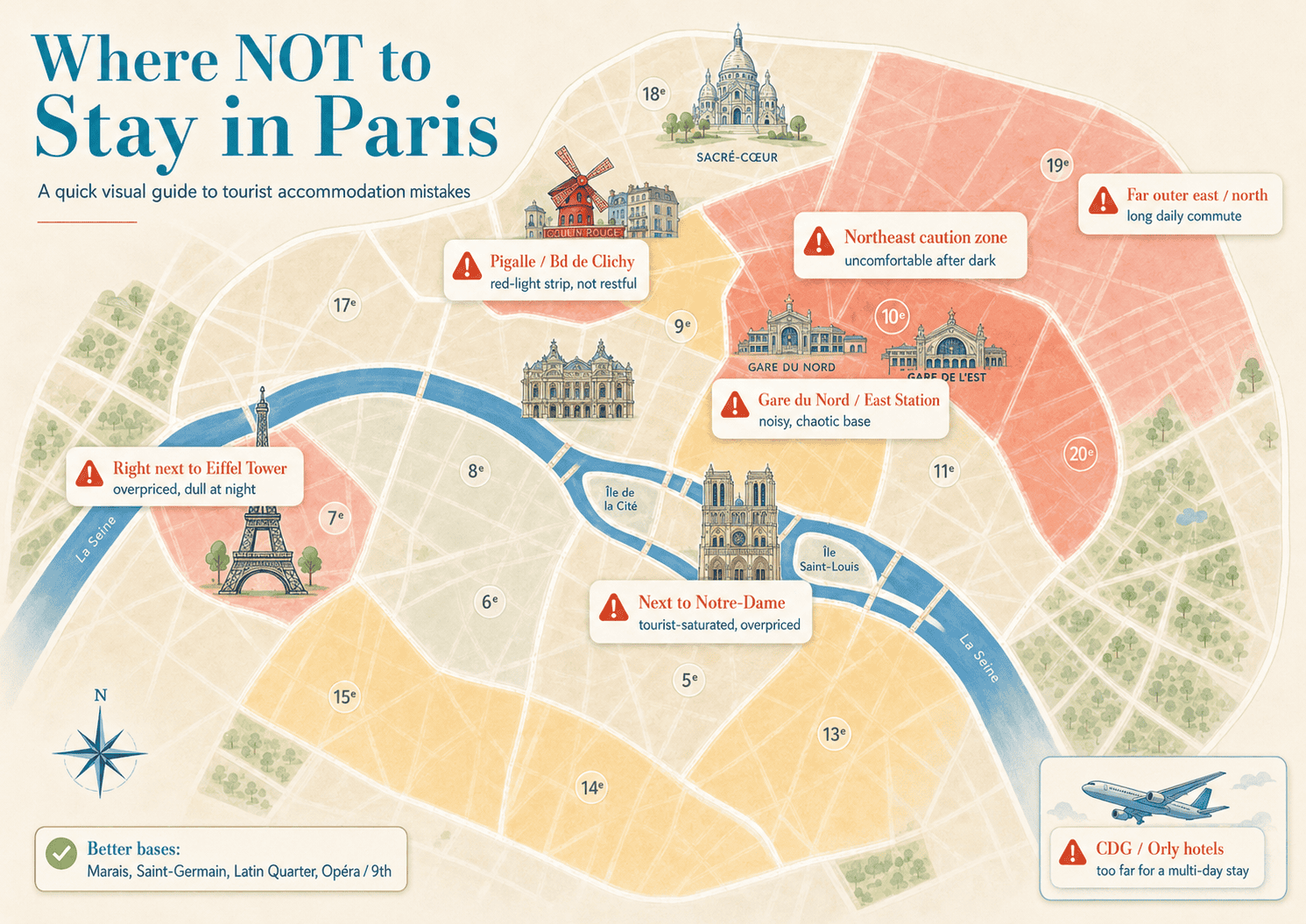
Areas to Reconsider at a Glance
| Area | The problem | Better alternative |
| Directly next to the Eiffel Tower | Premium prices, poor restaurant choice, isolated feel | Saint-Germain or the Marais (still close, much better base) |
| Gare du Nord / Gare de l’Est area | Noisy, busy, less safe at night, not atmospheric | 9th arrondissement (Opéra), 15–20 min south by Métro |
| Around Pigalle / Boulevard de Clichy | Red-light area; aggressive touts; not restful | South Pigalle / SoPi (9th) or the hilltop streets above Abbesses — not the flat strip on Boulevard de Clichy |
| Far outer arrondissements (19th, 20th and parts of 18th) | Long commute to sights; 20–40 min Métro each way | Any central arrondissement (1st–9th) |
| Adjacent to Notre-Dame | Tourist saturation; overpriced everything; noisy | The Marais (4th) — 5–10 min walk, completely different feel |
| Budget hotels near Orly or CDG airports | 45–60 min from the city every single day | Central Paris — costs more but saves hours |
Directly Next to the Eiffel Tower
This is the most common accommodation mistake on a first Paris trip, and it’s understandable. The Eiffel Tower is the reason many people come to Paris, and staying within walking distance of it sounds ideal. The reality is more complicated.
Hotels in the immediate vicinity of the tower — particularly on Rue de la Tour, Avenue de Suffren, and the streets within 300 meters of the base — charge significantly more than equivalent hotels a short walk away. The restaurant options in the same radius are tourist-facing and expensive. And the neighborhood itself, while clean and safe, is quiet to the point of being dull in the evenings: there’s no real local life, no market street, no neighborhood restaurants that exist because residents need them.
The tower will still be there. You can visit in the morning, watch it light up at night, and spend the rest of your time based somewhere that actually works as a neighborhood. Saint-Germain-des-Prés is 20–25 minutes on foot; the Marais is reachable by Métro in 15 minutes. Both give you a far better base while keeping the tower accessible.
The exception: Families with very young children who want the Champ de Mars park on the doorstep, or visitors for whom the tower is genuinely the emotional center of the trip and proximity matters more than neighborhood character. In that case, the 7th arrondissement works — just research the specific street carefully before booking.
The Area Around Gare du Nord and Gare de l’Est
These two major train stations sit in the 10th arrondissement and handle some of the highest passenger volumes in Europe. The accommodation around them is plentiful, often reasonably priced, and very well-connected by transport — which is why many visitors book here, particularly those arriving by Eurostar or Thalys.
The problem is that proximity to a major station is not a quality of life indicator. The streets immediately around Gare du Nord and Gare de l’Est are busy, sometimes chaotic, and not particularly pleasant to spend multiple days in. Pickpocketing is more common here than in the central tourist areas. The restaurant quality is variable. At night, the area around Gare du Nord in particular requires more awareness than most of central Paris.
If you’re arriving by Eurostar or international train, the practical answer is simple: take the Métro south for three or four stops and stay in the 9th or 4th arrondissement instead. The commute to the station for your departure is 10 minutes; the improvement in your base for the rest of the trip is significant.
The exception: One night before a very early departure, when the station is genuinely the right place to be. In that case, book exactly what you need for one night and no more.
Pigalle and Boulevard de Clichy
Pigalle has a complicated reputation that’s partly deserved and partly outdated. The area around Boulevard de Clichy and the Moulin Rouge is a red-light district with adult entertainment venues, aggressive touts outside clubs, and a nighttime atmosphere that many visitors find uncomfortable. For a first-time visitor trying to get settled in the city, it’s not a restful base.
The confusion arises because Pigalle sits directly below Montmartre, which is one of the most beautiful neighborhoods in Paris. Many visitors book “Montmartre” accommodation without realizing their hotel is actually on the flat commercial strip at the bottom of the hill rather than in the village streets above.
The distinction matters: the area south of Boulevard de Clichy (lower Pigalle) is the problematic zone. The streets north of it — climbing toward Sacré-Cœur — are genuinely pleasant. So is the area immediately south of Pigalle known as SoPi (South Pigalle, roughly around Rue des Martyrs), which has a strong restaurant scene and a much more liveable feel.
If Montmartre appeals: Check the specific address of any hotel before booking. Anything on or above Rue Lepic, Rue des Abbesses, or in the streets around Place du Tertre is the real Montmartre. Anything on Boulevard de Clichy is not.

Northern Paris and the Surrounding Suburbs: Worth Knowing About
This is the part of Paris that most travel guides handle vaguely, if at all. It deserves a more direct mention, because it affects real decisions about where to stay and where to go.
A cluster of neighborhoods in the northeastern part of the city — broadly the area spanning parts of the 18th, 19th, and the streets around Gare du Nord — has a well-documented reputation for being uncomfortable, particularly after dark. The neighborhoods most consistently flagged by locals, long-term residents, and travel safety sources include:
- Barbès-Rochechouart and Goutte d’Or (18th arrondissement) — a busy, crowded area with a persistent drug trade and a street atmosphere that many visitors find overwhelming. Safe to pass through in daylight, but not a comfortable base.
- Château Rouge (18th) — adjacent to Barbès, similar character. A lively West African market area during the day, but not recommended for an evening walk or as a base.
- Stalingrad and Jaurès (19th arrondissement) — the area around these Métro stations has been a persistent problem zone, with visible drug use around the canal. The Parc des Buttes-Chaumont nearby is beautiful and safe; the streets leading to it from the Métro are not.
- La Chapelle (18th, near Gare du Nord) — one of the more difficult areas in central Paris. Often cited by locals as a place to avoid, including in daylight.
Beyond the Paris city limits, the northern suburbs — particularly Seine-Saint-Denis (the département 93, bordering the 18th and 19th arrondissements) — are best avoided entirely by tourists. This is a different category from the neighborhoods above: not just uncomfortable, but genuinely outside the zone where tourist infrastructure and police presence provide a reasonable level of security. Budget accommodation occasionally appears in this area. The savings are not worth it.
It’s worth being clear about what these areas are and aren’t. They are not war zones, and the vast majority of crime affecting tourists in Paris is petty — pickpocketing and scams — rather than violent. But these neighborhoods are consistently described in the same terms by locals, expats, and safety resources: uncomfortable, unpredictable in the evenings, and not suitable as a base for a first visit. That’s enough reason to choose somewhere else, particularly when better options exist at comparable prices in the central arrondissements.
The Outer Arrondissements: Too Far for a First Trip
Paris has 20 arrondissements, and the outer ones vary significantly. The 13th, 15th, 16th, and 17th are largely residential, safe, and perfectly liveable — just further from the main sights. The 19th and 20th, and parts of the 18th outside Montmartre, are where the commute starts to become a genuine problem for a first-time visitor trying to see the main sights.
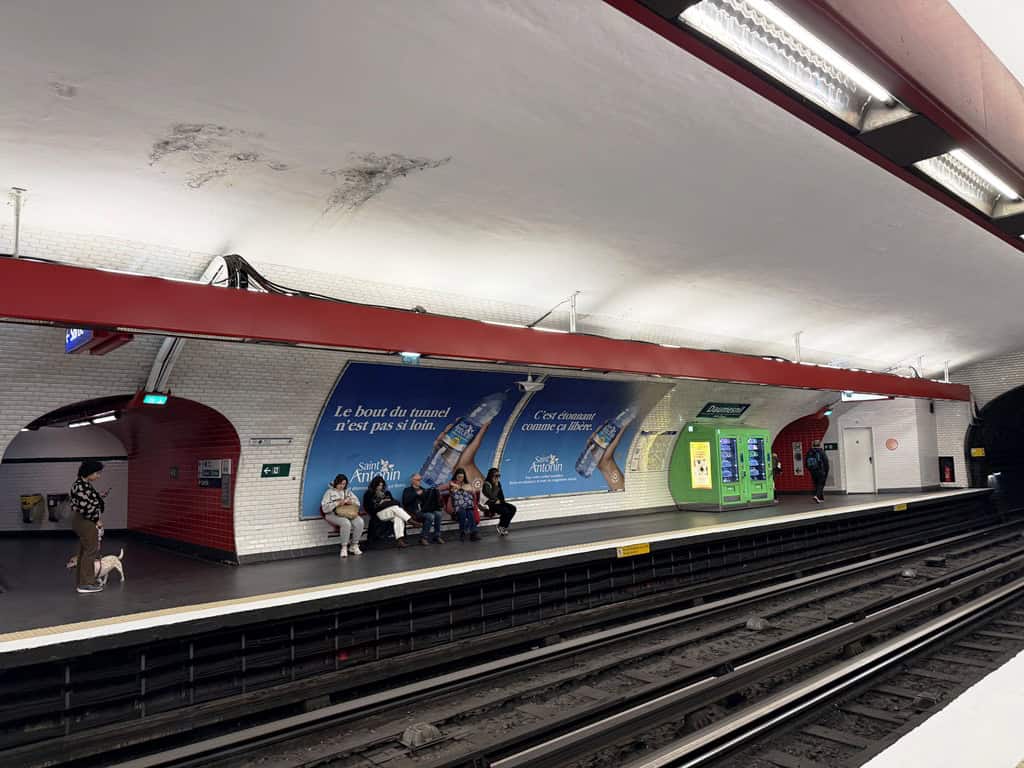
A hotel in the 19th or 20th typically means 25–40 minutes on the Métro to reach the Louvre, Notre-Dame, or the Eiffel Tower. That’s 50–80 minutes of commuting per day before you’ve done anything. Over a 4–5 day trip, that’s the equivalent of losing an entire day to underground travel.
The cost savings from staying further out are real but frequently overstated once Métro costs and the value of time are factored in. An extra €20–30 per night for a central location is usually worth it on a short first trip.
The exception: Visitors on a longer stay (7+ days) who want to experience residential Paris, or return visitors who specifically want to explore the outer neighborhoods. For them, staying in the 11th, 13th, or 20th can be exactly right. For a first trip of 3–5 days, staying in arrondissements 1–9 keeps the commute manageable.

Directly Adjacent to Notre-Dame
The streets immediately surrounding Notre-Dame on Île de la Cité and the nearby riverbanks are among the most tourist-saturated in Paris. Hotels here tend to price for the location rather than for value. The restaurants within 200 meters of the cathedral charge more and deliver less than what you’d find 10 minutes away in any direction.
What makes this particularly worth noting is that the Marais — a significantly better neighborhood in almost every practical sense — is a 5 to 10-minute walk across the river. For the same price or less, you get a genuinely characterful neighborhood, better food options, and the same access to Notre-Dame on foot whenever you want it.
Île Saint-Louis, the small island directly behind Notre-Dame, is a partial exception: quiet, beautiful, and worth considering for a stay if the budget allows. But the hotels there are limited and prices are high. For most visitors, the Marais is the right answer.
Airport Hotels for a Multi-Day Stay
Staying near Charles de Gaulle or Orly airport for multiple nights to save money on accommodation is a trade-off that consistently works out worse than expected. The RER B from CDG takes 35–45 minutes to reach the city center; Orly is 35–40 minutes. That’s 70–90 minutes of travel per day, every day.
On a 4-day trip, an airport hotel saves perhaps €30–50 per night over a central option. Against that, you spend roughly 5–6 hours of your trip on airport trains. For most visitors, that calculation doesn’t work in favor of the airport.
The one legitimate use case: arriving very late or departing very early, where an airport hotel for a single night makes genuine sense. For anything longer, stay in the city.
What a Good Location Actually Looks Like
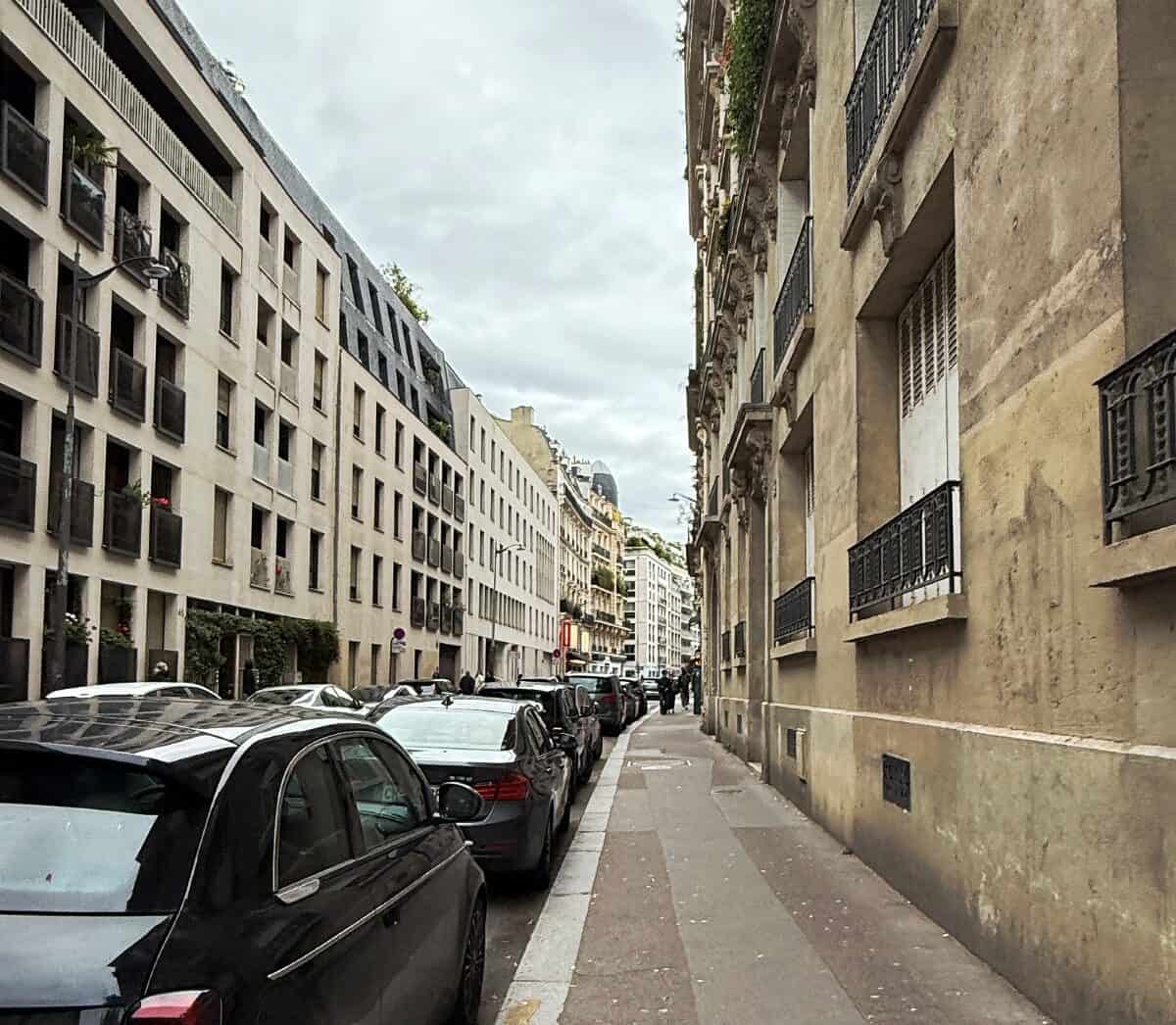
The best bases for a first visit share a few qualities: they’re walkable to at least some of the main sights, they have a genuine neighborhood life (restaurants, bakeries, a market street), and they’re well-connected by Métro to the parts of the city that are further away.
Arrondissements that consistently meet these criteria for first-time visitors:
- 4th (Le Marais) — central, walkable, lively, excellent food scene
- 6th (Saint-Germain) — calm, classic Left Bank, strong restaurant options
- 5th (Latin Quarter) — good value, historic, close to the river
- 7th (Eiffel Tower area) — quieter, family-friendly, good for Left Bank sights
- 9th (Opéra / SoPi) — practical, well-connected, mid-range prices
For a full breakdown of what each area offers and who it suits, the Best Areas to Stay in Paris for First-Time Visitors guide covers the decision in detail.
Practical Checks Before You Book
Check the actual address, not just the neighborhood name. A hotel described as “Montmartre” may be on Boulevard de Clichy. A hotel described as “Eiffel Tower area” may be in the 15th arrondissement, a 20-minute walk from the tower. Look at the pin on the map, not just the marketing copy.
Check walk time to the nearest Métro station. A hotel 800 meters from the nearest station adds 10 minutes each way to every Métro journey. On a short trip, this adds up.
Read recent reviews specifically for location comments. Guests who found the neighborhood noisy, unsafe, or inconvenient will say so. Sorting reviews by “most recent” and filtering for mentions of location gives a realistic picture.
Look at street-level imagery before booking. A quick look at the street outside the hotel tells you more than any marketing description. If it’s a busy transit corridor or a commercial strip with no neighborhood life, you’ll see it.
Check what’s within walking distance. Not landmarks — the things you’ll actually use every day: a bakery for breakfast, a supermarket, a restaurant street within 10 minutes on foot. These are the details that determine whether a base feels good to come back to each evening.
Plan Where to Go, Not Just Where to Stay
Once you have the right base, the next question is what to see first. The Paris For You map covers 100+ essential places across the city — offline, in 26 languages, with attraction info and audio guides. Useful from day one, regardless of which neighborhood you’re staying in.
Download the Paris For You map
What Not to Overreact About
The areas above are described honestly, but they’re not dangerous in any absolute sense. Paris is a safe city by the standards of major European capitals, and most of the neighborhoods on this list are simply inconvenient or overpriced rather than genuinely problematic.
If you’ve already booked somewhere on this list, don’t panic. A hotel near Gare du Nord is fine for a night or two; it just isn’t ideal as a 5-day base. A hotel at the bottom of the Pigalle hill is manageable with some awareness; it’s simply not restful. The outer arrondissements are perfectly liveable — they’re just further away than they look on a full-city map.
The point of this guide isn’t to alarm — it’s to help you choose better before you book, so the trip starts well rather than requiring adjustments once you’re there.

The Accommodation Mistakes in Brief
Booking based on the landmark, not the neighborhood. Proximity to the Eiffel Tower or Notre-Dame sounds good. In practice, these locations often mean higher prices, worse food, and less interesting surroundings. The landmark is a 15-minute walk from better neighborhoods.
Confusing the train station with the city. Gare du Nord is practical for arrival and departure. It is not a good base for a Paris holiday. Take the Métro south.
Booking “Montmartre” without checking the address. The name covers everything from the beautiful hilltop village to the flat commercial strip at the bottom. Check the map.
Staying far out to save money. The savings are real but the commute cost — in time and Métro fares — often cancels them out on a short trip.
Not checking street-level reality. A hotel can be in a technically central arrondissement but on a loud, unattractive street. Look at street view before booking.
The Right Base Makes Everything Easier
Accommodation isn’t the most exciting part of planning a Paris trip. But it’s one of the decisions that affects every other part of the experience. A good base means shorter walks, better evenings, and less time spent commuting to where you actually want to be.
The areas above aren’t inherently dangerous or impossible — most of them are perfectly fine for a brief stay. But for a first trip where every day counts, they’re worth avoiding in favor of neighborhoods that work as a genuine base rather than just a place to sleep.
Download the Paris For You App
Navigate Paris from the moment you arrive. Offline maps, attraction info, audio guides, and 26 language options — useful in any neighborhood you choose to stay in.
Paris For You app brings together must-see places, themed maps and practical tips in one app. Ideal for first-time visitors and for those who want to explore beyond the obvious.
Download on iPhone
Download on Android


