



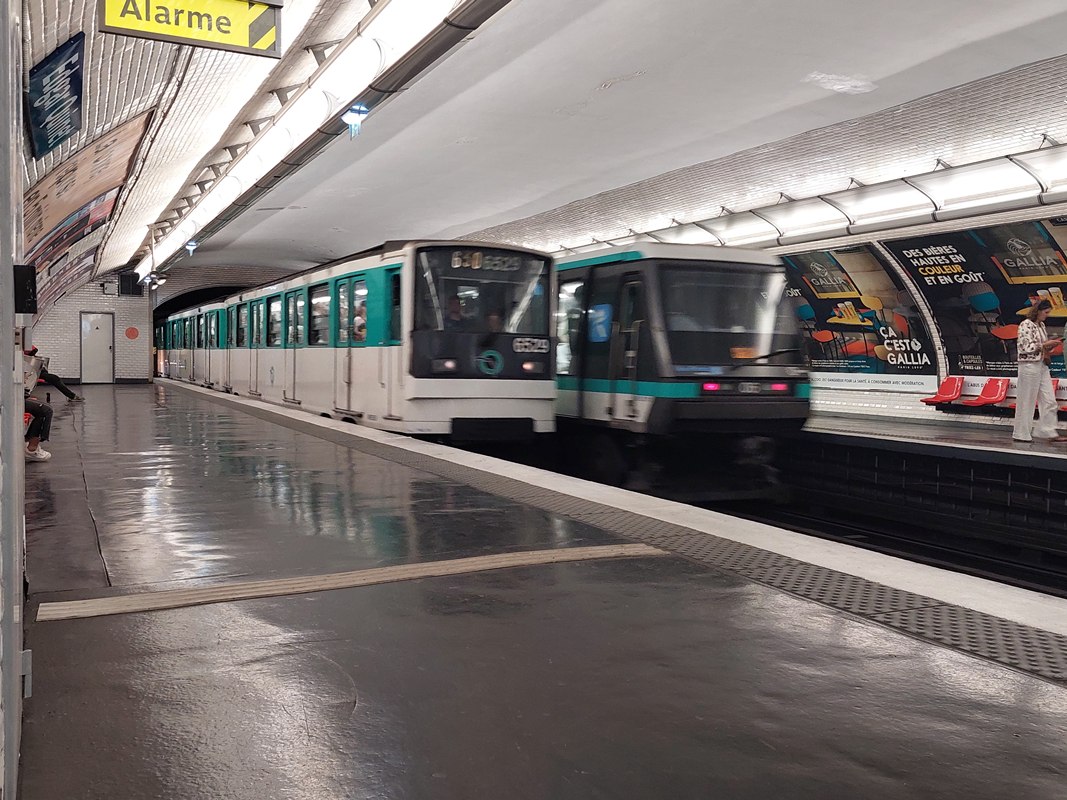
If you want postcard views without a pricey bus tour, Metro Line 6 is your best €2.50 “city tour.” Unusually for the Paris Metro, long stretches of Line 6 run above ground on iron viaducts. Between Trocadéro, Passy, Bir-Hakeim, and La Motte-Picquet – Grenelle, you’ll glide past rooftops, cross the Seine, and catch multiple, shifting angles of the Eiffel Tower—all from a regular metro seat.
This guide shows you exactly where to sit, when to ride, and where to hop off for short, high-impact stops. You’ll also find a simple mini-itinerary, photo tips, and practical notes so you can enjoy the views without stress.
- Why Line 6 is different
- Where to sit (and which way to ride)
- How often trains run?
- Highlight segment (with hop-off ideas)
- More to notice along Line 6
- When to ride (light and timing)
- Photo tips (fast and polite)
- A ready-to-copy mini-route (40–60 minutes + short walks)
- Practicalities: tickets, etiquette, accessibility
- Extend the experience: combine with Bus 69
- Plan it with Paris For You app
New to this series? Start with our overview — The Best €2.50 Paris Tours: Metro Line 6 & Bus 69 — for seats, timing, and how Bus 69 pairs with Line 6.
Fares can change. Treat “€2.50” as shorthand for about the price of a single ride. Since 5 November 2025, paper tickets are no longer sold in Île-de-France. Load your ride on a Navigo Easy card or use phone tickets in the official apps. Always check current fares before you go.
Why Line 6 is different
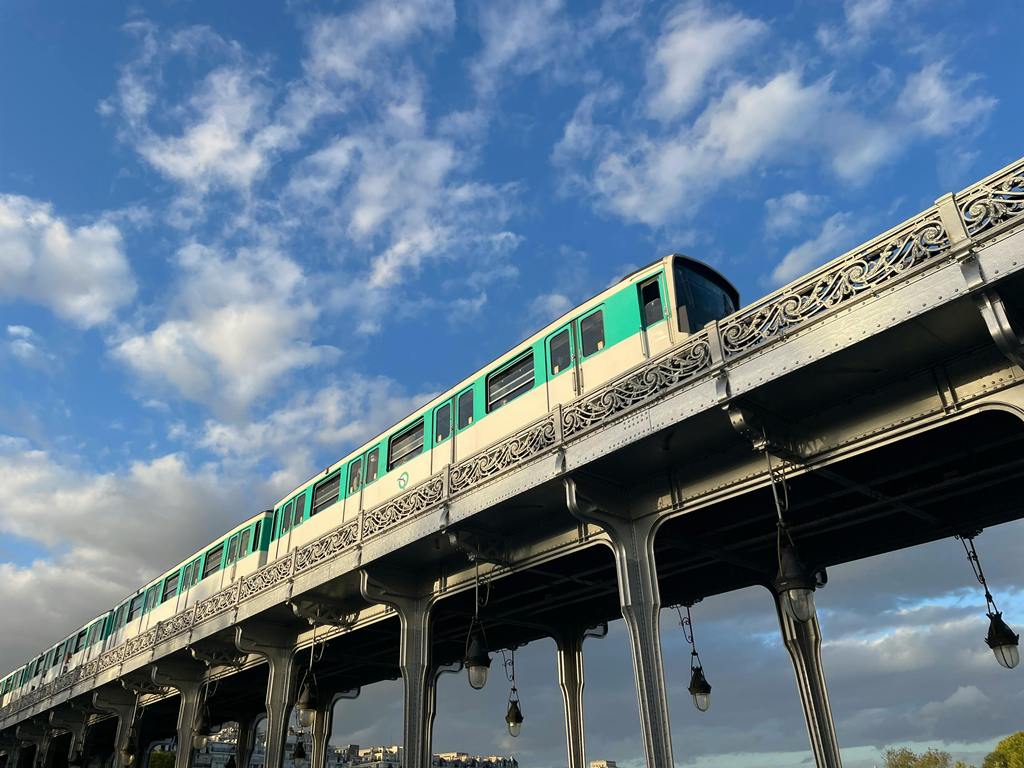
Most Paris metro lines run underground. Metro Line 6 is one of the exceptions, with extended elevated sections that frame the Eiffel Tower from several angles and cross the Seine on the Bir-Hakeim bridge. It’s a quick way to orient yourself on day one: classic views, easy hop-offs, and everything inside central zones.
At a glance: Line 6 runs 13.6 km from Charles-de-Gaulle–Étoile to Nation, serving 28 stations; about 45% of the route is elevated and includes two Seine crossings. A full end-to-end ride takes around 31 minutes in normal daytime service.
Rubber-tyred trains (quieter on viaducts).
Line 6 uses rubber-tyred rolling stock, which reduces vibration and noise on the long elevated segments. The result is a smoother ride when the train is out in the open—especially over bridges and along steel viaducts.
For a city layout refresher before you ride, see our Paris Arrondissements Guide.
Where to sit (and which way to ride)
- Best direction for Eiffel views: Charles-de-Gaulle–Étoile → Nation
- Best side to sit: In that direction, choose the left-hand side; in the opposite direction (Nation → Étoile), choose the right-hand side.
This positioning gives you the most open angles on the Tower as you pass Trocadéro → Passy → Bir-Hakeim and then sweep into La Motte-Picquet – Grenelle.
How often trains run?
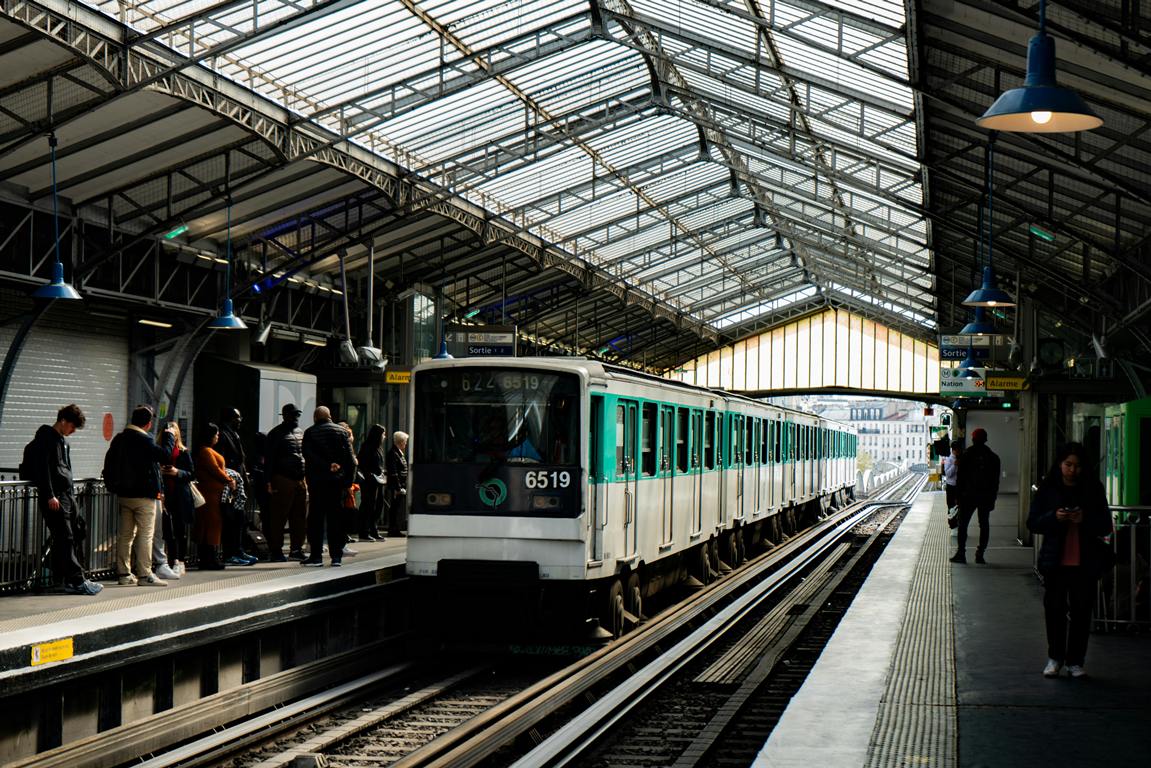
Frequency varies by time of day and service conditions, but as a practical guide you can expect roughly:
- Peak hours: about every 2–3 minutes
- Midday/afternoons: about every 3–6 minutes
- Late evening: about every 5–7 minutes
For live intervals, check station displays or the official journey planner on the day you ride.
Highlight segment (with hop-off ideas)
Étoile → Trocadéro → Passy → Bir-Hakeim → La Motte-Picquet – Grenelle
- Trocadéro (hop off)
Take the terrace for a wide, axial view of the Tower and Champ de Mars. Ten minutes is enough for a first look; more if you want to descend the gardens. If you love bridge architecture and river photos, pair this stop later with Pont Alexandre III. - Passy → Bir-Hakeim (signature crossing)
Stay seated for the Seine crossing. The double-deck Bir-Hakeim bridge (metro above, road/pedestrian below) gives repeating steel arches—great for short video clips from the train window.
Bir-Hakeim (hop off): Walk the lower deck of the bridge for shots back to the Tower, then continue to Champ de Mars. - La Motte-Picquet – Grenelle (optional)
Good for a café break or a short walk toward the Tower lawns. Nearby Dupleix and Cambronne are quieter for market streets and everyday Paris.
If you plan to stop at Les Invalides on the same outing, read our practical guide first: Les Invalides: History, Highlights, and How to Visit.
More to notice along Line 6
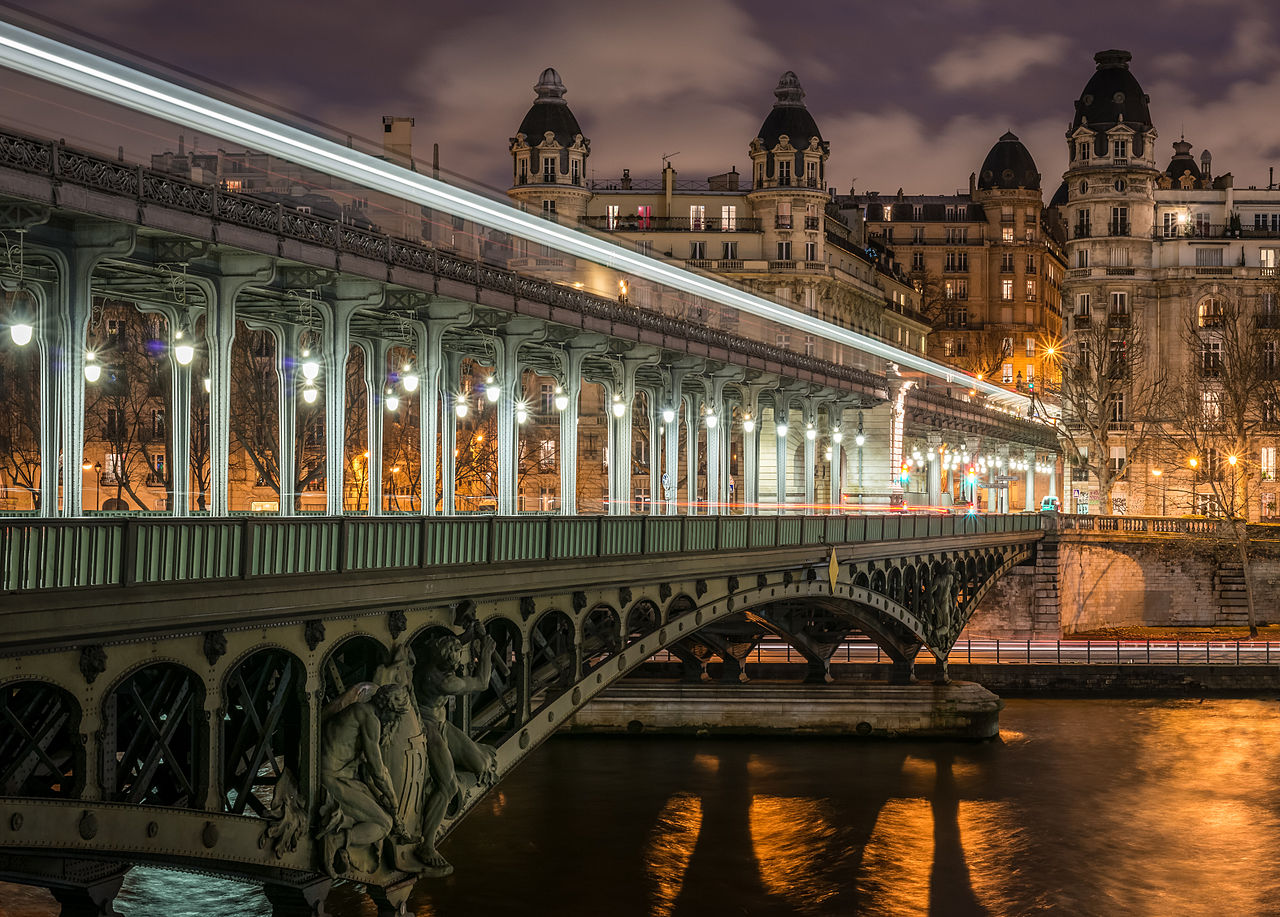
- Two Seine crossings. In addition to the famous Bir-Hakeim moment near the Eiffel Tower, the line crosses the river again in the east, by Pont de Bercy—a completely different urban landscape with sweeping views of the Seine’s curves.
- Distinctive stations.
- Passy has a split personality: part open-air, part covered tunnel segment.
- Kléber features extra tracks for operational regulation and driver changes, which is unusual in Paris.
- Charles-de-Gaulle–Étoile connects directly with the Arc de Triomphe above (worth a separate stop before or after the view ride).
- Viaduct architecture. Early-20th-century steel structures carry the line between Haussmann façades; look up at the riveted girders and stone piers as you approach bridges.
- Bir-Hakeim in popular culture. Thanks to its symmetrical arches and double-deck profile, the bridge appears frequently in films and fashion shoots—one reason it’s among the most photographed spots in Paris.
When to ride (light and timing)
- Golden hour (late afternoon to sunset) is ideal for warm light on stone and steel.
- Clear days give better distance and structure; if the sky is flat, try again later.
- Avoid peak commute (roughly 08:00–09:30 and 17:00–19:00) if you want an easy window seat and a calmer ride.
Visiting in the shoulder season? See why it’s especially rewarding in Paris in Autumn: Why Fall is a Great Time to Visit.
Photo tips (fast and polite)
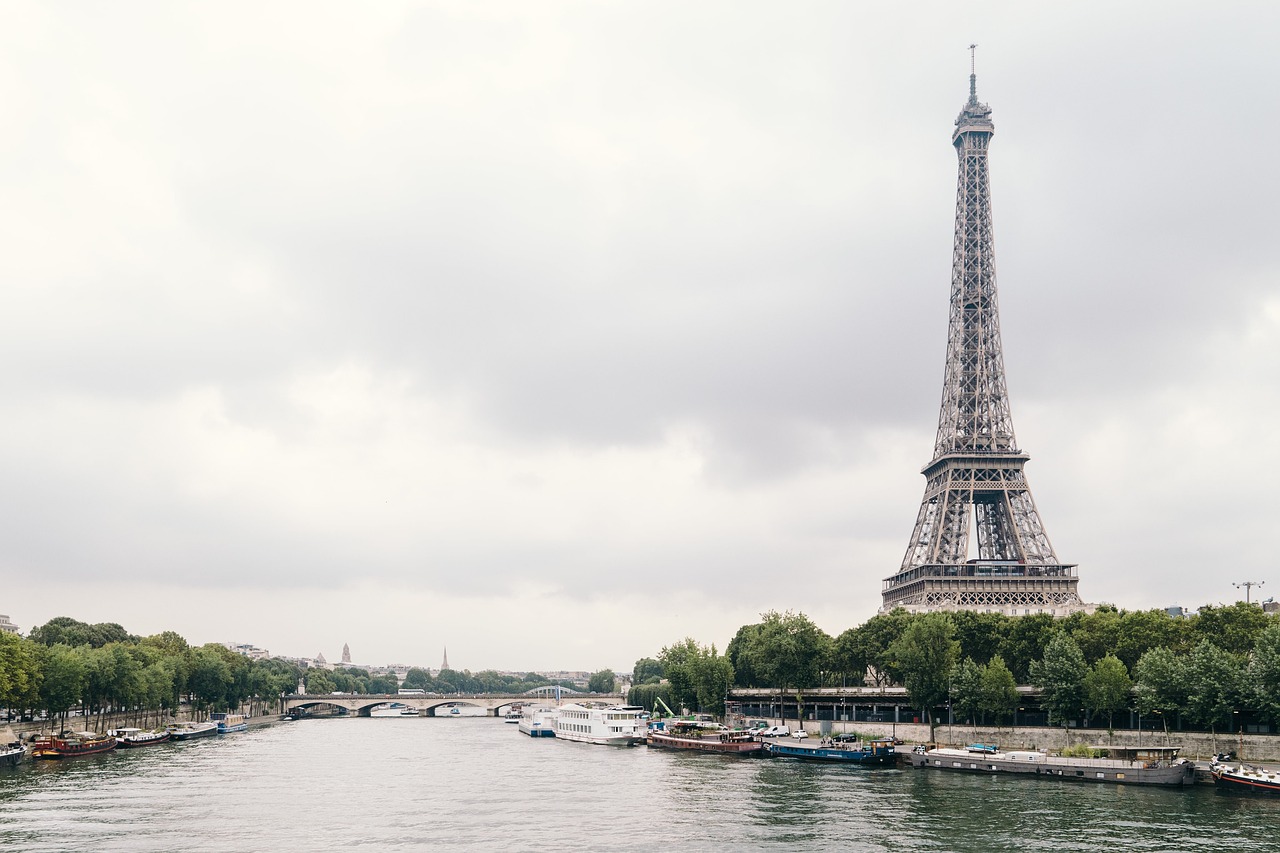
- Sit by the window; hold your phone close to the glass at a slight angle to minimize reflections.
- Capture short clips during the river crossing rather than long, shaky videos.
- Don’t block doors or aisles for photos; trains stop briefly and doors close quickly.
- For cleaner compositions at ground level, hop off at Bir-Hakeim and shoot on the lower deck of the bridge looking back to the Tower.
Avoid common pitfalls with our reality checks here: Top 10 Mistakes in Paris – and How to Avoid Them.
A ready-to-copy mini-route (40–60 minutes + short walks)
- Start: Charles-de-Gaulle–Étoile (Line 6) → sit left-hand side.
- Hop off: Trocadéro for the panoramic terrace (10–15 minutes).
- Ride: Trocadéro → Passy → Bir-Hakeim; hop off.
- Walk: Cross the lower level of Bir-Hakeim bridge for photos; continue to Champ de Mars.
- Optional add-on: Later in the day, stroll or ride toward Pont Alexandre III for golden-hour bridge views (see our guide linked above).
Practicalities: tickets, etiquette, accessibility

- Tickets: Buy a single ride on a Navigo Easy card or as a phone ticket via the official Île-de-France Mobilités / Bonjour RATP apps. Paper tickets are no longer sold. Validate at the metro gates (or on boarding a bus) and keep your proof of payment until the end of the trip. If you’ll ride several times in a day, consider loading a day or weekly pass onto Navigo Easy or purchasing in-app (names/prices can change; check the app on the day).
- Etiquette: Let passengers exit before you board. Offer priority seats if needed. Keep bags zipped and in front of you.
- Safety: Line 6 is busy and central. Daylight and early evening are easiest for first-timers; if you’re solo late at night, prefer familiar segments and well-lit stations.
- Accessibility: Some Line 6 stations have stairs and limited step-free access. Station-by-station planning helps if lifts/escalators are essential. Buses (e.g., Bus 69) are generally low-floor with ramps; consider combining both routes for flexibility.
- For broader planning (including buses), see Planning a Trip to Paris: What You Should Know.
Extend the experience: combine with Bus 69
If you enjoyed Line 6’s aerial angles, try Bus 69 on another day for street-level sightseeing across town—from the east side through Bastille and the heart of the city to Champ de Mars. Our pillar guide explains both routes side by side: search our blog for The Best €2.50 Paris Tours: Metro Line 6 & Bus 69 and save both for later.
Plan it with Paris For You app
The Paris For You app helps you find curated routes, quizzes, and offline maps—all in 26 languages—so you can discover Paris without stress. You’ll also find themed maps such as Paris Top Insta Spots, Paris For FREE, and Paris Top 15 Must-See Places.
Download on Android
Download on iPhone


