






Updated on 26 July 2026
If you want to see where Parisians actually spend their free time, skip the Seine and head to Canal Saint-Martin. This 4.5-kilometer waterway threading through the 10th and 11th arrondissements has become the city’s unofficial hangout spot for anyone seeking something more authentic than tourist-packed river cruises or landmark selfie opportunities.
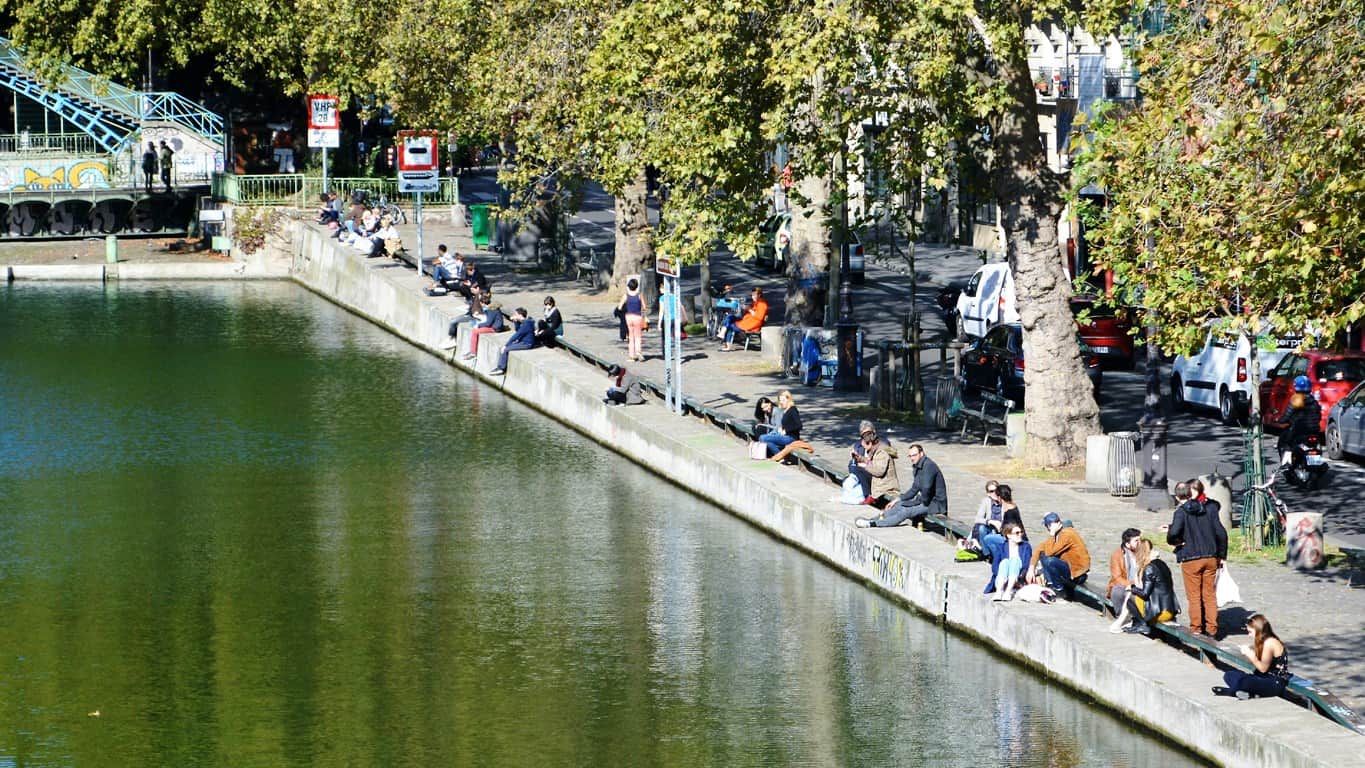
On weekends, the canal’s tree-lined banks fill with locals picnicking on the cobblestones, drinking wine from bottles, and watching boats navigate the nine historic locks. Independent bookshops, vintage boutiques, and cafés spill onto the sidewalks along Quai de Valmy and Quai de Jemmapes. Street art covers walls in the side streets. And somehow, despite appearing in films like Amélie and becoming increasingly popular, the area has maintained the relaxed, unpretentious vibe that makes it special.
This isn’t a place you visit for an hour to check off a list. It’s a neighborhood you wander through, stopping when something catches your attention, lingering because there’s no rush, and eventually understanding why locals guard it so protectively.
A Canal Built on Wine Tax
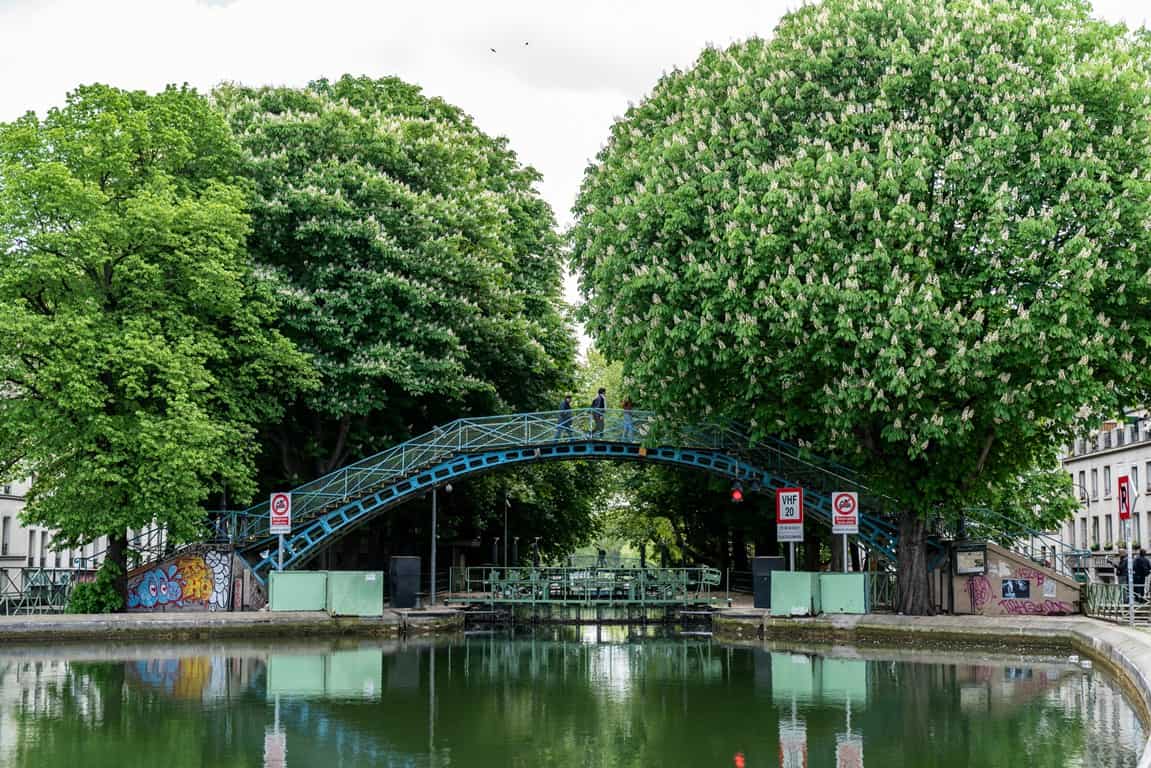
Napoleon I ordered the canal’s construction in 1802 with practical goals: supply Paris with fresh drinking water from the Ourcq River (helping prevent cholera and dysentery), and create a transportation route for goods coming from northeast France. The project was funded by a new tax on wine—a detail that perfectly captures French priorities.
Construction began at both ends in 1805, but the technical challenges of building a canal through an increasingly urbanized area delayed completion until 1825. The finished waterway featured nine locks to handle a 25-meter elevation change, elegant cast-iron footbridges, and two ports for unloading goods: Bassin de la Villette at the northern end and Port de l’Arsenal connecting to the Seine in the south.
For decades, the canal bustled with industrial traffic. Warehouses and factories lined the quays. Working-class neighborhoods grew around it, populated by boatmen, stevedores, and lock-keepers. The area was gritty, functional, and essential to Paris’s economy.
Then in the 1860s, Baron Haussmann—Napoleon III’s engineer responsible for creating Paris’s grand boulevards—made an odd decision. Rather than simply building bridges over the canal, he sent nearly half of it underground, creating Boulevard Jules Ferry and Boulevard Richard Lenoir above the subterranean waterway. This required lowering the canal bed and modifying locks, all for the sake of straight-line boulevards.
The Canal That Almost Became a Highway
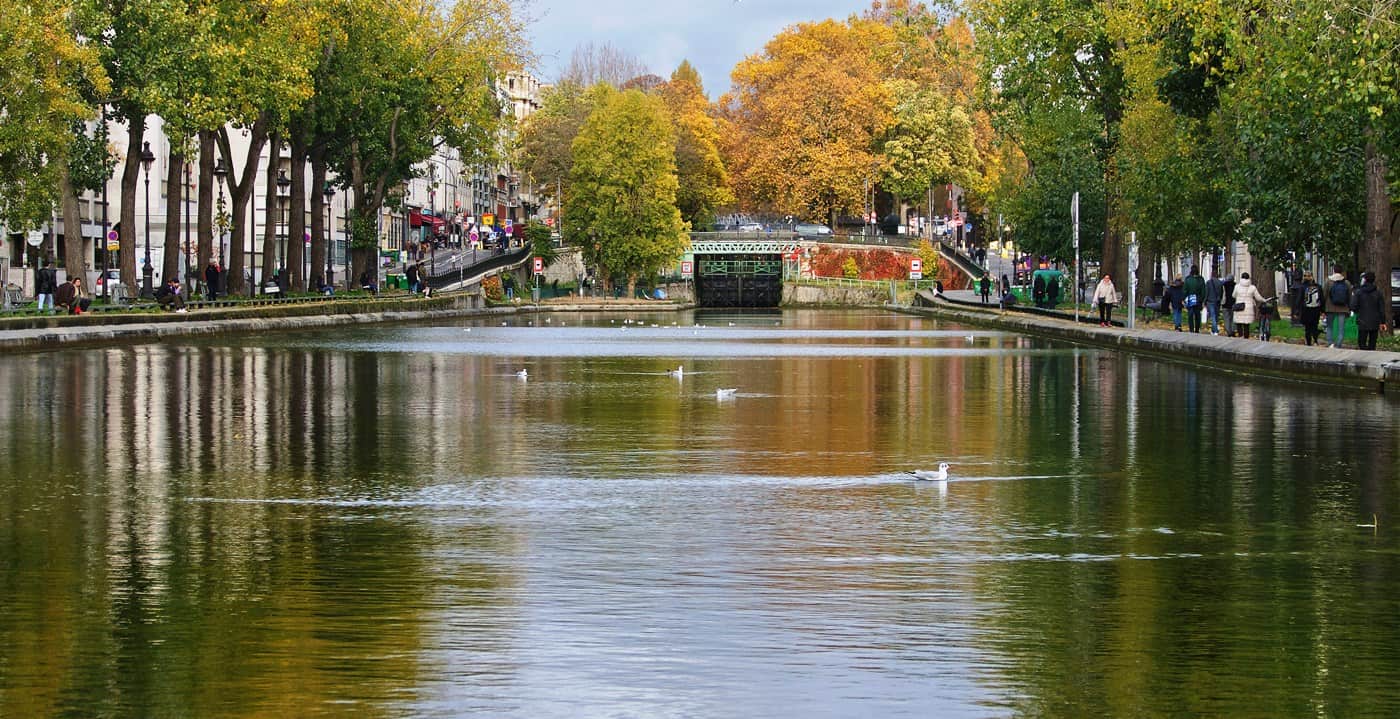
By the 1960s, boat traffic had dwindled to almost nothing. Cars dominated urban planning thinking, and Paris proposed demolishing the canal entirely to build a freeway. The canal came remarkably close to disappearing—its survival came down to budget constraints rather than preservation instincts. The city simply couldn’t afford the demolition and highway construction.
This accidental preservation proved fortunate. Over subsequent decades, as Paris rediscovered the value of waterfront spaces and pedestrian areas, the canal transformed from industrial relic to neighborhood amenity. The 1993 designation as a historical monument officially protected what had narrowly escaped destruction.
The Canal in Three Sections
The canal divides into distinct segments, each with its own character:
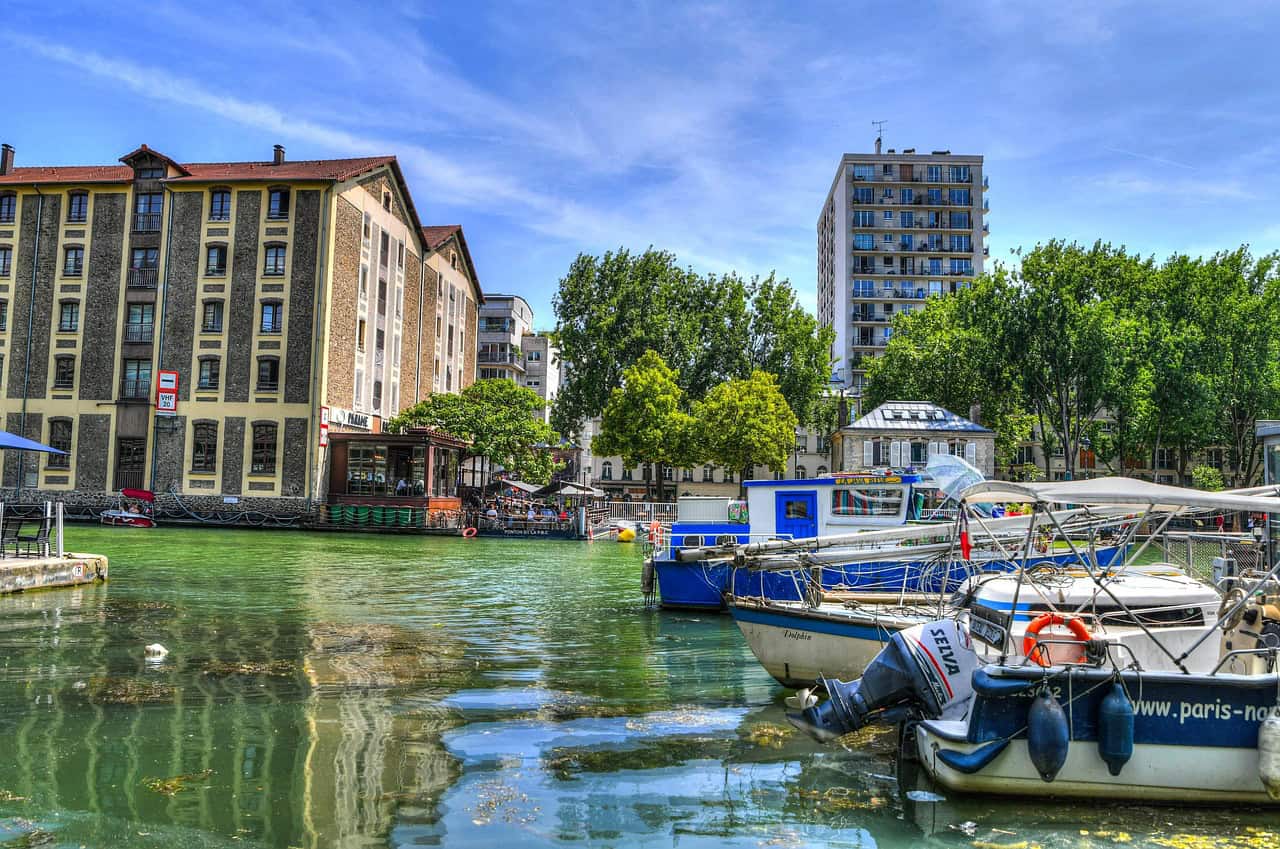
Bassin de l’Arsenal (south end) serves as Paris’s main pleasure boat marina. Historic riverboats converted into houseboats dock alongside modern yachts, creating an eclectic floating neighborhood. The adjacent Jardin du Port de l’Arsenal offers a quiet garden perfect for reading or relaxing away from tourist traffic.
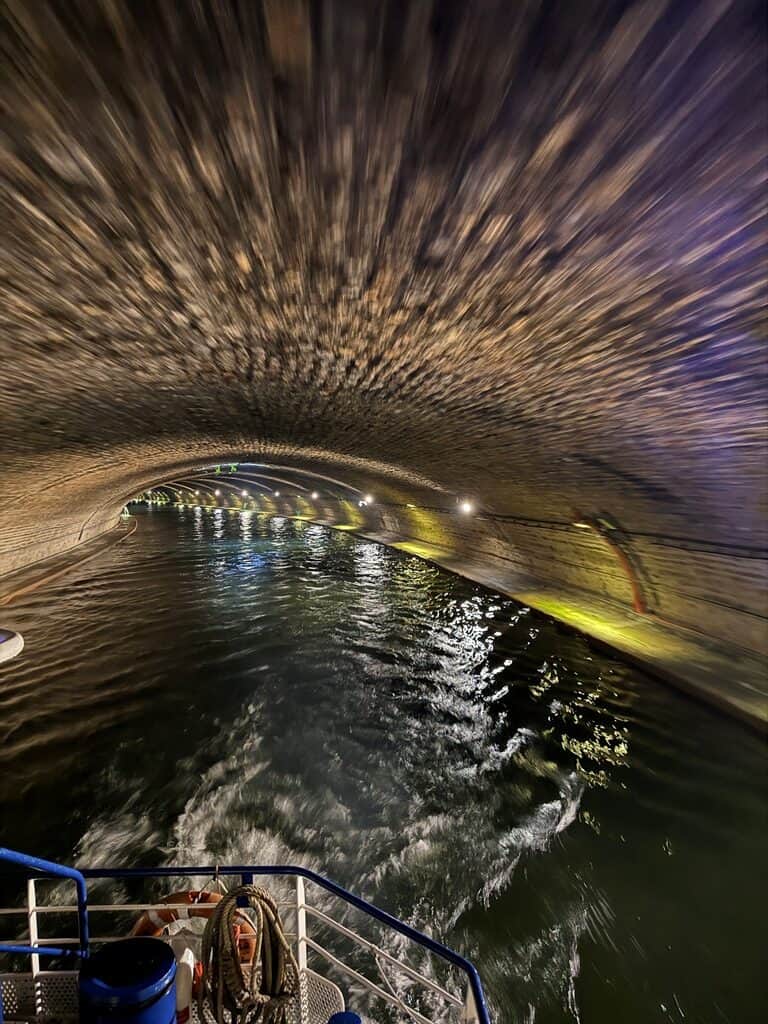
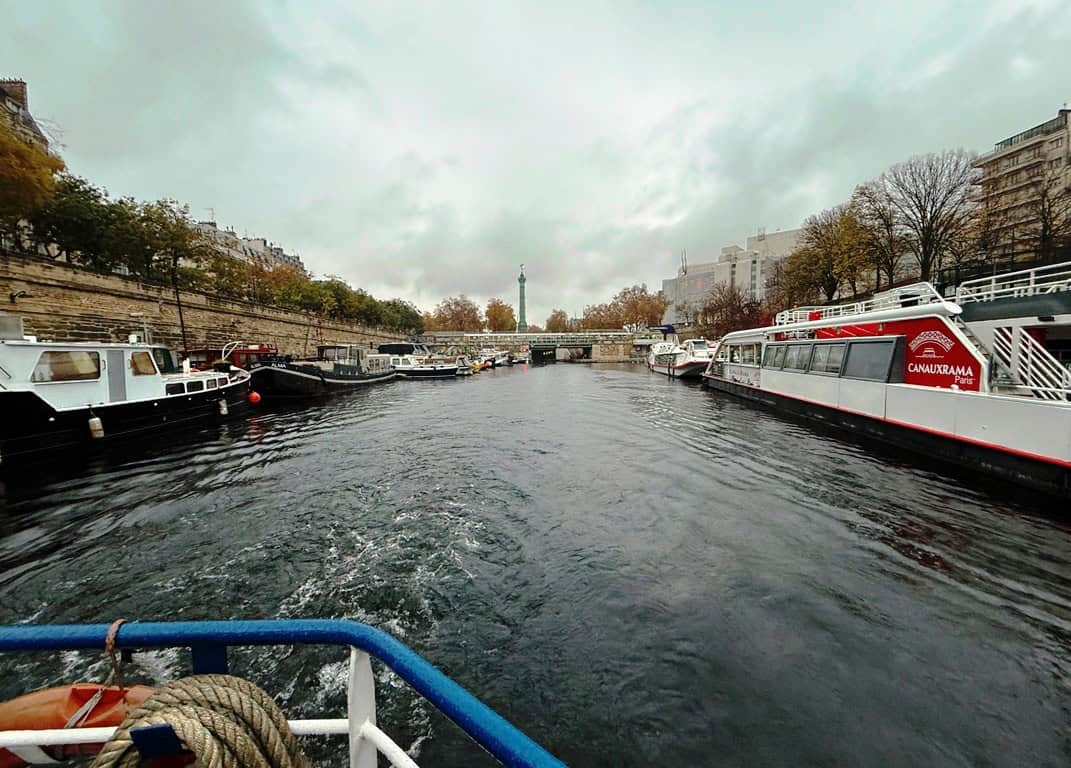
The Underground Section runs from Place de la Bastille through three successive tunnels (Bastille, Richard-Lenoir, and Temple) for about 2 kilometers. You can explore this section on canal cruises that navigate the atmospheric vaulted tunnels—an experience that feels like discovering Paris’s hidden arteries.
The Open-Air Section between République and Bassin de la Villette is what most people mean when they reference Canal Saint-Martin. This is where the magic happens: the tree-lined quays, the working locks, the iron footbridges, the café life, the weekend crowds sprawling on the cobblestones.
Bassin de la Villette (north end) is Paris’s largest basin at 800 meters long and 70 meters wide. Once a busy commercial port, it’s now surrounded by entertainment venues, restaurants, and the MK2 cinema complex. In summer, a temporary beach appears along one quay, and outdoor movie screenings draw crowds.
What Makes the Neighborhood Special
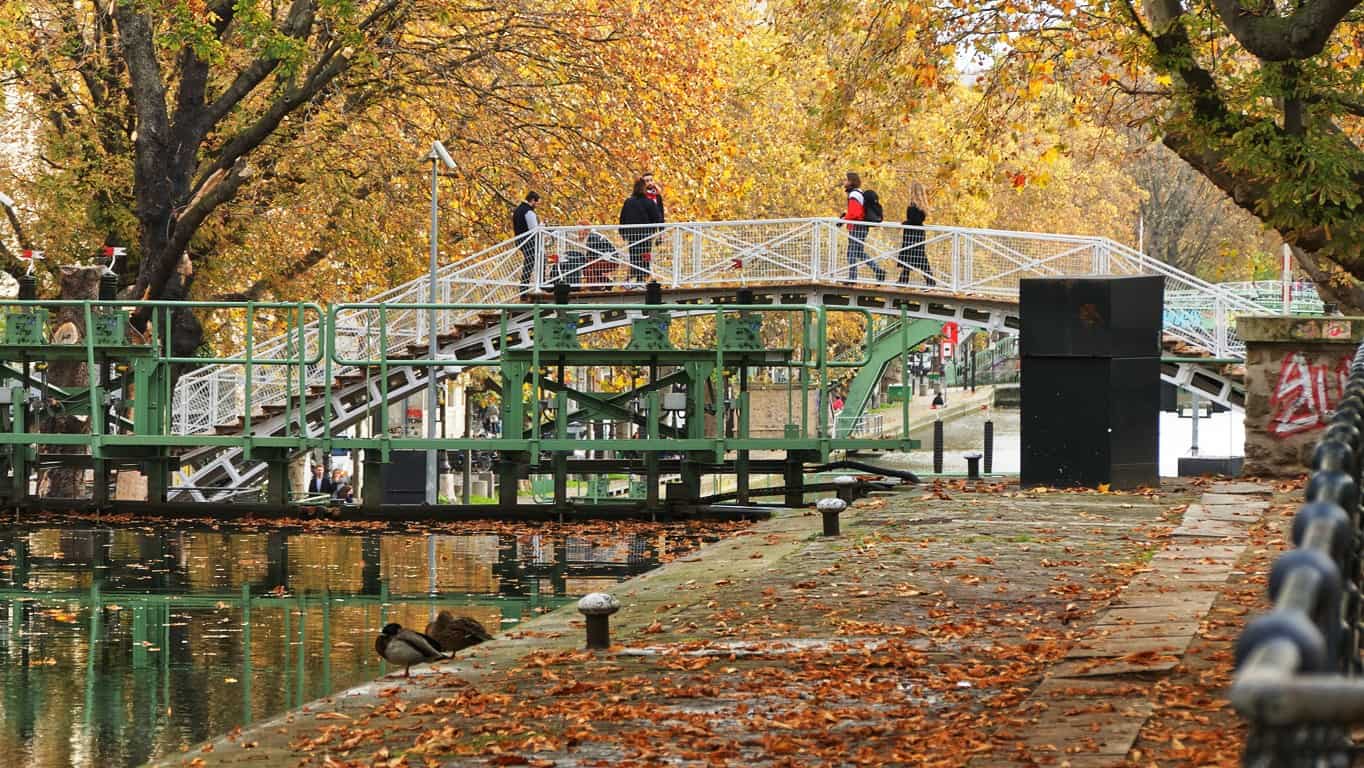
The Canal Saint-Martin area doesn’t feel like it’s performing for tourists. Yes, visitors come (increasingly so), but the neighborhood functions primarily for people who live and work there. This creates a different dynamic than areas that exist mainly to serve tourists.
The shops reflect this. Instead of souvenir stores, you’ll find independent bookshops like Artazart (specializing in design and graphic arts), vintage clothing boutiques, record stores, and small galleries. The businesses cater to locals first, which means they need to offer something genuine rather than just location convenience.
The café and restaurant scene follows similar logic. Places like Chez Prune, which overlooks one of the canal’s locks, serves food Parisians actually want to eat at prices they can afford regularly. Le Comptoir Général creates an eclectic tropical-meets-industrial space that functions as café, bar, museum, and event venue—the kind of place that only works in a neighborhood with authentic creative energy.
The vibe changes throughout the week. Weekdays see fewer crowds—locals grabbing coffee, working in cafés, meeting friends for lunch. Weekends transform the canal banks into outdoor social spaces, with hundreds of people sitting along the quays, particularly around the lock by Rue des Récollets. It can get crowded and littered, which some longtime residents lament, but it’s also evidence of the area’s appeal as a democratic public space.
The Locks: Industrial Ballet
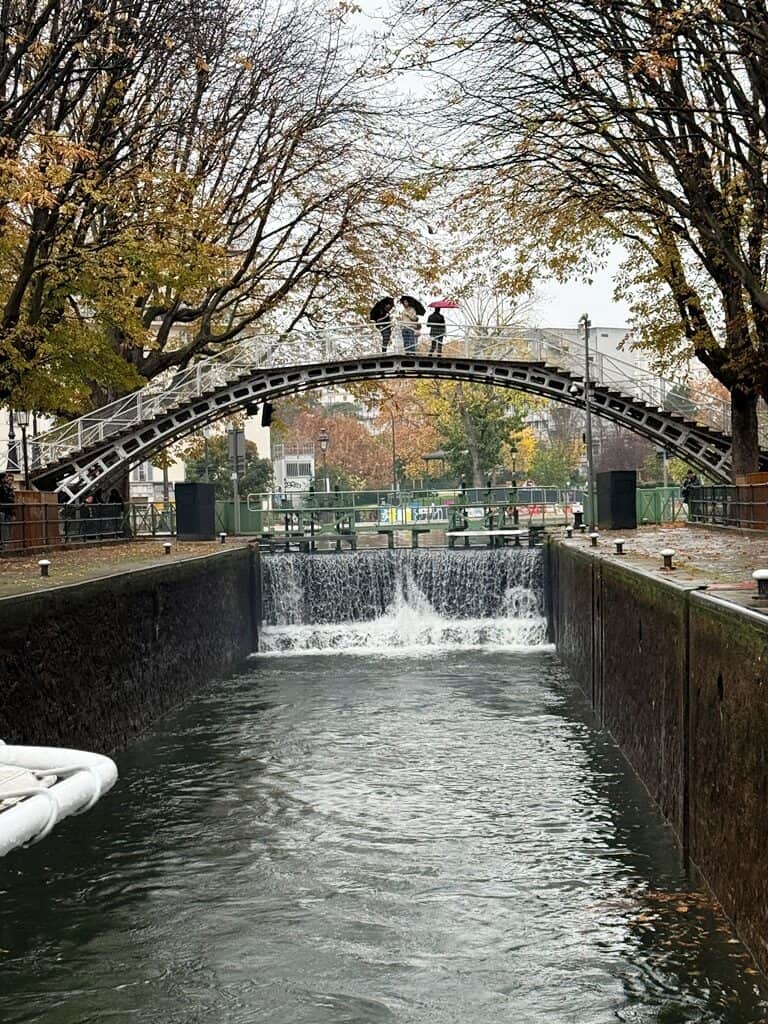
Watching boats navigate the canal’s locks never gets old. The process is mechanical, slow, and somehow mesmerizing: the lock-keeper opens the gates, water flows in or out, the boat rises or falls several meters, then continues on its journey. The whole operation takes about 10 minutes per lock, and people regularly gather on the footbridges to watch.
The locks aren’t decorative—they’re functional infrastructure still operating as designed nearly 200 years ago. Canal boats, including tourist cruises, use them daily. Some private boats navigate the entire canal from Bassin de la Villette to the Seine, a journey that takes a few hours and passes through all nine locks.
The canal’s metal swing bridges add to the operational charm. These bridges rotate to let boats pass, temporarily stopping pedestrian and vehicle traffic. It’s a reminder that in this part of Paris, boats have right of way—a reversal of normal urban priorities.
The Canal Gets Cleaned
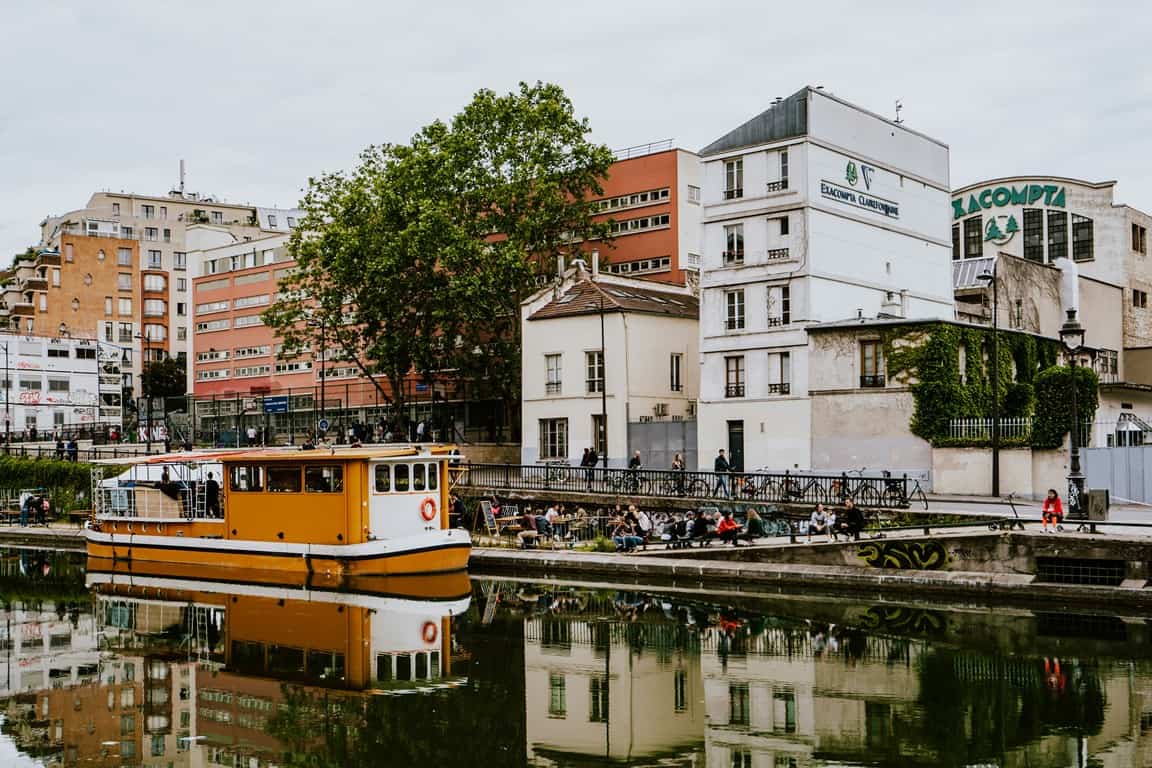
Every 10-15 years, Paris drains Canal Saint-Martin for maintenance and cleaning. This event becomes a citywide spectacle, with Parisians gathering to see what’s been accumulating at the bottom.
The 2016 cleaning revealed the usual suspects: shopping carts, bicycles, traffic cones, scooters. But also more surprising finds: a World War I shell, safes, cameras, countless wine bottles, and—somehow—a motorcycle. In total, about 40 tons of objects were retrieved.
The process requires draining 90,000 cubic meters of water while carefully managing the canal’s fish population (about 5 tons of fish are temporarily relocated to tanks). The drained canal bed becomes briefly visible, offering a surreal view of this normally water-filled space reduced to muddy bottom.
The cleaning costs around €9.5 million and takes three months. When the canal refills and boats return, locals celebrate what feels like a neighborhood rebirth.
Films and Cultural Moments
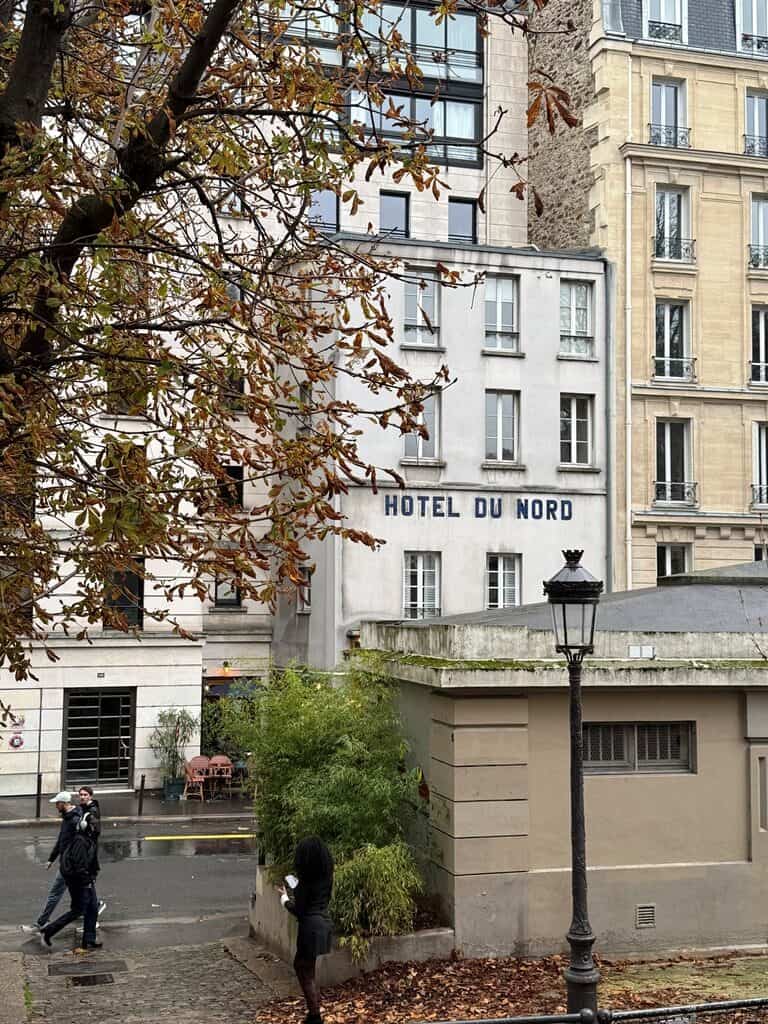
The canal has featured in French cinema since the 1930s. Marcel Carné’s 1938 film Hôtel du Nord made the area famous, though interestingly, the film was shot on a studio set that painstakingly recreated the canal and surrounding buildings. A bar and restaurant now called Hôtel du Nord occupies the actual location depicted in the film.
Jean Vigo’s L’Atalante (1934) used the real canal as a setting, capturing its working-class character. More recently, Jean-Pierre Jeunet’s Amélie (2001) featured Audrey Tautou skipping stones at one of the locks, introducing the canal to international audiences and contributing to its transformation into a must-see destination.
The area has also attracted painters—Alfred Sisley painted the canal in 1870—and continues to inspire street artists whose works cover walls throughout the neighborhood.
If you want to see more of Paris with less guesswork, the full Paris For You map is a smart place to start.
Practical Navigation
The canal is easy to reach via several Métro stations: République (lines 3, 5, 8, 9, 11), Goncourt (line 11), Jacques Bonsergent (line 5), Jaurès (lines 2, 5, 7bis), and Gare de l’Est (lines 4, 5, 7). The open-air section stretches about 2 kilometers, easily walkable in 30-40 minutes if you’re not stopping.
But stopping is the point. The canal isn’t really a destination—it’s a place to wander. Walk along one bank, cross a footbridge, walk back along the other. Duck into shops that look interesting. Sit at a café watching locks operate. Buy provisions at Marché Couvert Saint-Quentin (a beautiful covered market from 1854) and picnic on the cobblestones.
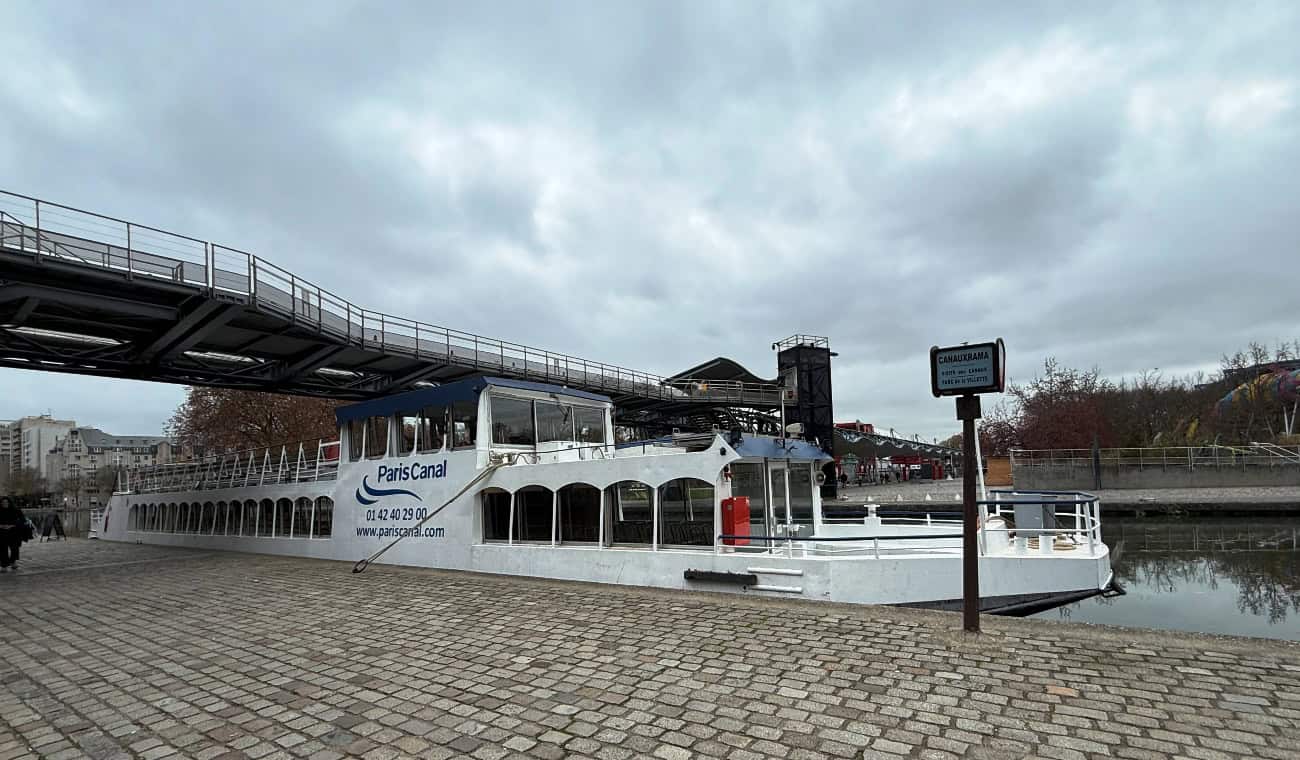
Canal cruises offer a different perspective. Companies like Canauxrama and Paris Canal operate boats that navigate from Bassin de la Villette through the underground sections to the Seine, passing through locks and tunnels. The journey takes about 2.5 hours and reveals parts of the canal impossible to see from street level.
The neighborhood also offers easy access to Parc de la Villette (north end), with its museums, concert venues, and green spaces. The combination makes for a full day of exploring beyond central tourist areas.
When to Visit
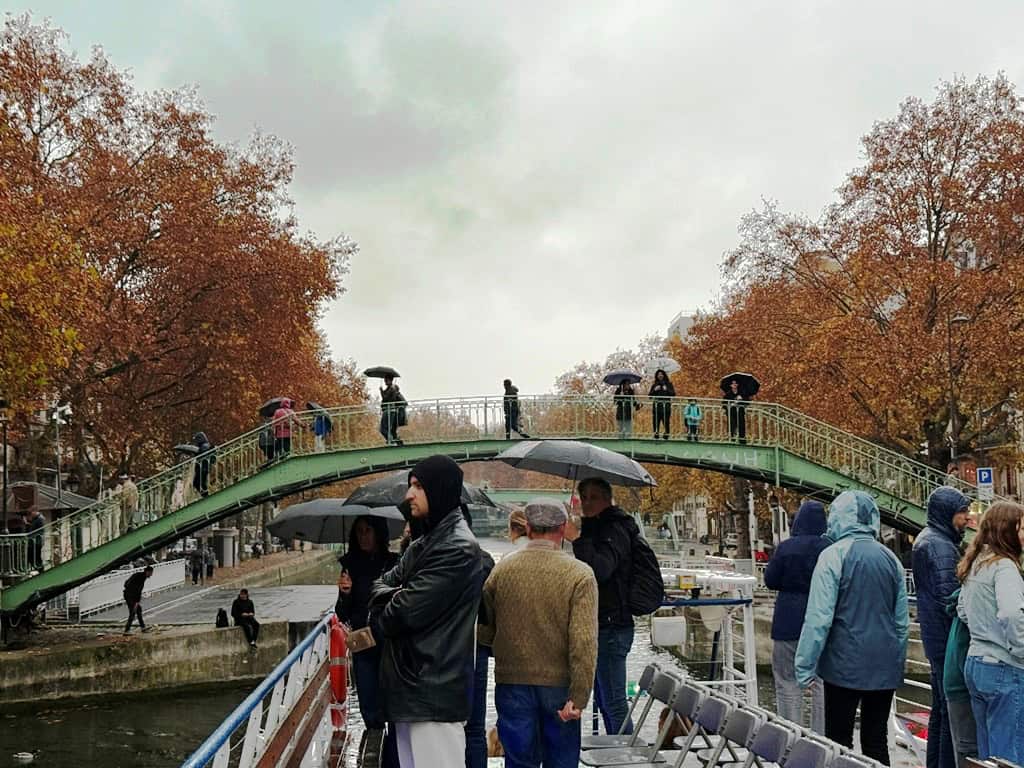
The canal works in all seasons but shines in spring and early fall. Spring brings blooming trees along the quays and that particular Parisian energy of people reclaiming outdoor spaces after winter. Fall offers golden light filtering through leaves and pleasant temperatures for walking.
Summer sees the most crowds, particularly weekend afternoons when the quays become genuinely packed. If you’re visiting in summer, come on weekday mornings for a calmer experience, or embrace the crowds as part of the neighborhood’s social character.
Winter doesn’t stop locals from using the canal—Parisians are more weather-resistant than tourists expect—but the outdoor picnic culture obviously diminishes. The cafés stay busy year-round.
What the Canal Represents
Canal Saint-Martin embodies a particular vision of urban life: functional infrastructure transformed into public amenity, industrial space reclaimed for leisure, working-class neighborhood evolved into creative hub, all without completely erasing the history that came before.
The canal doesn’t try to be beautiful in the way Parisian monuments are beautiful. Its charm comes from usefulness, from the way it serves the neighborhood, from its role as a democratic public space where anyone can sit, picnic, watch boats, exist without needing to buy anything.
This accessibility matters in a city where so much feels designed for tourists or requires money to access. The canal belongs to everyone who uses it—locals drinking cheap wine, tourists taking photos, families with children, students between classes, elderly couples on afternoon walks, young people meeting friends. It’s Paris functioning as a city rather than performing as a destination.
The area isn’t perfect. It can be littered after weekend crowds. The gentrification that preserved the canal has also changed the neighborhood’s character and pushed out long-time residents. The cool factor that drew creative types now attracts development that threatens affordability.
But Canal Saint-Martin still offers something valuable: a glimpse of Paris as Parisians experience it, a place where the city’s history remains visible in working locks and old warehouses, where public space serves community needs, and where you can spend an afternoon doing nothing in particular without feeling like you’re wasting precious tourist time.
Download the Paris For You App
Explore Paris with offline maps, walking routes, and neighborhood guides—all in 26 languages. Navigate like a local even without an internet connection.
Want to explore Paris with a clear plan?
Download the Paris For You app and use maps, routes and recommendations directly on your phone — even offline.
Download on Android
Download on iPhone


